Some strains fit a lazy Sunday. Some fit a late-night movie. Sour Headband strain is the one people often ask about when they want to stay engaged with their day but take the edge off.
That’s a familiar Long Island use case. You’ve got a work task that needs focus, a list of errands, maybe a creative project you’ve been putting off, and you want something with lift, not drag. You want relief without feeling parked on the couch.
Sour Headband sits in that sweet spot for many adult consumers. It’s known for a sharp diesel-citrus profile, a clear-headed but potent high, and a body feel that relaxes without always pushing into heavy sedation. It also has enough variation between growers that choosing the right batch matters.
Your Guide to the Sour Headband Strain
Sour Headband has a reputation for balance. It usually appeals to people who like the mental brightness of a sativa-leaning cultivar but still want some physical ease in the background.
That combination is a big reason it keeps showing up on must-try lists. The strain is commonly described as sativa-dominant, but not in a one-note way. It tends to bring an alert, upbeat start, followed by a calmer body feel that can make tension easier to carry.
Where people get confused is simple. They hear “sativa-dominant” and assume jittery. They hear “Headband” and assume sleepy. Sour Headband often lands somewhere more useful than either of those extremes.
Budtender mindset: Don’t shop this strain by name alone. Shop it by the lab results, aroma, and the kind of day you want to have.
If you’re newer to cannabis, think of Sour Headband as a strain that asks for intention. If you’re experienced, it’s one of those cultivars worth revisiting when you want flavor, potency, and functionality in the same jar.
Sour Headband Strain Profile at a Glance
Here’s the fast read version before we get into the finer points.
| Attribute | Description |
|---|---|
| Strain type | Sativa-dominant hybrid |
| Genetic background | Bred from East Coast Sour Diesel x West Coast Headband |
| Typical ratio | Often described in the 60 to 75 percent sativa range, depending on producer and phenotype |
| THC range | Commonly 17 to 25 percent, with premium indoor batches reaching 25 to 27 percent under controlled conditions |
| CBD content | Typically below 0.5 to 1 percent |
| Dominant terpenes | Beta-caryophyllene, limonene, and myrcene |
| Aroma | Diesel, citrus, sour lemon, earthy notes |
| General effect style | Mentally uplifting with physical relaxation |
| Common use window | Often chosen for daytime or early evening by people who want clarity with relief |
| Flowering time | 8 to 9 weeks, or 56 to 63 days |
| Indoor yield | 475 to 525 grams per square meter |
| Outdoor yield | 16 to 19 ounces per plant |
What stands out is the full package. Sour Headband isn’t only known for effects. It also has serious cultivation appeal, a recognizable aroma profile, and enough potency to matter for both casual and experienced consumers.
For shoppers, the practical takeaway is this. If you care about flavor and want a strain that may support a productive headspace, Sour Headband is worth a close look. If you’re highly sensitive to THC, approach it carefully.
Unpacking the Legendary Genetics of Sour Headband
Sour Headband comes from serious lineage. It was bred by Loud Seeds from East Coast Sour Diesel and West Coast Headband, and it’s generally described as 60 to 75 percent sativa with lab-tested THC levels ranging from 17 to 25 percent, while premium indoor batches can reach 25 to 27 percent. It was stabilized around the early 2010s and has an 8 to 9 week flowering time (SeedFinder’s Sour Headband listing).
What it gets from Sour Diesel
The Sour Diesel side explains a lot of the first impression.
That parent is why people often notice a more animated mental start. The diesel sharpness in the nose, the brighter mood, and the “let me get moving” feel all make sense when you know Sour Diesel is in the family tree.
For shoppers, this matters because it helps explain why Sour Headband often feels more active than heavy. Even before you look at the lab sheet, the genetics point you in that direction.
What it gets from Headband
The Headband side rounds it out.
The strain is known for a more grounded body component and that classic “pressure around the temples” description some users report. Not everyone experiences that sensation the same way, but the name isn’t random.
When those two parents meet, the result is a hybrid that can feel more centered than either extreme. You get a mental push from the Sour Diesel side and a calmer body tone from the Headband side.
Why the genetics matter when you shop
Genetics tell you what a strain is trying to be. They don’t tell you exactly how every batch will feel.
That’s why it helps to understand different strains of cannabis and how genetics shape effects. Two jars labeled Sour Headband can still lean a bit differently depending on cultivation, harvest timing, and phenotype expression.
Good strain education starts with lineage, but it ends with the lab report and your own response.
Decoding the Pungent Aroma and Flavor Profile
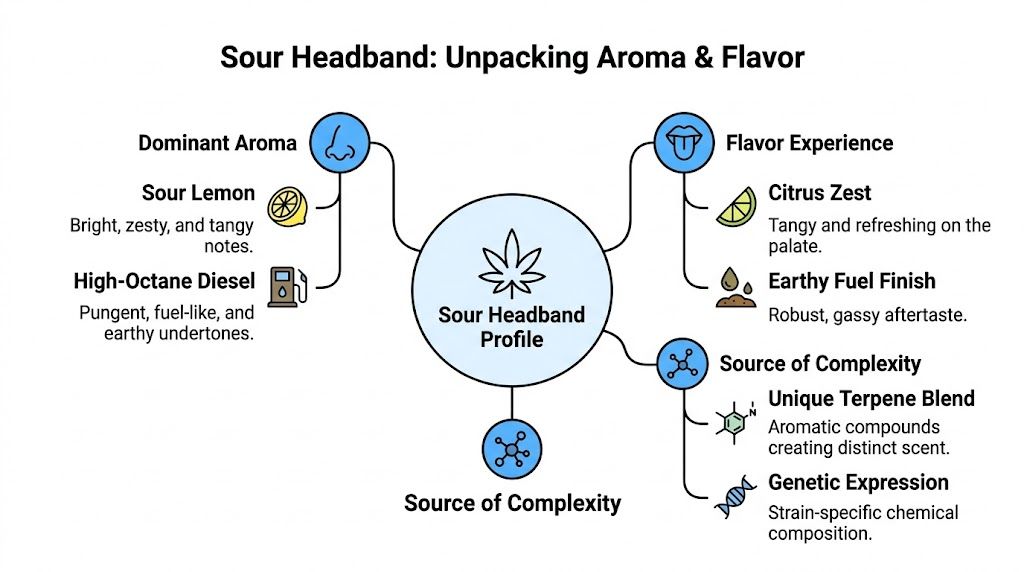
If Sour Headband had a handshake, it would be the smell. Open the jar and you’ll usually get hit with a mix of high-octane diesel and sour citrus before anything else.
That aroma isn’t just branding. It comes from the terpene profile, which helps many consumers understand why one strain feels “right” while another doesn’t, even when the THC numbers look similar.
The three terpenes to know
Sour Headband is commonly led by beta-caryophyllene at 0.3 to 0.7 percent, limonene at 0.3 to 0.6 percent, and myrcene at 0.2 to 0.8 percent. Aggregate lab data also shows total terpenes reaching 1.8 to 3.0 percent by weight, which contributes to the strain’s diesel-citrus aroma. The same source notes user-reported relief for stress at 39 percent and depression at 36 percent (Joint Commerce’s Sour Headband strain guide).
Each terpene plays a different role:
- Beta-caryophyllene often brings the peppery, spicy edge. In plain language, it helps keep the profile from tasting flat or overly sweet.
- Limonene is the bright one. It’s the citrus peel note that makes the nose feel lively instead of murky.
- Myrcene adds the earthy base. Think of it as the deeper tone under the sharper top notes.
How to smell for quality
A lot of people hear terpene names and tune out. A simpler way to think about it is music.
THC is the volume. Terpenes are the arrangement.
A loud strain with weak terpene expression can still feel blunt. Sour Headband tends to be more memorable when the diesel, lemon, and earthy layers all show up clearly.
Here’s what I’d look for when evaluating flower:
- Fresh jar aroma: You should notice a distinct scent quickly, not a muted or dusty smell.
- Clear citrus-diesel contrast: Strong Sour Headband usually isn’t only sweet or only gassy. It has tension between the two.
- No stale finish: If the aroma drops off fast or smells hay-like, the batch may be past its best.
Why flavor often predicts experience
Flavor won’t tell you everything, but it can hint at the style of the high.
When Sour Headband shows strong limonene and caryophyllene expression, many people describe a cleaner, more alert feel. When the profile leans heavier and earthier, the body side may feel more noticeable.
That’s one reason terpene testing matters. It helps turn “I liked that one” into something more useful and repeatable.
What to Expect from the Sour Headband Experience
Consumers don’t choose Sour Headband for one single feeling. They choose it because the experience tends to unfold in stages.
The opening is often the part people remember first. There’s usually a mental lift, a sense that your thoughts have more motion, and a subtle sharpening that can make routine tasks feel less dull.

The first phase
With a creative, upbeat start, Sour Headband often earns its daytime following.
Some users describe a creative, upbeat start that works well for writing, design work, cleaning, organizing, or getting through a busy afternoon without feeling mentally fogged. It doesn’t always read as “speedy.” It often reads as engaged.
The classic headband feel
Then there’s the name.
Some consumers report a light pressure or wrapping sensation around the forehead or temples. For many, it feels more curious than uncomfortable. It can give the strain a focused, almost narrowed quality, like your attention has been gently pulled into the present.
That’s also why this cultivar stands out from generic “energetic” strains. It tends to have shape to the high.
The body side that follows
Sour Headband isn’t just cerebral. A body effect usually trails behind the mental rise, and that’s what makes it useful for people who want to stay functional.
The experience has been described as a mentally arousing uplift with physical relaxation, suitable for daytime tension or pain relief while preserving clarity. User data also notes headache mitigation at 27 percent, along with an energizing body buzz and strong ratings for chronic pain and migraine support (Sunnyside Sourband review).
A good Sour Headband session often feels like your shoulders loosen before your ambition disappears.
If you want a visual breakdown of the strain and its appeal, this quick video adds useful context.
Who usually enjoys it most
Sour Headband often fits people who want:
- Creative momentum: Helpful for sketching, brainstorming, journaling, or music.
- Task-friendly relief: Better suited to an active day than a strain built for deep sedation.
- A balanced high: Mental movement up front, body ease later.
If you’re looking for a knockout nighttime strain, this may not be your first pick. If you want to stay present and still feel relief, it makes much more sense.
Dosing and Consumption Tips for Best Results
Sour Headband can reward a measured approach. It’s potent enough that how you consume it matters almost as much as which batch you buy.
Because it commonly falls in the 18 to 25 percent THC range, tolerance management matters. The available guidance also notes that consumers should think about timing for daytime productivity versus evening use, and about how flower and concentrate formats can change the duration and intensity of the long-lasting cerebral high. Rotating strains can help maintain sensitivity over time (Leafly Sour Headband reviews page).
If you’re new to Sour Headband
Start smaller than your ego wants to.
A couple of inhalations from flower or a vape is often a more sensible starting point than chasing a full effect immediately. Then wait and assess it. With strains that have a strong cerebral side, the “I don’t feel much” mistake is common.
Practical rule: Start with the smallest amount that lets you notice the character of the strain.
Choosing the format
Different formats shape the experience differently.
- Flower: Best for people who want the full profile and easier dose control.
- Vape: Often more convenient and discreet, with a quicker, cleaner-feeling session for some users.
- Concentrates: Better left to experienced consumers who already know they enjoy this terpene and effect profile.
If you prefer very controlled intake, some shoppers who are still learning their limits end up doing better with measured products such as THC tincture options, even if they enjoy Sour Headband’s effect style in flower form.
Timing and tolerance
Sour Headband often makes more sense earlier in the day or in the late afternoon than right before bed, especially if you’re sensitive to mentally active strains.
For regular consumers, rotating it with lower-intensity or differently balanced cultivars can help keep it feeling distinctive. Otherwise, a favorite can become background noise.
Potential Side Effects and Safety First
A strain can be excellent and still require respect.
With Sour Headband, the main issue usually isn’t quality. It’s overdoing it. Because the profile can start in the head before it settles into the body, taking too much too quickly can make the experience feel sharper than intended.
Common cannabis side effects like dry mouth and dry eyes are the easy part. Water, a comfortable setting, and a slower pace usually handle those well.
The more important caution is for people who already know they can get uneasy with potent, sativa-leaning flower. Sour Headband’s mental lift is part of the appeal, but it can also feel intense if your dose is too high or your environment is stressful.
A few simple habits help a lot:
- Go slow on the first session: Especially if the aroma is strong and the batch is clearly terpene-rich.
- Use it in the right setting: Not when you’re already overstimulated, rushed, or dehydrated.
- Pause before redosing: Let the strain show you its full shape first.
Responsible use isn’t a buzzkill. It’s how you get the experience you wanted in the first place.
Find Lab-Tested Sour Headband on Long Island
Not every Sour Headband jar is trying to tell the same story.
That’s because genetic ratios can vary across producers, and those phenotype differences can change the flavor, the balance between energy and relaxation, and how strongly the classic “headband” feel comes through. Existing guidance also notes that lab testing data is critical for identifying which versions deliver consistent effects and diesel-forward expression (AllBud’s Sour Headband overview).
What to look for on the label
When you’re standing at the menu, a smart Sour Headband purchase starts with three questions:
| Check | Why it matters |
|---|---|
| THC and cannabinoid panel | Confirms potency and helps you decide if the batch fits your tolerance |
| Terpene profile | Helps predict whether the batch leans bright, gassy, earthy, or more balanced |
| Cultivator consistency | Tells you whether this producer tends to deliver a repeatable version of the strain |
How a good budtender helps
A good budtender doesn’t just read the name back to you. They help translate the lab report into plain English.
That matters with Sour Headband because one grower’s version may feel more uplifting, while another feels more body-heavy. If you’ve ever bought a strain you loved once and found it underwhelming later, phenotype variation is often the reason.
For consumers who already know they enjoy a brighter, active vape experience, comparing similar options can also help. A product like a Pineapple Express cart may appeal to the same shopper, but in a fruitier, less diesel-forward lane.
The label tells you what the product is called. The lab report tells you what it’s likely to do.
Your Sour Headband Questions Answered
Is Sour Headband more energizing or more relaxing
Usually both, but in sequence.
Many people notice the mental uplift first, then the body ease later. If you take a small amount, it may feel more productive than sleepy. Larger amounts can make the relaxing side more noticeable.
Is Sour Headband good for beginners
It can be, but only for patient beginners.
This isn’t the best strain for reckless first sessions. It’s better for new consumers who are comfortable starting very low, paying attention, and waiting before taking more.
Why does one Sour Headband batch feel different from another
Because strain names don’t erase phenotype variation.
Different growers can bring out different traits, which is why aroma, terpene profile, and lab testing matter so much with this cultivar.
What should Sour Headband smell like
Most quality batches lean toward diesel, sour citrus, and an earthy finish.
If it smells flat, stale, or generic, it may not be the expression you’re looking for.
When is the best time to use it
That depends on your tolerance and your goal.
For many adults, it fits best when they want to stay mentally present and physically comfortable. If you’re sensitive to active strains, save it for a time when you don’t need to wind straight into sleep.
If you want help finding a lab-tested Sour Headband or a similar strain that fits your routine, visit Strong Strains. Our East Setauket team helps Long Island adults shop by effects, terpene profile, and potency, with premium flower, vapes, concentrates, tinctures, pickup, and local delivery available.