
You’re exhausted, but your brain didn’t get the memo.
It’s late on Long Island. The house is finally quiet. The dishwasher stopped humming, your phone is face down, and you’ve already done the classic routine: flip the pillow, adjust the blanket, check the clock, regret checking the clock. Maybe your shoulders still feel tight from the day. Maybe your mind keeps replaying tomorrow’s to-do list. Maybe you’re not wide awake exactly. You’re just not dropping into sleep.
That’s where a lot of adults start looking into sweet dreams gummies. Not as a magic off switch, and not as something to take blindly, but as a more intentional sleep tool. The idea is simple: a chewable product built with cannabinoids and other calming ingredients that may support relaxation, help your body settle, and make bedtime feel less like a fight.
Some people start with herbal options first. If that’s you, this roundup of natural sleep aids that work is a useful way to compare the broader context before deciding whether cannabis belongs in your routine.
The key is knowing what you’re buying and why it’s made for sleep. A gummy meant for bedtime is very different from a random edible grabbed for fun. The ingredients, the dose, the timing, and the testing all matter.
The Long Island Search for a Good Night's Sleep
Sleep problems rarely look dramatic from the outside. They look ordinary.
You get through work. You answer texts. You make dinner. You do the bedtime routine for the kids, or you finish one more email, or you watch one more episode because you’re trying to unwind. Then bedtime arrives and your body feels tired, but your mind stays in motion.
That’s a common reason adults start asking about sweet dreams gummies at dispensaries. They’re not always looking to feel “high.” A lot of the time, they want something more specific. They want help getting quiet enough to fall asleep, or staying asleep without feeling wrecked the next morning.
On Long Island, that search usually comes with practical questions:
- Will this help me fall asleep faster
- Will I wake up groggy
- How much should I take
- What’s the difference between CBD, THC, and CBN
- How do I know the gummy contains what the label says
Those are the right questions. Sleep products deserve more scrutiny than impulse buys because bedtime is where poor dosing decisions get noticed fast.
Sleep support works better when you match the product to the problem. Trouble falling asleep, waking up at night, and stress-related restlessness don’t always call for the same formula.
A well-made sleep gummy is closer to a targeted blend than a generic edible. Some products lean on CBD for a calmer, non-intoxicating feel. Some include melatonin. Some use CBN, a cannabinoid many shoppers associate with nighttime products. More advanced formulas combine cannabinoids with terpenes or botanicals to aim at several parts of the sleep experience at once.
That’s why the label matters. “Sweet dreams” is a promise on the front of the package. The full story is on the back.
What Exactly Are Sweet Dreams Gummies
Sweet dreams gummies are bedtime edibles built to do a specific job. They give adults a measured, chewable way to use cannabinoids and other sleep-focused ingredients without smoking or vaping before bed. For many Long Island shoppers, that matters because nighttime routines need to feel predictable, not like guesswork.
The phrase on the package can still cause confusion. Two products can both say “sleep” and work very differently.
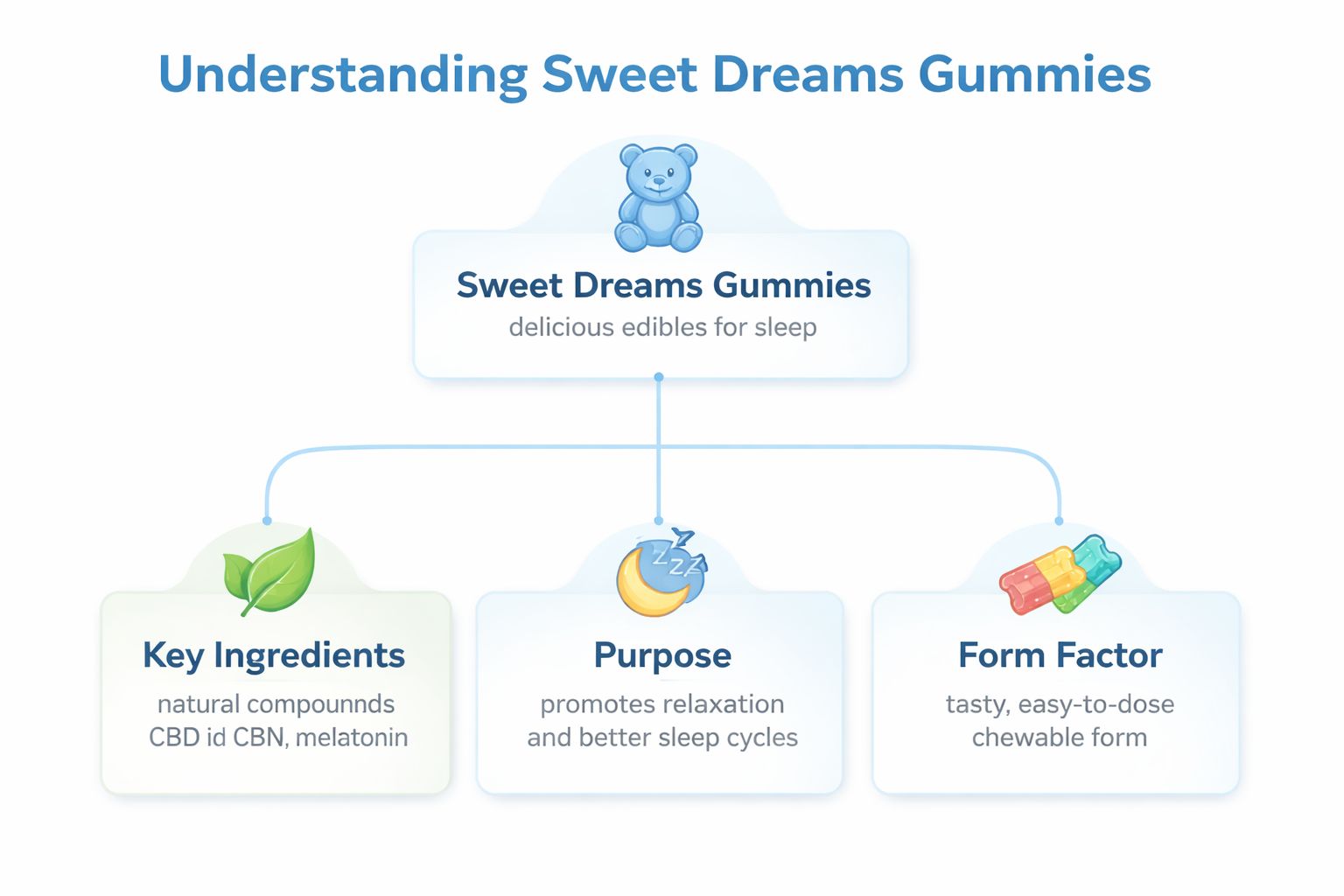
A better way to read these gummies is like reading a team roster. Each ingredient has a role, and the formula only makes sense when you know who is doing what.
The main players in the gummy
CBD is usually included for a calmer, less buzzy experience. It does not create the classic THC intoxication, so it often appeals to adults who want evening support but feel cautious about psychoactive effects. People dealing with mental overactivity at bedtime often start by learning how cannabis compounds may support stress relief, especially if racing thoughts are part of the problem. Our guide on how cannabis can help manage stress and anxiety can help with that background.
THC is the cannabinoid tied most closely to the “high” feeling. In a sleep gummy, the goal is usually different from a daytime edible. A lower or balanced dose may be chosen to help the body settle down, release physical tension, and make the transition into bed feel easier.
CBN often gets the most attention in nighttime formulas. You will see it on many labels designed specifically for sleep support rather than general relaxation. That does not mean every gummy with CBN will feel the same. The amount, the presence of THC or CBD, and the rest of the formula all shape the result.
The supporting cast
Terpenes are plant compounds that influence aroma and effect profile. In sleep gummies, names like myrcene and linalool matter more than candy flavor names because they are selected for a more evening-friendly feel. Terpenes work like seasoning in a recipe. They rarely define the whole dish, but they can change the final character in a noticeable way.
Some formulas also add non-cannabis ingredients. Melatonin is the most familiar example because many adults already know it from the supplement aisle. Other products include botanicals or amino acids aimed at evening calm.
Dakota Labs describes its Sweet Dreams Gummies as a blend of full-spectrum hemp extract with CBD, CBC, CBG, and CBN, along with botanicals such as California Poppy, Holy Basil, Passionflower, and Ashwagandha. That kind of formula tries to address more than one part of the bedtime routine.
Why formulas vary so much
Sleep is not one single problem. One person needs help slowing down mentally. Another falls asleep fine but wakes up in the middle of the night. Another feels physically tense, even when mentally tired.
That is why a stronger sleep gummy is usually built with intent, not just stuffed with trendy ingredients. A simple formula may work well for someone who wants a gentle nudge toward bed. A more layered formula may fit someone who wants cannabinoids, terpenes, and familiar wellness ingredients working together.
Here’s a practical way to sort the label:
| Ingredient type | What it may contribute | Who might care most |
|---|---|---|
| Cannabinoids | Calm, body relaxation, nighttime support | People comparing CBD, THC, and CBN options |
| Terpenes | A more sleep-focused effect profile | Shoppers choosing between similar gummy strengths |
| Melatonin | A familiar bedtime signal | Adults who already use traditional sleep supplements |
| Botanicals | Extra support for winding down | People looking for a broader plant-based formula |
Practical rule: Shop by the ingredient panel, not the dreamy product name.
That habit helps you buy with more confidence, especially at a Long Island dispensary where the menu may include several gummies that sound similar at first glance. The front label sells the idea. The back label shows whether the formula matches your sleep goal.
How Cannabis Compounds Promote Restful Sleep
At 11:30 p.m., the goal is usually pretty simple. You want your mind to stop racing, your body to settle down, and your bedtime gummy to feel predictable instead of random.
Cannabis can help with that because it interacts with systems your body already uses to regulate stress, mood, and rest. One of those systems is the endocannabinoid system, which acts like part of the body’s internal balancing process. Cannabis compounds do not build a new sleep system. They nudge signals that are already involved in winding down.

Why different cannabinoids can feel different at night
Here, labels start to matter.
THC, CBD, and CBN are all cannabinoids, but they do not usually feel the same in a sleep gummy. THC is often the one adults notice most because it can produce stronger body relaxation and a more obvious shift in perception. CBD is commonly used for a calmer, less intoxicating experience. CBN is often included in nighttime formulas because many shoppers look for it specifically in products designed for bed.
The practical takeaway for Long Island shoppers is simple. Two gummies can have the same fruity flavor and nearly identical packaging, yet produce very different bedtime experiences because the cannabinoid mix is different.
Why full formulas often work better than isolated ingredients
A sleep gummy is rarely built around one compound alone. Many formulas combine cannabinoids with terpenes because the overall effect can feel more focused and more intentional than a random edible made only to get you high.
A useful comparison is cooking. Salt by itself does one job. Garlic does another. Add both in the right amount, and the meal tastes more complete. Cannabis formulas work in a similar way. The cannabinoid sets the foundation, while terpenes can shape whether the experience feels heavier, calmer, or more settling before bed.
That combined effect is often called the entourage effect. You do not need to memorize the term. You just need to know why it matters when you are standing in a dispensary in East Setauket comparing two products that list the same milligrams of THC but have very different supporting ingredients.
Onset matters because bedtime has a clock
Sleep products have a small window to do their job well. If a gummy takes too long to come on, some adults assume it failed and take more than they meant to. If it hits too hard or too late, it can throw off the whole night.
That is why formulation matters, not just potency. Some gummies are made for standard edible absorption, which can feel slower and less predictable. Others are designed for faster absorption, which may help bedtime use feel more consistent. The exact experience still depends on the formula, the dose, and your body.
This point is easy to miss when shopping online or scanning a menu quickly. A stronger gummy is not always the better sleep gummy. For many adults, the better choice is the one that matches their actual bedtime routine.
Sleep support often starts before sleep
A lot of nighttime frustration begins with stress, not with sleep itself. If your brain keeps replaying tomorrow’s to-do list, a formula aimed at evening calm may make more sense than a gummy chosen only for its THC number. Our guide to how cannabis can help manage stress and anxiety explains that connection in plain language.
That is one reason experienced budtenders at Strong Strains ask follow-up questions. Are you struggling to fall asleep, stay asleep, or shut your mind off in the evening? Those are different problems, and they often call for different ingredient profiles.
A good sleep gummy is designed around a bedtime job. Calm the mind, relax the body, and arrive at that effect in a time frame that actually fits your night.
You do not need a science background to shop with confidence. You just need to read the formula as a tool, not as a candy label.
Your Guide to Dosing and Timing for Better Nights
It is 10:15 p.m. on Long Island. You took a sleep gummy after dinner, kept scrolling, felt nothing, and took another. By 11:30, both doses arrive at once.
That pattern causes a lot of rough first experiences with edibles. The fix is simple. Give one dose enough time to do its job before you change anything.
Start with your label and your own baseline
Your first night is a test run, not a final verdict.
Read the serving size on the package first. Then match it to your real experience level. If you rarely use cannabis, a full serving can be more than you need. If the gummy contains THC and can be split evenly, many adults do better starting with a partial piece and seeing how that feels on a quiet night at home.
CBD-only sleep gummies are usually more straightforward, but the same rule applies. Start with the label directions, stay consistent for a few nights, and avoid mixing in extra products right away. The goal is to learn what one formula does in your body, in your routine, and at your bedtime.
A good budtender in East Setauket will often ask a practical question here. Are you trying to fall asleep faster, or are you waking up at 3 a.m.? Dose size and product choice can shift depending on that answer.
Timing matters as much as dose
A sleep gummy works a bit like catching the last train. If you show up too early, you spend time waiting and wondering. If you show up too late, you miss the window you wanted.
Take your gummy early enough that it can begin working before you expect to be asleep. Then protect that window. Bright screens, a heavy late snack, or a stressful conversation can make it harder to judge whether the product is helping or whether your routine is getting in the way.
A simple Long Island bedtime test works well:
- Choose a real sleep time: Pick the time you want to be asleep, not the time you plan to put your phone down.
- Dose the same way for several nights: Same product, same amount, similar timing.
- Keep the hour after dosing quiet: Lower lights, reduce scrolling, and skip anything that ramps you up.
- Notice the morning after: Did you fall asleep faster, stay asleep longer, or wake up groggy?
That last step matters more than people expect. Sleep support is not only about how you feel at bedtime. It is also about how functional you feel the next morning.
For adults who want smaller dose adjustments than a gummy allows, a tincture can offer finer control. Our guide to a 1000 mg THC tincture for adjustable nighttime dosing explains how that format compares.
Here’s a quick visual walkthrough if you want a more practical feel for edible use and expectations at bedtime.
If the first night is off, change one thing at a time
A sleepy gummy routine usually takes a little dialing in.
Maybe the amount felt too light. Maybe it helped, but too late. Maybe you got drowsy on schedule and still woke up in the middle of the night. Those are different problems, so they need different adjustments.
Use one product at a time, keep your routine steady, and change only one variable at once. That’s how you figure out whether the dose, the timing, or the formula needs adjustment.
That approach saves money and frustration. If you switch brands, increase the serving, and change your bedtime habits all in the same week, you learn almost nothing. Keep a short note on your phone with the dose, timing, and next-morning result. For Long Island shoppers trying to buy with confidence instead of guessing from a menu, that small habit makes your next dispensary visit much more useful.
Reading Lab Results to Ensure Purity and Potency
You finally find a sleep gummy that looks promising at a Long Island dispensary. The package sounds calming, the flavor looks good, and the dose seems reasonable. Before you buy it, check the part that answers the only question that matters here. Does the product match its label, and was it screened for contaminants?
The document that helps you answer that is the Certificate of Analysis, or COA. A COA is the product’s report card from an independent lab. It shows what cannabinoids are in the gummy and whether the batch passed common safety tests. If a brand makes big promises but cannot show a recent COA that matches the product in your hand, treat that as a warning sign.
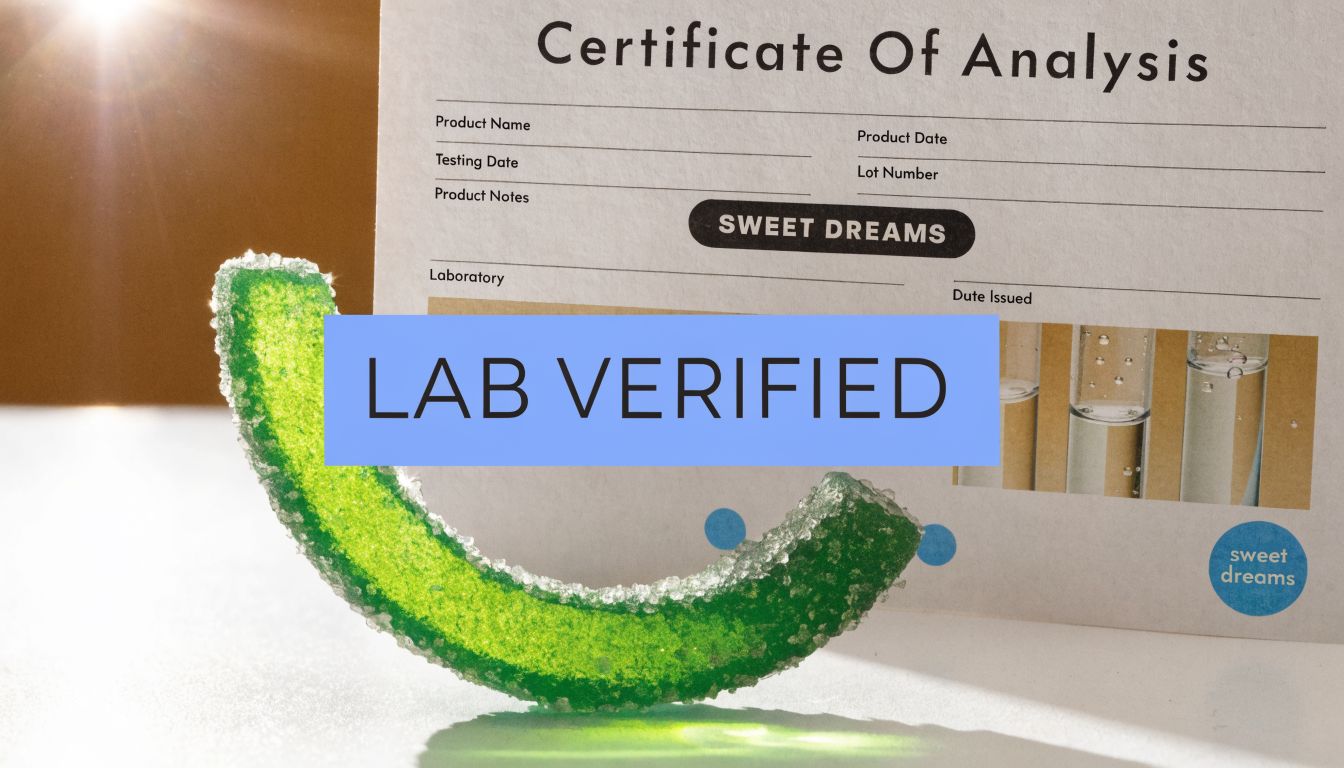
Start with the potency panel
Look first at the cannabinoid section.
This is the part that tells you whether the gummy contains the THC, CBD, or CBN listed on the package. For sleep products, small formula differences can change the feel of the experience. Two gummies may both say “nighttime,” but one may be built for gentle relaxation while another may feel heavier or last longer.
Check for three things:
- Per-piece potency: You want to know what is in one gummy, not just the whole container.
- Cannabinoid breakdown: THC, CBD, CBN, and any other listed cannabinoids should appear clearly.
- Matching batch number: The lot number on the package should match the lot number on the COA.
That batch match matters more than many shoppers realize. A COA from a different production run is like reading last month’s weather report before heading to Jones Beach today. It may tell you something general, but it does not confirm the product you are about to use tonight.
Then confirm the safety screens
Potency answers, “What’s in it?” Purity answers, “What else is in it?”
A proper edible COA usually includes screening for pesticides, heavy metals, residual solvents, and microbes. You do not need to read it like a chemist. You are checking for a simple result. Was this batch tested, and did it pass?
Many reports make this fairly easy to spot. Look for language such as “pass,” “meets specifications,” or a result below the allowed limit. If a report feels hard to read, ask a budtender to walk you through it. That is a normal question, not a technical one.
If you cannot verify potency and safety, you are buying packaging and promises.
Use the COA to compare products with more confidence
This is especially useful if you are choosing between a few bedtime gummies that look similar on the shelf. A clean label and a sleepy product name do not tell you whether one gummy has a little THC with CBD, a stronger THC-forward profile, or added CBN for a more nighttime-focused formula.
Some COAs also include terpene results or other manufacturing details. Those extra details can help explain why one product feels more calming than another with a similar cannabinoid count. Consistency matters too. If you are trying to build a repeatable bedtime routine, you want a product that is made carefully from batch to batch, not one that feels different every time you buy it.
If you are still comparing options, our roundup of Long Island cannabis products worth knowing before you shop can help you narrow the field before you read individual lab reports.
A simple COA checklist
| What to check | Why it matters | What you want to see |
|---|---|---|
| Potency | Confirms the dose matches the label | Clear cannabinoid listing tied to the product batch |
| Purity | Screens for unwanted contaminants | Passing safety results |
| Batch number | Confirms the report belongs to the product in your hand | Exact lot match between package and COA |
| Extra formula details | Helps explain how the gummy may feel | Terpenes or other product-specific notes when available |
You do not need to memorize every line on a lab report. You just need to know how to spot the basics. For Long Island adults shopping for sleep support, that small skill makes it much easier to buy from a trusted East Setauket dispensary with confidence instead of guessing from the front of the bag.
Finding Your Perfect Sleep Gummy on Long Island
It is 10:30 p.m. on a Tuesday in Suffolk County, and you are staring at a wall of gummies that all promise a calmer night. One says THC. Another highlights CBD and botanicals. A third mentions CBN. If every bag starts to blur together, the fix is simple. Start with your sleep pattern, then match the product to that pattern.
That approach works better because “sleep trouble” is not one problem. Trouble falling asleep, waking up at 2 a.m., stress at bedtime, and body discomfort can all call for different formulas. Shopping by symptom is a lot like choosing the right coat for Long Island weather. A rain shell, a fleece, and a heavy winter jacket all solve different problems, even though they belong in the same closet.
Match the gummy to your actual sleep pattern
If falling asleep is the hard part, look for a gummy with a clear bedtime identity. That often means a formula built around THC, CBN, or both, sometimes with calming terpenes or familiar sleep-support ingredients. The goal is not a dramatic effect. The goal is a product that helps your mind and body shift into nighttime mode without feeling messy or overstimulating.
If you stay asleep for an hour or two and then wake up, a broader formula may fit better. Many Long Island shoppers in that situation prefer a steadier cannabinoid mix instead of chasing the fastest possible onset. A balanced formula can feel less like a quick push and more like a longer glide.
Stress creates its own category. If your body is tired but your brain keeps replaying the day, a gentler formula with CBD or supportive botanicals may make more sense than reaching for the highest THC number on the shelf.
Body discomfort is different again. Some adults want a gummy that feels more physically settling than mentally heady. In that case, the full formula matters. THC alone does not tell the whole story.
Sleep gummy ingredient cheat sheet
| Ingredient | What it may contribute | Often a fit for |
|---|---|---|
| CBD | A calmer, less keyed-up baseline | Adults who want a gentler, less intoxicating approach |
| THC | Heavier relaxation and stronger subjective effects | Adults comfortable with psychoactive effects at bedtime |
| CBN | A common ingredient in nighttime formulas | Shoppers specifically looking for sleep-focused products |
| Melatonin | A familiar supplement-style sleep cue | Adults moving from standard sleep aids into cannabis products |
| Myrcene or Linalool | A more evening-friendly feel | Shoppers comparing similar gummies with different effects |
| Passionflower or Ashwagandha | Extra plant-based support around stress or routine | People who like wellness-style blends |
Three common Long Island shoppers
The cautious first-timer
This shopper wants help sleeping without feeling out of control. A clearly labeled gummy with an easy-to-split serving usually makes the learning curve much easier.
The regular cannabis user building a bedtime routine
Experience with edibles does not automatically translate into smart sleep shopping. Nighttime products work best when they are predictable, not just strong.
The supplement shopper crossing into cannabis
This person may recognize melatonin before CBN, and CBD before terpene names. They usually benefit from slower label reading and a quick conversation about how cannabis-derived and hemp-derived formulas can feel different in practice.
The best sleep gummy is the one that matches your specific night, your tolerance, and your routine.
Shopping locally with more confidence
Online menus are useful, but sleep products often make more sense after a real conversation. A good budtender can help translate labels into practical questions: How soon might this start? Is the effect more body-heavy or mentally quieting? Can you comfortably cut the gummy in half?
That matters on Long Island, where shoppers often want a local option they can return to if a product works well. Consistency is part of a sleep routine. If you find a formula that fits, you want to know where to get the same style again without guessing.
Before you shop, it can help to scan a broader list of Long Island cannabis products worth comparing before you buy. That gives you context, so you can tell the difference between a general edible and a true bedtime product.
If you are shopping in person, ask questions that get specific answers:
- Is this better suited for falling asleep or staying asleep
- What cannabinoids are doing the heavy lifting here
- Can I split the gummy easily for a smaller first dose
- Do customers describe it as body relaxation, mental quiet, or both
- Is this a good fit for someone who wants sleep support without a very intense high
For North Shore adults who want that kind of guidance, Strong Strains in East Setauket is one local place to compare lab-tested gummies and tinctures side by side, ask direct questions, and buy with more confidence.
A good purchase should feel clear before you get to the register. If it still feels confusing, the product probably is not specific enough for your needs yet.
Frequently Asked Questions About Sleep Gummies
Will sweet dreams gummies make me feel groggy the next day
They can, but that usually comes down to formula, serving size, and timing.
A gummy taken too late at night can still be active when your alarm goes off. A serving that’s too large for your tolerance can also leave you feeling slow in the morning. The fix is often practical, not dramatic: lower the amount, take it earlier, and keep notes for a few nights.
Products built with CBD or CBN may feel gentler for some people than THC-heavy options, but individual response varies. That’s why cautious experimentation matters.
Can I build a tolerance to them
Some people notice that a product feels less noticeable over time, especially if they use the same kind of gummy every night.
That doesn’t automatically mean the gummy stopped working. Sometimes sleep has improved and the dramatic “knock me out” feeling fades. Sometimes the body adapts. If you find yourself increasing your dose quickly, pause and reassess the routine instead of chasing intensity.
Helpful questions to ask yourself:
- Am I still taking it at the same time each night
- Did my stress, caffeine use, or screen time change
- Am I using the gummy as sleep support or as a catch-all for every rough evening
A consistent bedtime routine often matters as much as the edible itself.
Are these gummies legal on Long Island
For adults 21+, cannabis shopping on Long Island means staying within New York’s adult-use rules and buying from compliant sources. The exact legal status of a gummy can also depend on whether it’s a hemp-derived product or a state-regulated cannabis product.
That’s one reason labels and testing matter. A compliant dispensary should be able to tell you what category the product falls into, what it contains, and how it was tested. If a seller is vague about those basics, move on.
What if I have a bad reaction
Most rough experiences with edibles come from taking too much, taking more too soon, or combining products without a plan.
If a gummy feels stronger than expected, keep it simple. Stop taking more. Sit or lie down somewhere comfortable. Sip water. Reduce stimulation. Remind yourself that the sensation will pass. If you have medical concerns, severe symptoms, or think the reaction may involve an interaction with medication, seek medical help.
This is also why it’s smart to talk with a doctor before starting a new sleep supplement or cannabis routine, especially if you take prescription medications or have underlying health conditions.
How long does it take to find the right one
Usually not one night.
Sleep support is rarely about discovering a perfect gummy on the first try. It’s about narrowing in on the right formula, the right amount, and the right timing. Adults who do this well tend to be methodical. They change one variable at a time and pay attention to patterns rather than expecting instant perfection.
“Start low and go slow” sounds basic, but it’s still the most useful advice in the category.
That rule protects beginners, but it also helps experienced consumers make better decisions. Bedtime products reward patience.
If you’re comparing sleep gummies and want help narrowing down the right formula, serving style, or lab report, Strong Strains offers a local starting point for Long Island adults who prefer clear product guidance, tested options, and a straightforward in-store or delivery experience.