
You’re standing at the edible shelf, looking at a package that says 100 mg THC, and your brain immediately splits in two. One side says, “That sounds strong.” The other says, “But is that strong for the whole package, or for one piece?”
That hesitation is smart.
A lot of Long Island shoppers run into the same question when they move from flower or vapes into edibles. The label looks simple, but the experience behind it isn’t. With high-potency products, the difference between a smooth night and a rough one usually comes down to understanding how the dose is packaged, how your body processes it, and how patient you are after taking it.
A 100 mg edible product can be a great fit for some adults and a very poor fit for others. The number alone doesn’t tell the whole story. Your metabolism matters. Your tolerance matters. Whether you ate dinner matters. Even medications and genetics can change how the same edible lands.
The Allure and Mystery of 100 mg THC
A customer picks up a gummy pack, flips it over, and sees 100 mg THC on the label. Then they spot a chocolate bar with the same number. Then a beverage. Same number, different formats, different brands, different expectations.
That’s where confusion starts.
Some people see 100 mg thc and assume it means one massive serving. Others assume it’s standard because they’ve noticed that many legal products seem to land around that total package amount. Both reactions make sense, and both need context before anyone opens the package.
Why that number gets attention
A 100 mg label carries a certain gravity. It signals potency, but it also signals structure. In many legal markets, that number often appears as the total THC in the full package, not the amount you should take all at once.
For experienced consumers, that total package size can feel practical. It gives them room to choose their preferred serving without buying an oversized product. For newer consumers, it can look intimidating because the label highlights the total before the serving breakdown.
Practical rule: Treat the front label as the headline, not the full story. The important safety detail is the THC per serving.
Why shoppers ask the same questions
Most edible questions come down to a short list:
Is 100 mg a lot
For an edible package, it can be normal. For a single sitting, it can be far beyond what many adults want.Is it stronger than smoking
Usually, people experience edibles very differently from inhaled cannabis.Can I cut it down
Often, yes. Gummies, scored chocolates, and measured tinctures are built for portioning.Will it hit everyone the same way
No. Two adults can take the same amount and report very different effects.
That last point matters most. People often want one universal answer, but cannabis doesn’t work like a one-size-fits-all product. A label tells you what’s in the package. It doesn’t tell you how your liver, diet, or tolerance will respond.
What a premium shopper should know first
If you’re browsing legal edibles in New York, think like a careful buyer, not a thrill seeker. Start by separating package potency from personal dose. Then look at the product format. A gummy from Wyld or Wana, a chocolate from Kiva, or a drink from Ayrloom may all be easy to portion, but they still need a deliberate approach.
The right mindset is simple. Respect the number. Don’t fear it, and don’t underestimate it.
The True Potency Behind 100 mg Edibles
A customer sees “100 mg THC” on the package and assumes that number describes one intense serving. In many legal edibles, it describes the full package instead.
That difference matters because package potency and personal dose are not the same decision. A gummy bag may hold 100 mg total THC while each gummy contains a smaller, measured amount. A chocolate bar may reach 100 mg across the whole bar, with each square designed as a separate serving. The large number on the front tells you how much THC is inside overall. The smaller serving number tells you what you are taking at one time.
Total package versus actual serving
Many shoppers get tripped up. They read the headline number and miss the serving panel.
A simpler way to read the label is to treat it the way you would treat a bottle of wine or a carton of espresso concentrate. The total amount in the container matters, but your experience is shaped by the portion you pour. With edibles, the serving size is the number that should guide your choice, especially if you are trying to dial in a predictable result.
In New York’s regulated market, that structure is common for a reason. Licensed products are often portioned to help adults choose smaller, repeatable amounts instead of guessing.
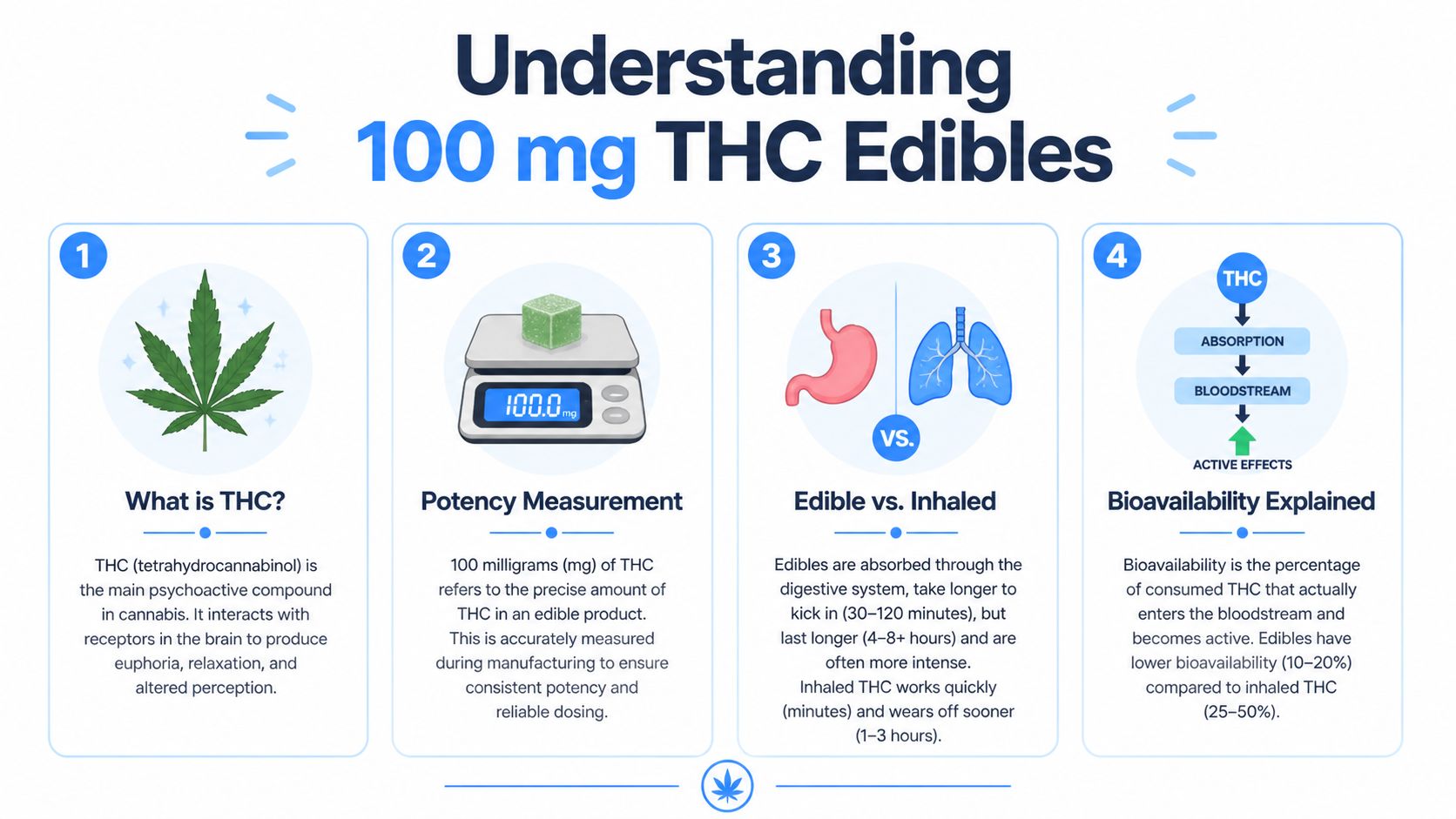
Why edibles can feel stronger than the number suggests
Edibles follow a different route through the body than inhaled cannabis. After you eat THC, it moves through digestion and then the liver, where part of it is converted into 11-hydroxy-THC. That form often feels heavier, longer-lasting, and harder to gauge in real time than inhaled THC, as explained in Kizmah’s overview of 100 mg THC potency.
The practical takeaway is straightforward. A familiar number on a label does not guarantee a familiar experience.
That is why two adults can take the same edible and report very different outcomes. One may feel pleasantly settled. Another may feel far more intensity than expected. Metabolism plays a big role here. Your liver is doing chemical processing, not simple delivery, and that process varies from person to person based on tolerance, body chemistry, what you have eaten, and how quickly your system handles cannabinoids.
Why metabolism changes the experience
Metabolism helps explain the mystery around 100 mg better than generic “start low” advice ever could.
Some people process edibles slowly and feel a delayed, drawn-out build. Others convert THC more efficiently and feel a stronger wave once it arrives. Dinner can change the pace. So can an empty stomach. Even a shopper with years of experience smoking may be surprised by an edible because inhalation and digestion are different systems with different timing and different intensity.
For that reason, 100 mg in edible form sits firmly in high-potency territory as a single dose. For an experienced consumer, that package may be useful because it offers multiple measured servings. For a newer consumer, taking the full amount at once can be far beyond comfortable.
Why 100 mg products remain popular
A 100 mg package still has a clear place on dispensary shelves. It gives experienced shoppers a regulated, labeled product with enough THC to portion across several sessions, and it gives careful shoppers a product they can divide with intention instead of guessing from an unmarked homemade edible.
That is the key distinction. The value of a 100 mg edible is not that everyone should take 100 mg. The value is that a well-made, lab-tested product gives you a defined total amount, so you can choose a dose that fits your own metabolism, tolerance, and plans for the evening.
Navigating the Edible Experience Timeline
You take a gummy after dinner at 7:30, feel nothing at 8:15, and start wondering whether the label overstated the dose. Then it arrives closer to 9:00, and it keeps building after that. That delayed curve is one of the biggest reasons 100 mg products cause confusion.
Edibles move on digestive time, not smoking time. Your body has to break the product down, absorb the THC, and process it through the liver before the full experience becomes clear. A good comparison is a dimmer switch with a lag. You may not notice much at first, then the room keeps getting brighter after your hand has already left the dial.

The first stretch
The opening phase can be misleading.
Some adults feel a faint body looseness, a dry mouth, or a subtle change in focus. Others feel almost nothing until the effects arrive in a more noticeable wave. That difference is part of why a 100 mg edible should be treated with respect in New York dispensaries. The label may be clear, but your personal timing is never identical to someone else’s.
If you are used to inhaled cannabis, people often misread the situation. Smoking gives feedback quickly. Edibles do not. Taking more during that quiet early window is like adding logs to a fire that has not shown flames yet. The heat may already be building underneath.
A smooth edible timeline often looks like this:
Early onset
Effects begin gradually and can be easy to dismiss.Rising intensity
The experience can keep building well after you first notice it.Extended middle
The core effects tend to stay around longer than many shoppers expect.Slow landing
As the experience fades, you may feel sleepy, heavy, or mentally hazy.
The peak is where timing and metabolism show up
The strongest part of an edible session is not always the first part you notice. For some adults, the peak feels warm, immersive, and pleasantly heavy. For others, especially with too much THC on board, it can feel disorienting, fast, and mentally loud.
That gap matters because 100 mg does not hit every body the same way. Two shoppers can eat the same amount from the same package and describe two very different nights. One may feel a delayed but manageable climb. Another may feel a stronger, longer wave because their liver processes edible THC differently. That is why premium dispensary guidance in New York focuses on personal response, not just package strength.
If an edible feels stronger than expected, stop adding variables and make the next hour as calm and boring as possible.
For some readers, a visual breakdown helps more than a written one:
What a smooth session looks like
The adults who handle high-potency edibles best usually keep the plan simple. They dose in a familiar setting, avoid alcohol, and leave enough time for the full arc of the experience. They do not judge the edible too early.
If you want more precision than a gummy can offer, a measured product can help you control the timeline with more intention. A guide to 1000 mg THC tincture dosing shows how many experienced consumers use measured servings when they want tighter control over how much they take.
If the session starts feeling heavier than expected, keep the response practical:
Sit somewhere calm
A quieter setting can reduce stimulation and help you settle.Sip water
Small physical comforts can make you feel more grounded.Skip alcohol
Mixing substances can make the effects harder to read.Remind yourself that the peak passes
Even an uncomfortable edible experience changes with time.
With inhaled cannabis, you usually know the direction quickly. With a strong edible, the full picture may not show up until much later. Patience is part of the dose.
How to Split 100 mg for a Perfect Dose
The smartest way to approach 100 mg thc is to stop treating it like one dose and start treating it like a dose bank.
That’s especially important because the same 100mg amount can land very differently from person to person. Individual liver enzyme differences such as CYP3A4 can alter THC absorption rates by 30 to 50%, which helps explain why one person may find a dose moderately strong while another feels severe anxiety from the same amount, as discussed in this metabolism-focused guide to 100 mg THC.
Why personal dosing beats generic advice
A dosage chart is a starting point, not a promise.
Your result can shift based on genetics, food intake, medications, and general body chemistry. That means the “perfect” dose isn’t the same for every adult, even if they buy the exact same gummy pack. A chocolate from Kiva, a gummy from Wana, or a measured oil from another brand can all be split thoughtfully, but the amount that feels ideal still has to be discovered, not assumed.
For people who want precision beyond gummies or chocolate squares, a measured oil can offer another route. A product such as a 1000 mg THC tincture guide can help you think about potency in a more calibrated way.
Splitting a 100 mg edible product
The easiest example is a 100mg package with 10 pieces, where each piece contains 10 mg.
| Dose Level | THC per Serving | How to Achieve It from a 100mg 10pc product | Typical User & Effects |
|---|---|---|---|
| Microdose | 1 to 2.5 mg | Cut one 10 mg piece into smaller portions | Adults seeking a very subtle effect or a cautious first trial |
| Low dose | 5 mg | Take half of one 10 mg piece | Adults who want a manageable, lighter edible experience |
| Standard single serving | 10 mg | Take one full piece | Adults with some comfort around edibles who want a fuller effect |
| High dose | 25 mg+ | Combine multiple pieces carefully | Experienced consumers only, with a higher chance of intensity or discomfort |
| Full package | 100 mg | Consume all 10 pieces | Veteran-level territory. Not appropriate for most adults |
A practical way to portion it
Here’s the cleanest way to handle a 100 mg package at home:
Read the serving math first
Don’t open the package until you know how much THC is in each piece.Choose your target before consuming
Decide whether you want a microdose, a light evening dose, or something stronger.Cut or separate the edible in advance
Don’t eyeball a gummy after you’ve already started feeling effects.Wait before changing course
Give the first serving time to develop before you consider any adjustment.
Dose check: If you’re debating whether to take more, that usually means it’s too early to decide.
Common mistakes people make with 100 mg products
Some mistakes show up again and again:
Confusing the package total with one serving
This is the biggest labeling error people make.Assuming smoking tolerance equals edible tolerance
It often doesn’t.Taking more because the first piece “did nothing”
Delayed onset creates false confidence.Choosing a high dose in an unfamiliar setting
Strong edibles pair best with low-pressure environments.
The phrase “start low, go slow” still matters. But the better version is more personal. Start with a serving that matches your own history, then adjust only after you’ve seen how your body handles that exact product.
Common 100 mg THC Products at Your Dispensary
Once you understand that 100 mg often refers to the full package, the shelf starts making more sense. You’re no longer shopping by one big intimidating number. You’re comparing formats, flavor, serving design, and how easy the product is to portion.
Different product types also create different rituals. Some people want a single gummy after dinner. Others prefer a square of chocolate, a measured tincture, or a beverage they can sip slowly.
Gummies and chewables
Gummies are often the easiest format for most adults to understand. They’re portable, discreet, and usually divided into clearly measured pieces. Brands like Wyld, Wana, Ayrloom, and Camino are the kinds of names many shoppers recognize when they want approachable portion control.
If your goal is consistency, gummies do a lot of things right. They tend to be easy to count, easy to split, and easy to store. For adults who like routine, that makes them a strong first stop in the edible category.
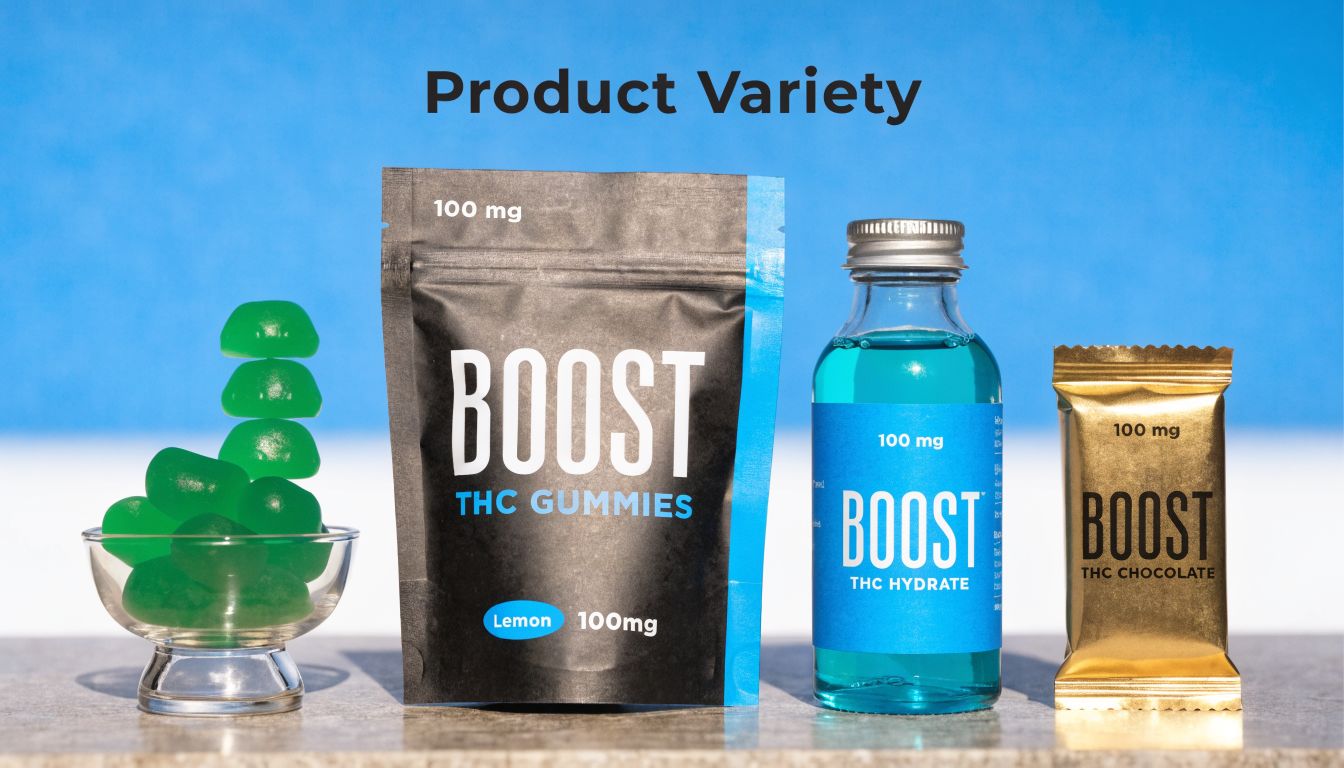
Chocolates baked goods and other edible treats
Chocolate bars and similar edibles appeal to people who want a more classic treat format. A scored bar from Kiva, MFNY, Incredibles, or ChocLit can be especially useful because the product is often physically divided into sections.
That physical demarcation matters. It gives you a visual reminder that the bar is meant to be portioned, not attacked like a standard candy bar.
A few traits make chocolate attractive:
Built-in segmentation
Scored lines make portioning more intuitive.Familiar format
Many adults find chocolate less clinical than measured oils or capsules.Good for planned use
It works well when you want a dessert-style routine rather than an on-the-go product.
Shoppers exploring other cannabis formats may also compare edibles with inhalables before choosing. A good example is this look at a Pineapple Express cart and how inhaled options differ, which helps highlight why onset and control feel different across categories.
Beverages tinctures and precision-forward options
Drinks and tinctures attract a different type of shopper. These formats often appeal to adults who care about flexible dosing and a more fitting experience.
Beverages from brands like Tune | Infused Seltzers, Ayrloom, and Weed Water can fit social settings well because they feel familiar. Tinctures from brands such as Head & Heal or Alchemy Pure tend to appeal to adults who want measured control rather than a snack-like experience.
A product category isn’t “better” because it’s stronger. It’s better when the format makes your dose easier to manage.
The best 100 mg product is usually the one you can portion cleanly, read easily, and repeat consistently.
Understanding NY Labels and Lab Reports
A good cannabis label should answer your main safety questions before you ever consume the product. In New York, that starts with learning where to find the total THC, the per-serving THC, and the batch and testing details.
If you only read the front of the package, you’re shopping half-informed. The actual value is usually in the smaller print and the linked lab information.
Why 100 mg shows up so often
Regulatory standardization has made 100 mg THC the most common limit for single edible packages across 13 states, and in practice a 100 mg product sold in New York is expected to be clearly demarcated into smaller servings, typically 10 servings of 10 mg each, following a portion-control model also used in states like California and Washington, according to the public health review of THC package limits.
That regulatory structure helps in two ways. First, it creates consistency on the shelf. Second, it nudges adults toward serving awareness instead of accidental overconsumption.
What to read before you buy
When you pick up a legal edible in New York, check these details in order:
Total THC in the package
This tells you the full amount across the whole product.THC per serving
This is the number that matters most for actual use.Serving count or demarcation
Gummies may list the number of pieces. Chocolate bars may show scored sections.Batch date and expiration information
Freshness and traceability matter.Testing or QR code access
This points you toward lab verification.
How to think about the COA
A Certificate of Analysis, often accessed by QR code, gives you a closer look at what the product contains and confirms that the item was tested. Even if you don’t read every line of a COA, the presence of accessible lab documentation matters.
It signals a legal, transparent supply chain.
That’s a major dividing line between licensed products and mystery-market edibles. With a legal product, you can verify potency and identify the product batch. With untested products, you’re often relying on packaging claims alone.
A polished package is not the same as a verified product. The label and the lab report should agree.
A fast label-reading habit
If you want a repeatable process, use this quick scan:
- Find the total package THC.
- Find the THC per piece or serving.
- Confirm how the product is divided.
- Check the date and batch details.
- Scan for lab access.
That routine takes less than a minute, and it dramatically improves the odds that your edible experience will match your intent.
Your Guide to Finding the Right Potency at Strong Strains
The smartest takeaway from any 100 mg thc conversation is simple. Potency is only useful when it’s paired with judgment.
A 100 mg package isn’t automatically “too much.” It’s a format. For some adults, it’s a convenient way to buy several moderate servings in one package. For others, it’s a reminder to go slowly and respect the math before taking the first bite.
Match the product to the person
The right potency depends on who’s using it and why.
A cautious edible shopper may do best with a low per-serving gummy they can divide even further. A seasoned consumer may prefer a product that gives them more headroom inside a single legal package. Someone who values precision may lean toward tinctures or clearly segmented chocolates. Someone who wants a more social format may prefer a beverage.
That’s why broad internet advice only goes so far. Real cannabis education happens when the product, the format, and the person line up.
What quality guidance should look like
A premium dispensary experience should do more than point at the strongest item in stock. It should help adults answer better questions:
- What’s your edible history
- Do you want subtle or pronounced effects
- How comfortable are you with delayed onset
- Would a gummy, chocolate, drink, or tincture give you better control
- Are you reading total package potency correctly
That kind of conversation matters more than hype.
For Long Island shoppers who want a wider view of curated options, this guide to the best cannabis products in Long Island for summer 2025 is a useful next read because it shows how different formats and strengths fit different goals.
The premium standard
The best cannabis shopping habits are surprisingly unglamorous. Read the label. Understand the serving. Respect your metabolism. Choose lab-tested products from brands with consistent packaging and clear information, whether that’s 1937, Wana, MFNY, Wyld, Ayrloom, Kiva, Camino, Rythm, Matter, or other trusted names carried in legal channels.
If you remember one thing, make it this. 100 mg THC is not a personality test. You don’t need to prove anything by taking more than your body wants.
A great edible experience usually feels measured, not reckless. You know what you took. You know why you took it. And you gave the product enough respect to let it work on its own timeline.
If you want help choosing the right edible strength, Strong Strains offers Long Island adults a premium, lab-tested cannabis experience with knowledgeable guidance, curated products, in-store pickup, and local delivery. Visit the East Setauket shop to explore gummies, chocolates, beverages, tinctures, vapes, flower, and more with support from a team that takes dosing, safety, and product quality seriously.