
You open your grinder, tap the bottom chamber, and there it is. A little pile of pale gold dust you didn’t want to waste, but also didn’t want to spill all over your tray.
Individuals typically use kief the same way at first. They sprinkle a pinch on a bowl, maybe dust a joint, and call it a day. That works. But it also leaves a lot of value on the table, especially if you’ve been saving clean, dry kief from good flower and want something easier to handle, store, and enjoy with more intention.
That’s where a kief pollen press starts to make sense. It turns loose trichomes into a compact puck or coin that feels less like leftover grinder dust and more like a finished concentrate. For a lot of adult consumers on Long Island, that shift matters. Better handling, cleaner dosing, less mess, and a more refined ritual.
If you’ve never used one, don’t worry. The process is simple once you understand what the tool is doing and why a few small choices, like material, pressure, dryness, and storage, make such a big difference.
From Golden Dust to Solid Gold
A customer will sometimes come in with the same question in different words. “I’ve got a ton of kief. What do I do with it?” Usually they’ve been collecting it for weeks. Sometimes months. They know it’s potent. They also know it’s annoying to work with.
Loose kief has two personalities. It’s premium because it’s concentrated trichomes. It’s frustrating because it’s loose powder. It sticks to your fingers, clings to parchment, scatters with one bad breath, and can feel wasteful if you’re trying to enjoy it carefully.
A pollen press fixes that in a very practical way. It takes that fragile powder and turns it into something solid enough to pick up, store, portion, and use without a mess. The ritual changes too. Instead of fishing around for dust in the bottom of a grinder, you’re working with a finished puck that feels intentional.
Why people fall in love with pressing
Some people want convenience. Others want to make their stash easier to manage. A few are just curious and like the craft of turning one cannabis form into another.
What they usually notice first is this:
- Handling gets easier. A puck is easier to move than powder.
- Sessions get cleaner. You can break off a piece without coating your tray.
- Storage gets better. A compact form is less chaotic than loose kief in a catch chamber.
- The experience feels upgraded. Pressing turns “extra” cannabis into a deliberate product.
Loose kief feels temporary. A pressed puck feels like something you made on purpose.
For people who care about premium cannabis, that difference matters. A kief pollen press isn’t just a novelty accessory. It’s a simple tool that helps you get more value from material you already have.
Understanding the Kief Pollen Press
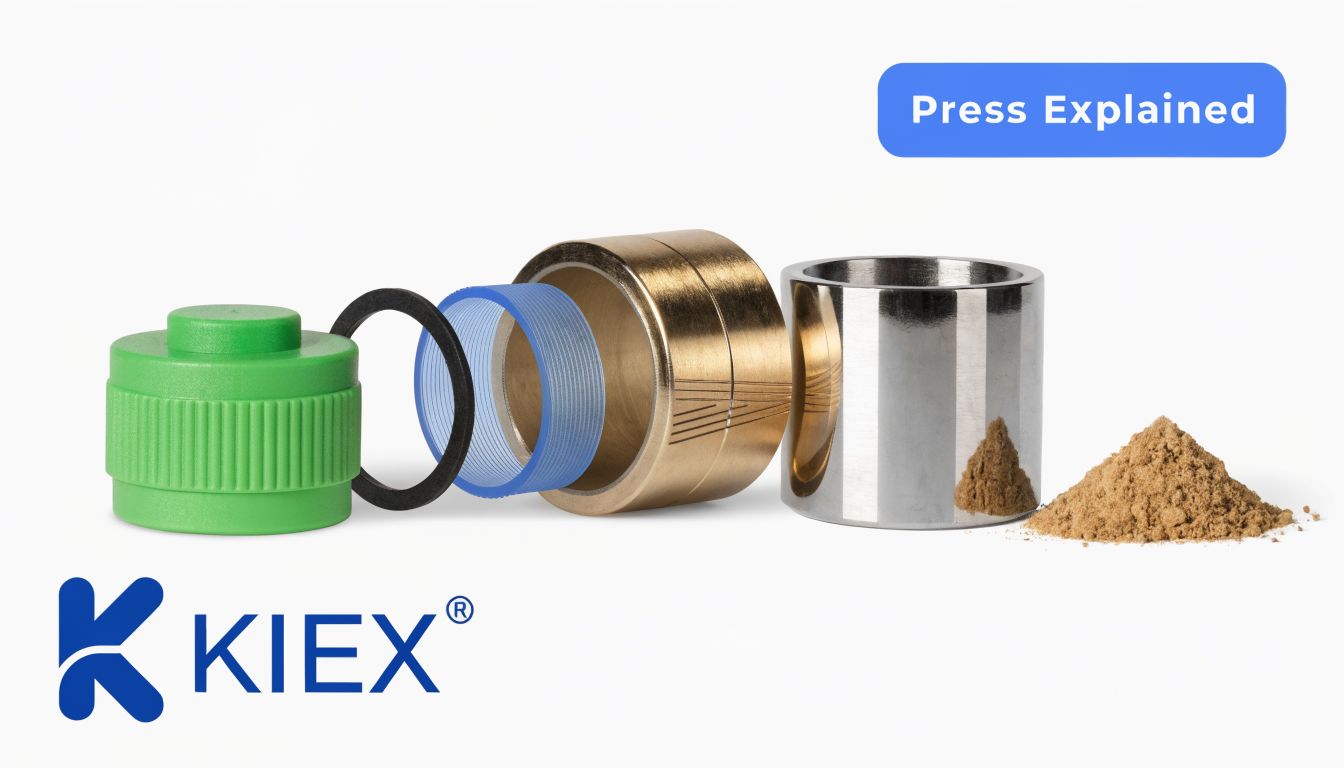
A kief pollen press is a small compression tool that turns loose kief into a firm puck, disc, or pellet. A coffee tamper gives a similar point of reference. Loose grounds are fluffy and hard to manage until pressure packs them into a tighter form. A pollen press does that with collected trichomes.
Some models are simple threaded cylinders. Others use a T-handle for more torque. The design changes, but the job stays the same. The press applies steady force inside a small chamber so the kief holds together in a shape you can handle more cleanly.
What the tool is actually pressing
Kief is not ordinary plant dust. It is mostly glandular trichomes, the resin-heavy structures that hold cannabinoids and terpenes. That matters because the press is working on resinous material, not creating a new extract from scratch.
Pressed kief stays the same cannabis product in a different form. No solvent enters the process. No filler gets added. You are taking something loose and fragile, then compacting it into something denser and easier to portion.
For Long Island shoppers who care about consistency, this is the part to remember. A press can improve handling, but it cannot clean up low-grade kief. Starting with dry, sifted, lab-tested material from a trusted dispensary like Strong Strains gives you a better shot at a stable puck with better flavor retention.
Here’s a simple breakdown of the parts:
| Part | What it does |
|---|---|
| Outer body | Holds the chamber together |
| Plungers or dowels | Compress kief from both ends |
| Threaded cap or T-handle | Applies pressure |
| Chamber | Forms the final puck |
Why the tool exists in the first place
Pressing kief into hash is much older than the metal gadget in your hand. The collection and compression of sifted trichomes goes back to the 7th century in Morocco’s Rif Mountains, where cannabis was screened and pressed for storage and trade, according to this history of kief in cannabis culture.
That same source notes that kief is often 50 to 70% more potent in THC than flower because it concentrates trichomes, which helps explain why people still value this form so highly today.
That history also clears up a common misunderstanding. A modern pollen press is not a chemistry device. It is a compact version of an old idea. Gather resin-rich material, apply pressure, and make it easier to store, share, and use with intention.
Where first-time users get tripped up
New users sometimes assume the press itself creates stronger hash. The press does not increase potency on its own. It mainly changes structure, density, and ease of use.
That difference matters.
If your kief is clean and resin-rich, pressing can give you a neat puck that holds together well. If your kief contains a lot of plant matter, feels damp, or has lost aroma from poor storage, the puck may crumble or taste flat no matter how hard you tighten the tool.
A practical rule helps here:
A pollen press shows the quality of your kief. It does not hide it.
That is why careful shoppers on Long Island often focus on material quality before they focus on accessories. Good input leads to better output, especially when you want a premium, responsible cannabis experience instead of a messy experiment.
How a Pollen Press Transforms Your Kief
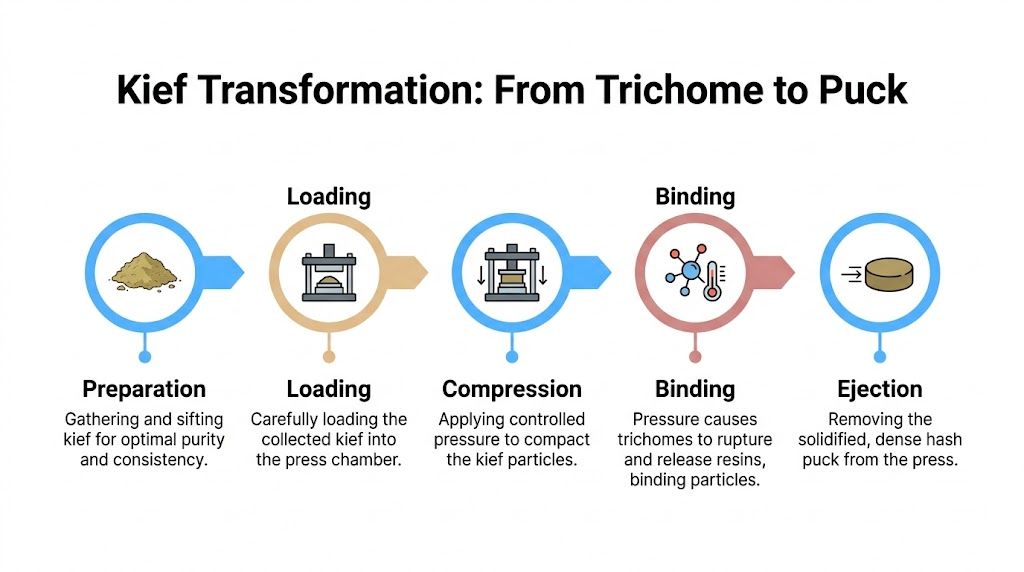
You start with loose, sticky-looking dust in your tray. A day later, that same material comes out as a firm puck you can handle cleanly, portion with less guesswork, and store with less mess. That change feels dramatic the first time you see it, but the mechanism is simple.
Pressure packs the trichome-rich particles tightly together, squeezes out pockets of air, and helps the resin hold as one piece. The press does not create new cannabinoids or rescue low-grade material. It changes shape, density, and how the kief behaves in real use.
What happens inside the chamber
Inside the chamber, loose kief stops acting like dry powder and starts acting more like compacted resin. A useful comparison is wet sand in a mold. Before pressure, it scatters easily. After pressure, it holds a shape because the particles are packed close enough to support each other.
That is why a pressed puck often feels more finished in the hand. It is less fluffy, less likely to spill, and easier to move from jar to bowl without losing material on the table.
Time helps too. A quick squeeze can form a disc, but a longer rest under steady pressure usually gives the trichomes more time to settle and bind. That is often the difference between a puck that stays together and one that cracks when you remove it.
Why the finished puck feels different
The finished puck usually looks darker and feels denser because the material is compressed into a smaller space. You are handling the same kief in a more concentrated form, so each pinch feels more deliberate and easier to measure.
For many Long Island customers, that is a true upgrade. Loose kief can turn every session into a cleanup job, especially if you are loading a bowl over a coffee table, car tray, or balcony rail with wind in the mix. A pressed puck gives you more control and less waste, which supports a more premium, responsible cannabis experience.
What pressing improves
A pollen press tends to improve the parts of daily use that matter most:
- Cleaner handling
- Less accidental spill loss
- More consistent portioning
- A shape that stores more neatly
- A steadier burn than loose powder in many setups
It also makes quality easier to judge. If you buy clean, aromatic, lab-tested kief from a trusted source like Strong Strains, pressing helps preserve what you already paid for instead of letting it drift away in the bottom of a grinder or jar. If the kief is old, damp, or full of plant material, the puck will usually show those problems.
That is the transformation in plain terms. A pollen press turns fragile, messy concentrate into a compact form that is easier to use with care.
A Step-by-Step Guide to Using Your First Press
Your first press should be boring. That’s a good thing. You want a clean tool, dry kief, steady pressure, and no drama.
The biggest beginner mistake is rushing. The second biggest is overfilling. Both usually lead to a crumbly result or a sticky mess when you try to eject the puck.
Get the press ready
Before loading anything, make sure the press is clean and dry. If old residue is stuck inside, your new puck may cling to the chamber wall or pick up stale material.
Keep a few basics nearby:
- Dry kief
- Your kief pollen press
- Parchment paper
- A small scoop or folded card
- Clean hands or gloves
A small piece of parchment can help prevent sticking, especially if you’re still figuring out your press.
Load the chamber correctly
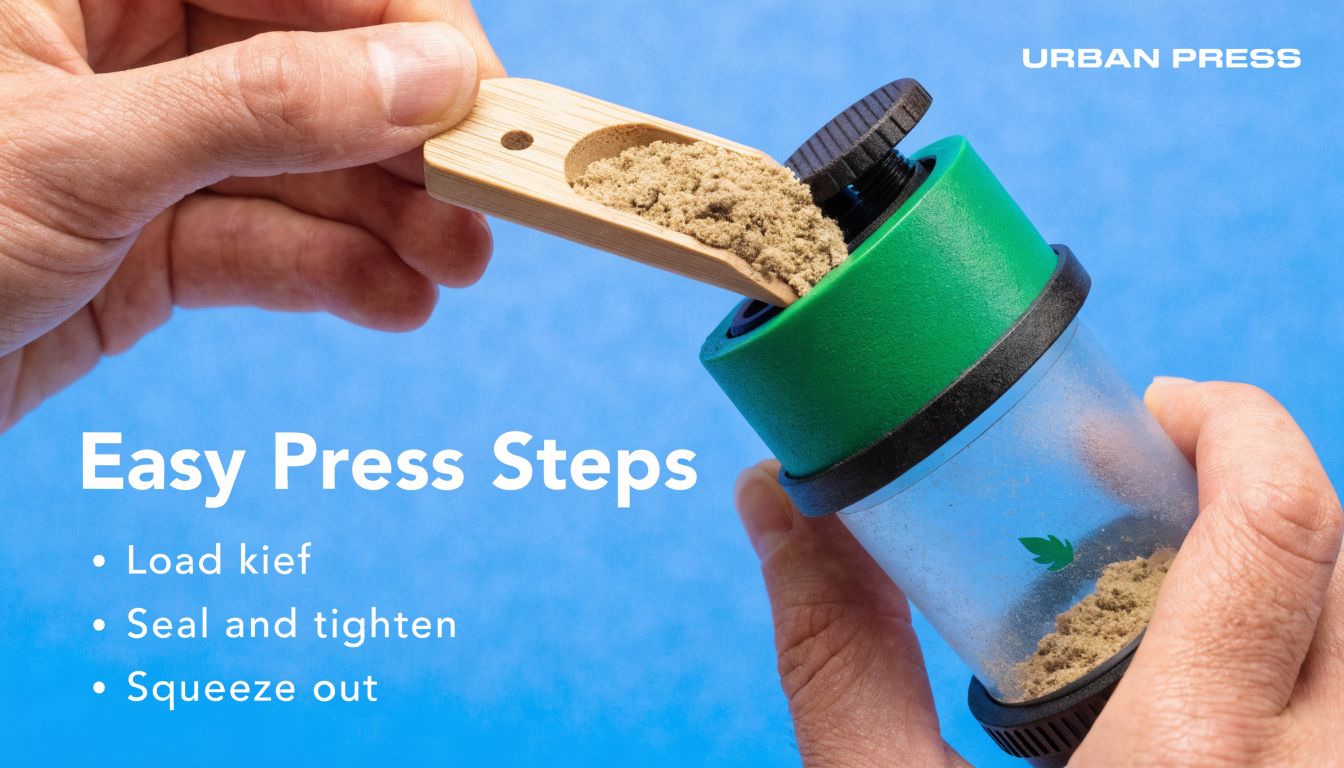
Unscrew the press and place one plunger in position. Add kief slowly. Don’t just dump it all at once if the chamber is narrow.
Tap the body lightly as you fill so the material settles evenly. Uneven loading creates uneven pressure, and uneven pressure creates weak spots in the puck.
A few practical rules help a lot:
- Use fully dry kief. Moist material can create handling and storage problems.
- Pack evenly. Lopsided loads often press poorly.
- Don’t overfill. If the threads barely catch, back off and remove some material.
Apply pressure in stages
Once both plungers are in place, tighten the press until you feel firm resistance. You don’t need to muscle it like you’re trying to break the tool.
Set it aside, then come back and tighten again later. That second tightening often matters more than people expect because the material settles after the initial compression.
If your puck keeps coming out loose, the problem is often patience, not force.
For a visual walkthrough, this demo is a helpful reference:
Wait longer than you think
A lot of beginners want same-hour results. You’ll usually get a better puck if you let the press sit and revisit it. Give the trichomes time to bind.
If you want to experiment later, you can compare a short press and a long press using the same kief. That’s one of the fastest ways to feel the difference in density and durability for yourself.
Eject the puck safely
When you’re ready, unscrew the press slowly. Don’t force the puck out with sudden pressure if it seems stuck. That’s how edges crack.
Instead:
- Loosen carefully
- Use the ejection side of the tool as intended
- Catch the puck over parchment
- Handle it gently at first
A fresh puck can still be fragile, especially if you’re using a basic manual press.
If your first puck isn’t perfect
That’s normal. Most first attempts teach you one of three things.
| Problem | Likely cause | Simple fix |
|---|---|---|
| Puck crumbles | Not enough time or uneven load | Press longer and fill more evenly |
| Puck sticks | Dirty chamber or resin buildup | Clean the press before next use |
| Puck looks rough | Kief quality is inconsistent | Sift cleaner material next time |
You don’t need a perfect coin on day one. You need a repeatable process. Once that’s in place, your results usually improve fast.
Choosing Your Ideal Press Material and Size
Buying a kief pollen press gets easier when you stop thinking in terms of “best” and start thinking in terms of fit. The right press depends on how often you’ll use it, whether you want to add gentle heat, and how much kief you usually save before pressing.
Material matters more than often recognized. So does the handle style. A tiny screw press can be fine for occasional home use. A sturdier stainless unit with greater mechanical advantage makes more sense if you press often and want a tool that can take abuse.
Aluminum versus stainless steel
Here’s the clean comparison.
| Feature | Anodized Aluminum | Stainless Steel |
|---|---|---|
| Weight | Lighter in hand | Heavier and more solid |
| Ease of carrying | Better for portable kits | Better for stationary use |
| Heat tolerance | Good for lighter heat use | Better for repeated higher heat exposure |
| Durability | Good for casual use | Better for frequent use |
| Cleaning feel | Usually smooth and simple | Usually more rugged and hard-wearing |
| Long-term value | Strong entry option | Better for heavy repeat use |
According to this 30mm T-Bar hash press product guide, food-grade 304 stainless steel presses can handle temperatures over 200°F, offer a 2 to 3x longer lifespan than aluminum in commercial settings, and the T-Bar mechanism can apply up to 1000 psi, increasing kief density by 15 to 25%.
That same source also notes that stainless steel provides a non-reactive surface aligned with New York lab-testing expectations, which matters if you care about clean handling and material stability.
Why handle style changes the experience
A small cylinder press with threaded ends is straightforward and compact. It works well if you’re pressing personal amounts and don’t mind taking your time.
A T-handle design gives you increased mechanical advantage. That doesn’t just mean more force. It means more controlled force. For many people, that makes it easier to get a consistent result without straining their hands.
Consider these use cases:
Occasional user
A compact aluminum screw press is usually enough.Frequent home presser
Stainless steel starts to make more sense for durability alone.Someone experimenting with gentle heat
Material heat tolerance becomes a real buying factor.
Size matters more than you think
A larger chamber sounds appealing until you realize it asks more from your material and your technique. Bigger presses can produce bigger pucks, but they also demand more even loading and better pressure control.
Smaller presses are often easier for beginners because they’re simpler to fill, simpler to tighten, and simpler to eject cleanly. If you’re unsure what style matches your habits, a quick conversation with a virtual budtender can help narrow the choice without guesswork.
Buy the press that matches your real routine, not the fantasy version of your routine.
A simple buying framework
Ask yourself four questions before you choose:
- How often will I use it?
- Do I want to experiment with low heat?
- Am I pressing tiny personal batches or larger amounts?
- Do I want portability or maximum durability?
If your answers lean casual, light, and simple, aluminum is often enough. If they lean frequent, heat-assisted, and long-term, stainless steel is usually the smarter buy.
Advanced Tips for Perfect Hash Pucks
Once your basic technique is working, the next jump in quality comes from small refinements. Not more force. Better control.
Experienced users distinguish a puck that merely holds together from one that feels dense, polished, and stable over time. The biggest levers are gentle heat, cleaner handling, and smarter storage.
Using low heat without overdoing it
Some presses are designed to handle light heat-assisted curing. The goal isn’t to cook the kief. The goal is to help resin bind more completely so the puck comes out firmer and less fragile.
The Kannastör Kief Press product information states that its 61/60 anodized food-grade aluminum construction can withstand up to 175°F, and that applying heat for 5 to 8 minutes can create denser, darker hash coins while reducing friability by up to 80% compared to cold-pressed kief.
That’s useful because it shows what many people notice in practice. Gentle heat can improve cohesion. Too much heat can change the material more than you want.
What “better” looks like
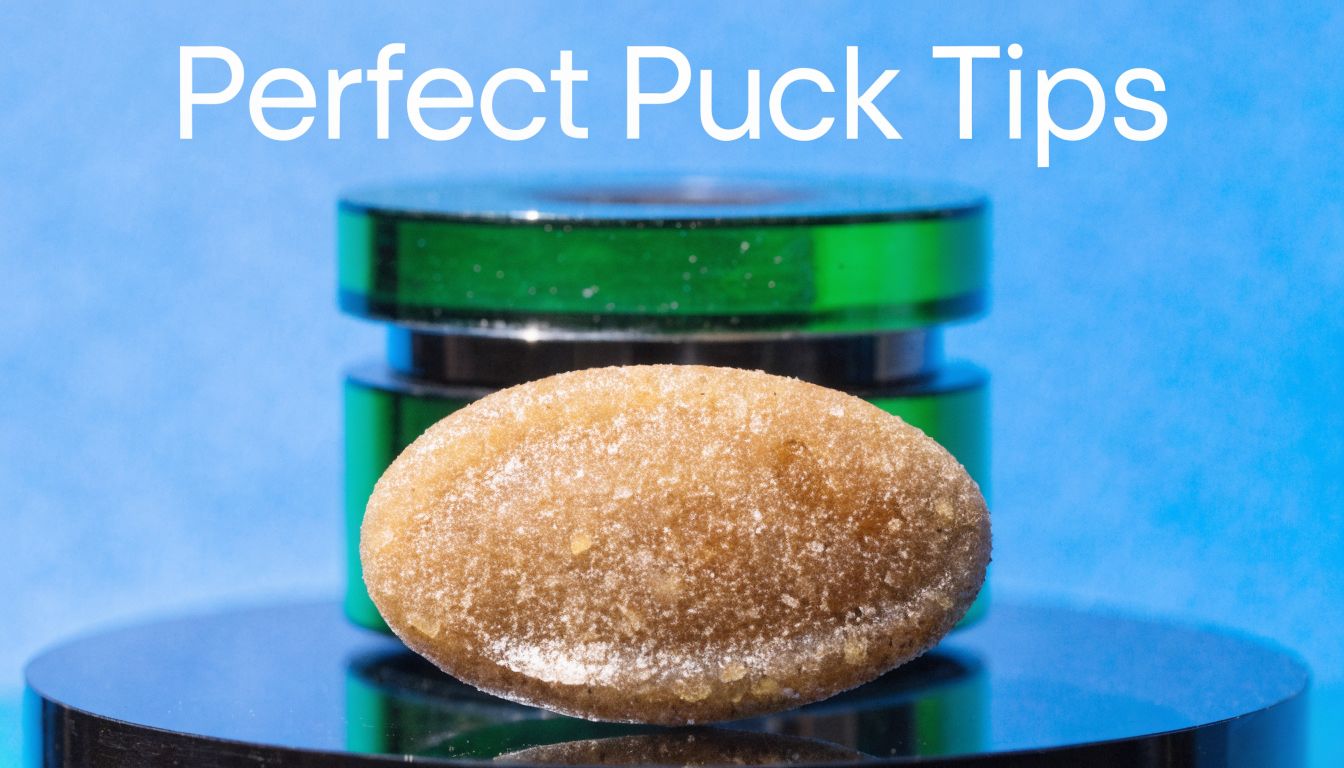
A better puck usually has a few clear traits:
- It ejects with less crumbling
- It holds its shape when handled
- It feels cohesive, not dusty
- It breaks apart deliberately instead of collapsing
Color alone isn’t the whole story. A darker puck can result from heat, but darker doesn’t automatically mean better. Structure matters more than appearance.
Potency preservation is mostly about restraint
People often focus on making the puck denser and forget the more important question. How do you preserve the quality of the material you started with?
A few habits help:
- Start with dry, clean kief
- Keep your press clean between uses
- Use only gentle, controlled heat if your press is rated for it
- Avoid repeated reheating
- Store finished pucks away from air, moisture, and light
Good pressing is less about “maximum transformation” and more about avoiding unnecessary damage.
A simple refinement routine
If you want a more polished result, try this sequence:
- Press dry kief evenly and let it sit properly.
- Retighten rather than relying on one aggressive crank.
- If your tool supports it, use light heat conservatively.
- Let the puck cool before rough handling.
- Store it well as soon as it’s finished.
This kind of consistency usually beats improvisation. The best-looking pucks often come from calm, repeatable habits, not from pushing the tool as hard as possible.
Your Long Island Guide to Buying and Responsible Use
On Long Island, convenience can tempt people to treat concentrates casually. That’s a mistake. Pressed kief may look small and tidy, but it can deliver a more concentrated experience than flower, so responsible sourcing and responsible use matter.
For adults 21+ in New York, accessories are one thing. The more important issue is where your starting material comes from. If you’re pressing kief at home, the quality of that puck begins long before the press. It begins with clean, properly stored, lab-tested cannabis.
What smart local shoppers should prioritize
Don’t choose your material based only on hype, strain names, or how frosty a jar looks under store lighting. Ask practical questions.
Look for:
- Lab-tested products
- Clean handling and storage
- Clear information about potency and format
- Staff who can explain how a product behaves, not just how strong it sounds
That’s especially important if you’re trying to build a premium at-home routine instead of just chasing intensity.
Why local climate changes the conversation
Long Island’s humidity can work against concentrates and against home processing habits. Material that isn’t kept dry and clean can become harder to press well and harder to store safely. That makes disciplined handling more important here than many generic guides admit.
If you’re deciding what kind of cannabis products fit your summer sessions, portability, or stronger concentrate-friendly formats, this guide to the best cannabis products in Long Island for summer 2025 is a useful starting point.
Responsible use still comes first
A pressed puck is compact, which can make it feel deceptively easygoing. Treat it with the same respect you’d give any concentrate. Start low. Use a small amount. Wait and see how it hits before adding more.
If you’re sharing, be extra clear with newer consumers. A little piece of a puck can be more than enough for someone who’s used to flower alone.
Kief Press Frequently Asked Questions
How do I clean a sticky kief pollen press
A sticky press usually means resin has started building up in the places that do the primary work: the chamber, the threads, and the plungers. Take the press apart fully and wipe those areas down before the residue hardens and starts affecting pressure or cleanliness.
That matters even more if you press often. A clean tool gives you more consistent pucks and lowers the chance of introducing dust, moisture, or old material into fresh kief.
What’s the best way to store finished pucks on Long Island
On Long Island, storage is where good work can fall apart. Humid air can soften a puck, dull aroma, and make clean handling harder than many generic guides suggest.
Keep your finished pucks in a sealed glass container in a cool, dry spot. If you want longer-term storage, vacuum sealing adds another layer of protection. According to this guide on properly using a pollen press, anaerobic vacuum-sealed pucks stored in glass at 4°C can maintain 90% potency for 6 to 12 months. The same guide says poor sterilization during home pressing can raise microbial risk, which matters if you want concentrate handling that stays within standards such as less than 1,000 CFU/g for concentrates.
The short version is simple. Store pucks clean, dry, sealed, and cool.
Why did my puck crumble when I pushed it out
A crumbly puck usually points to pressure, packing, or moisture.
If your kief sits unevenly in the chamber, the press compresses one side more than the other, like trying to form a snowball with dry powder on one side and loose flakes on the other. If the material is too dry, too contaminated with plant matter, or not held under pressure long enough, it may not bind into a firm puck.
Try three adjustments next time:
- Fill the chamber more evenly
- Let it sit under pressure longer
- Use clean, dry, sifted kief from a reliable, lab-tested source
That last point makes a bigger difference than many beginners expect. Cleaner input usually presses better output.
Can I use pressed kief right away
Yes. You can break off a small piece and add it to a bowl, joint, or other flower session right after pressing.
Go small first. Pressed kief is compact, so the amount can look modest while still hitting much harder than loose flower. If you shop at Strong Strains, ask for lab-tested products and guidance on formats that match your tolerance, not just the highest number on the label.
Where can I get more help with products and beginner questions
If you want help comparing products, checking pickup details, or getting clear answers before you buy, the Strong Strains cannabis FAQ page is a good place to start.
For Long Island customers building a better at-home routine, that kind of guidance helps you choose cleaner material, press more confidently, and use concentrates responsibly.