
You’re lying in bed, your body is tired, but your brain won’t stop. You replay a conversation from earlier. You think about tomorrow’s to-do list. You flip the pillow, check the clock, and tell yourself that if you fall asleep now, you can still get enough rest.
That’s the point when a lot of adults start looking for help that feels practical, not mysterious. Some want something stronger than tea. Some want an alternative to a harsh next-morning fog. Some just want to understand why one cannabis product makes them melt into the mattress while another leaves them alert and chatty.
Sleep-focused cannabis works best when you stop treating strain names like magic words. “Indica” can be a useful shortcut, but the better question is: what in this product is likely to help with your specific sleep problem? Trouble falling asleep calls for one kind of profile. Waking up in the middle of the night can call for another. A racing mind often needs a gentler approach than physical tension does.
Tossing and Turning? How Indica Can Help You Sleep
A lot of people don’t start with cannabis because they’re chasing a buzz. They start because bedtime has become frustrating.
Maybe you can’t switch off after a long day. Maybe your shoulders stay tight even after you get under the blanket. Maybe you fall asleep, then wake up at the wrong hour and never fully settle back in. If that sounds familiar, you’re not alone, and you’re not overthinking it. Sleep problems rarely feel dramatic from the outside, but they can wear you down fast.
Some non-cannabis habits still matter here. If your sleep routine is chaotic, your room is too bright, or you’re doom-scrolling in bed, it helps to also learn how to stop tossing and turning at night with simple environment and routine changes.
Why nighttime users often lean indica
There’s a reason indica strains come up so often in sleep conversations. In a landmark review of 24,189 cannabis sessions, predominant indica and indica hybrid strains were the most commonly used for managing insomnia symptoms, well ahead of sativa varieties, according to this sleep-strain analysis.
That doesn’t mean every indica will knock you out. It does mean many people already gravitate toward indica-leaning products when they want nighttime relief instead of daytime stimulation.
Cannabis for sleep makes more sense when you match the product to the problem, not just the label to the jar.
A lot of new shoppers get stuck on one question: “What’s the strongest thing you have for sleep?” Sometimes that’s the right question. Often it isn’t. If your issue is anxious mental chatter, a heavy THC product may feel too intense. If your issue is deep body tension or stubborn insomnia, a lighter option may not do enough.
A better way to shop for sleep
The best indica strains for sleep usually make more sense when you sort your experience into a few buckets:
- Can’t fall asleep: You want a profile that settles the mind and body fairly quickly.
- Can’t stay asleep: You may need a format and chemistry that lasts longer through the night.
- Feel tense or achy at bedtime: Look for strains associated with body relaxation.
- Feel mentally wound up: A balanced formula may work better than a THC-heavy one.
If stress is a big part of why you’re awake, it also helps to understand the overlap between sleeplessness and tension. This guide on how cannabis can help manage stress and anxiety gives that side of the picture more context.
Why Indica Strains Make You Tired
A simple rule is often heard first. Indica makes you sleepy, sativa makes you energetic. That shortcut isn’t useless, but it’s incomplete.
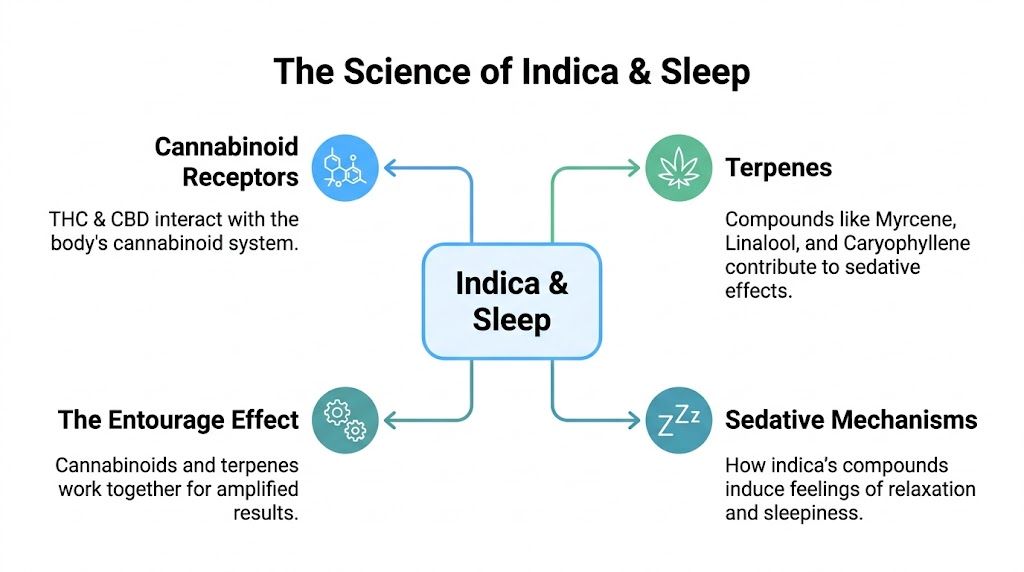
What shapes a sleep strain is the plant’s chemical profile. Consider it an orchestra. THC is the volume. It tells you how forceful the experience may feel. Terpenes are the instruments. They shape whether that experience feels heavy, calming, soothing, or mentally noisy. CBD can soften the sharpness and help some people feel more settled.
THC sets the intensity
THC matters because it can create the body heaviness and mental slowing many people want at night. But more THC isn’t automatically better.
For some users, especially newer ones, very high THC can feel mentally loud instead of restful. That’s why “best indica strains for sleep” doesn’t just mean “highest number on the label.” You’re looking for a profile that points the experience toward rest.
Terpenes shape the sleepy feel
If THC is the volume knob, terpenes decide the mood of the song.
Here are the ones sleep shoppers usually care about most:
- Myrcene: Often associated with heavy body relaxation and sedation.
- Linalool: Commonly linked with a calmer, more soothing feel.
- Beta-caryophyllene: Often discussed when pain, irritation, or physical stress are part of the bedtime problem.
One of the clearest examples is Purple Kush. According to this breakdown of sleep strains, Purple Kush carries THC levels of 17–22% and can bring on profound body heaviness within 20–30 minutes, with myrcene described as a GABA-A receptor modulator that enhances inhibitory neurotransmission in the central nervous system.
That wording can sound technical, so here’s the plain-English version. A terpene like myrcene may help push the nervous system away from “switched on” and closer to “settle down.”
Practical rule: Don’t shop for sleep by THC alone. Ask what terpenes are leading the experience.
CBD can change the experience
CBD doesn’t hit everyone the same way, but many shoppers appreciate it because it can make a nighttime product feel gentler. That matters when your sleep issue starts in the mind, not the muscles.
Some people don’t want a hard sedative effect. They want their thoughts to stop racing. Others want to relax without feeling flattened. In those cases, a balanced formula can make more sense than a classic knockout indica.
Why the combo matters
Cannabis rarely works as a one-ingredient story. A strain’s effect comes from the way cannabinoids and terpenes show up together.
That’s why two products with similar THC numbers can feel completely different:
| What you notice | What may be driving it |
|---|---|
| Heavy limbs and body melt | THC plus myrcene-rich profile |
| Calm without feeling pinned down | Balanced cannabinoids with softer terpene mix |
| More physical relief at bedtime | Beta-caryophyllene in the mix |
| Smoother mental unwind | CBD-inclusive or calming terpene profile |
The useful takeaway is simple. Stop asking only, “Is it indica?” Start asking, “What’s in it that makes it good for sleep?”
How to Match a Strain to Your Sleep Needs
The biggest mistake new shoppers make is treating all sleep problems like they’re the same. They aren’t.
Someone who lies awake for hours has a different need than someone who falls asleep fast but wakes up uncomfortable. Someone whose mind is racing may need a different product than someone whose lower back won’t let them settle. Matching the strain to the problem is where things start to click.

If falling asleep is the hard part
This is the “head hits pillow, brain starts performing” category.
You’ll usually want a product that feels calming fairly quickly and leans into sedative terpene expression. In plain terms, shoppers often look for indica strains known for myrcene-forward effects and a body-led finish.
A good check-in question is: what’s keeping you awake?
- Racing thoughts: A gentler, calming profile may work better than a very forceful one.
- Physical restlessness: A heavier indica can make more sense.
- Stress after a long day: A balanced formula may quiet the landing without feeling overwhelming.
If you want a better feel for how strain categories differ before you narrow your options, this guide to understanding the different strains of cannabis is a helpful starting point.
If staying asleep is the real issue
This problem often gets misread. People think they need “stronger,” when they may need “longer-lasting” or “more body-centered.”
If you wake up because of discomfort, tight muscles, or a general inability to stay settled, terpene profiles associated with body ease may matter more than a flashy THC number. Some shoppers also do better with formats that don’t fade as quickly.
A simple decision lens:
| Sleep issue | What to look for |
|---|---|
| Trouble drifting off | Faster-feeling calming profile |
| Waking from body discomfort | Strains associated with deeper physical relaxation |
| Waking after stress dreams or mental agitation | Gentler, balanced options |
| Sensitive to feeling too high | Lower-THC or CBD-inclusive products |
For anxiety-driven insomnia, gentler can be better
A lot of sleep advice in cannabis goes straight to heavy hitters. That works for some people, but it skips an important group: adults who want rest without an overpowering head high.
According to this guide on indica sleep options, CBD-dominant or balanced options can reduce anxiety-driven insomnia without the next-day grogginess common with high-THC strains. That’s especially useful for newer users and wellness-focused shoppers who want calm more than couch-lock.
That idea matters because bedtime anxiety doesn’t always need maximum sedation. Sometimes the win is reducing the internal noise enough to let natural sleep happen.
Here’s a short walkthrough that helps many first-time shoppers:
- Name the problem first. Is it mental, physical, or both?
- Choose your intensity second. Do you want strong sedation or a soft unwind?
- Check the chemistry third. Ask about THC, CBD, and terpene lead.
- Pick the format last. Fast onset and long duration are not the same thing.
A short visual can help if you want a more general overview of the sleep-and-cannabis connection:
If high-THC products have ever felt too loud, don’t assume cannabis isn’t for you. The formula may have been the mismatch, not the plant itself.
Our Top Indica Strains for Powerful Sedation
Some shoppers want a soft landing. Others want the full shutdown sequence.
If your nights involve stubborn insomnia, strong physical tension, or the feeling that your body just won’t let go, classic heavy indicas tend to stand out. These are the strains people usually mean when they say they want something that feels deep, body-heavy, and clearly nighttime only.

Granddaddy Purple
Granddaddy Purple has earned its place in almost every serious sleep conversation for a reason. It’s widely known for a dense, melting kind of body feel that suits late-night use.
According to this strain profile, Granddaddy Purple contains over 0.5% myrcene, and user surveys suggest it can cut the time it takes to fall asleep by an average of 45%. In practical terms, that’s why so many people describe it as the strain they reach for when they need the day to stop talking back.
Its terpene profile includes myrcene, caryophyllene, and pinene. The effect many users chase is a combination of quieted thoughts and heavy physical relaxation. If your bedtime problem feels like “too much tension everywhere,” this is the kind of profile that often makes sense.
Purple Kush
Purple Kush belongs in the heavy-sedation category. It’s the strain people bring up when they want body heaviness to arrive with purpose, not subtly.
The chemistry behind its reputation also helps explain the feel. Purple Kush is associated with high myrcene expression and a potent sedative direction, which is why experienced users often reserve it for nights when a mild unwind won’t do the job.
Northern Lights
Northern Lights often gets recommended because it tends to feel classic and dependable. Not everyone wants the absolute heaviest option possible. Some want a strain that settles the body and quiets the mind without feeling chaotic or flashy.
It’s a familiar choice for shoppers who want nighttime calm from a famous indica name but still want the experience to feel smooth rather than punishing. Think of it as a foundational sleep strain for people who want reliable evening use.
Quick comparison
Here’s a simple side-by-side way to think about these high-potency options:
| Strain Name | Primary Terpene | Typical THC% | Best For |
|---|---|---|---|
| Granddaddy Purple | Myrcene | Not listed on this source set | Falling asleep faster, full-body evening relaxation |
| Purple Kush | Myrcene | 17–22% | Severe insomnia, strong body heaviness, fast sedation |
| Northern Lights | Not specified in verified data | Not listed on this source set | Classic nighttime calm and physical ease |
How to choose among the heavy hitters
The best pick depends on what “strong” means to you.
- Choose Granddaddy Purple if you want a famous sleep strain with a myrcene-rich reputation and a body-heavy finish.
- Choose Purple Kush if you already know you want pronounced sedation and you’re comfortable with a stronger nighttime profile.
- Choose Northern Lights if you like the idea of a classic indica that many people associate with evening calm.
Some strains don’t feel “sleepy” because they’re trendy. They feel sleepy because their chemistry keeps pushing the experience toward body release and mental quiet.
If you’re newer to cannabis, don’t start here just because these strains are well known. Powerful isn’t always better. Sometimes it’s just more.
Calming Indica Hybrids for First-Time Users
Not everyone wants to feel pinned to the couch. A lot of adults want help sleeping, but they also want to feel in control, clear, and comfortable.
That’s where calming indica hybrids and balanced profiles come in. They can be a better fit for first-time users, low-tolerance shoppers, or people whose sleep problems start with stress rather than deep physical discomfort. The goal here isn’t “knock me out.” It’s “help me exhale.”

What makes a strain beginner-friendly
A beginner-friendly sleep product usually does a few things well. It eases mental tension. It doesn’t rush too hard. It gives you room to notice the effects before they become intense.
That’s why balanced CBD and THC products matter. A softer formula can feel more supportive than dramatic, especially if your biggest concern is waking up groggy or feeling too high before bed.
Profiles worth asking about
You don’t always need a famous “sleep strain” to sleep better. Sometimes the better question is whether the product feels calm, balanced, and manageable.
A few profile types to ask a budtender about:
- CBD-inclusive indica hybrids: Good for shoppers who want relaxation without a strong psychoactive push.
- Lower-THC nighttime options: Better for people who are sensitive to THC or prone to overthinking.
- Calming terpene profiles: Especially useful when you want emotional quiet more than blunt-force sedation.
The verified data includes examples of this softer approach. Midnight is mentioned as a CBD-forward option, and some Granddaddy Purple variants are noted as including CBD alongside THC. The larger point is what matters most: balanced formulas can support sleep in a way that feels approachable.
Who should start here
This lane often makes sense if any of the following sounds like you:
- You’re brand new to cannabis
- You’ve had an anxious experience with THC before
- You want to relax, not feel overwhelmed
- Your sleep issue is mostly mental tension
- You care a lot about avoiding next-day drag
A gentle product isn’t a “weak” product. It’s a better match for some bodies and some goals.
Start with the calmest option that seems likely to help. You can always go stronger later. It’s much harder to undo a dose that felt like too much.
A simple beginner mindset
If you’re shopping for the best indica strains for sleep and you’re new, don’t chase online hype. Ignore the loudest recommendation in the room for a minute.
Instead, ask for a nighttime product with a manageable feel, ideally one that’s lab-tested and easy to dose. The best first sleep product is the one that lets you learn your own response without turning bedtime into an experiment you regret.
Finding Your Perfect Dose and Format
A great sleep strain can still disappoint if the format doesn’t fit your routine.
This part matters because onset and duration aren’t the same thing. Some formats act faster. Some last longer. Some are easier to measure. The right choice depends on whether your problem is getting to sleep, staying asleep, or avoiding a too-intense experience.
Flower and vapes for faster feedback
Flower and vape formats are often chosen by people who want to feel the effect sooner and adjust in small steps. That can be useful if your sleep trouble peaks right at bedtime and you don’t want to wait a long time wondering if anything is happening.
These formats can also make it easier to learn your threshold. You can pause, notice the effect, and decide whether you need more. For many adults, that’s less intimidating than taking a product that keeps building long after they’ve already committed.
Edibles and tinctures for a different rhythm
Edibles often appeal to people who want a longer runway through the night. The tradeoff is patience. They can take longer to show themselves, so impulse redosing is where many people get into trouble.
Tinctures sit in a useful middle zone. They often feel more precise, and many shoppers like them because they’re easy to measure and easy to make part of a wind-down routine. If you want a closer look at that format, this guide to a THC tincture 1000 mg explains how tinctures fit into practical use.
Best format by sleep problem
| Format | Best for | Watch out for |
|---|---|---|
| Flower | Fast bedtime unwind, easier self-titration | Effects may not last as long |
| Vape | Quick onset and convenience | Easy to take too much too quickly |
| Edible | Longer overnight support | Delayed onset can tempt redosing |
| Tincture | Measured dosing and routine-friendly use | Requires patience and consistency |
Dosing rules that keep things simple
You don’t need a complicated protocol. You need a calm one.
- Start low: Especially if you’re new, try the smallest practical amount.
- Change one variable at a time: Don’t switch strain, format, and dose all in one night.
- Take notes: Product, time used, and how you felt the next morning tells you a lot.
- Respect edibles: If it hasn’t kicked in yet, that doesn’t mean it won’t.
A sleep routine works better when it’s repeatable. The ideal dose isn’t the maximum you can handle. It’s the minimum that reliably helps.
Frequently Asked Questions About Cannabis for Sleep
When should I take cannabis for sleep?
That depends on the format. Faster-acting products are usually used closer to bedtime. Longer-lasting formats need more lead time. If you’re new, give yourself enough buffer that you’re not testing a product at the exact moment you hope to be asleep.
What if I feel too high?
Don’t panic. Sit or lie down somewhere comfortable, lower the lights, sip water, and remind yourself that the feeling will pass. If you’re trying cannabis for sleep, this is one more reason to start low and avoid stacking doses too fast.
Can I mix cannabis with other sleep aids?
Use caution. If you already take sleep medications or other sedating products, talk with a qualified medical professional before combining them. Cannabis can feel deceptively gentle at first, but stacking sedating substances can make the experience less predictable.
Will I feel groggy the next day?
You might, especially if you took too much, chose a very heavy product, or used it too late. Many people reduce next-day grogginess by lowering the dose, choosing a gentler profile, or giving the product more time before sleep.
Should I choose by strain name or lab profile?
Use the strain name as a clue, not a guarantee. The better move is to look at cannabinoids, terpene information when available, and the format. That gives you a much clearer idea of how the product may feel.
If you want help finding the right sleep-friendly product for your routine, visit Strong Strains. Their East Setauket team can walk you through lab-tested flower, vapes, edibles, tinctures, and other nighttime options, whether you want a gentle unwind or a stronger indica profile for serious rest.