You’re probably here because you typed in maui pineapple strain, opened a few tabs, and got three different answers.
One site says it leans indica. Another says it’s a bright daytime hybrid. A breeder page points to a more classic Hawaiian sativa direction. If you’re shopping on Long Island and you want a strain that fits your day, that kind of mismatch is frustrating.
The good news is the confusion makes sense once you know what you’re looking at. “Maui Pineapple” isn’t always one perfectly fixed profile across every grower, breeder, and menu. It’s closer to a family of tropical expressions built around Hawaiian genetics and pineapple-forward aroma, with some versions landing more balanced and others leaning more energizing.
Your Tropical Ticket to a Brighter Day
A lot of shoppers want the same thing, even if they describe it differently. They don’t want a heavy, sleepy strain. They want something that feels sunny. Something for a beach walk, a low-key backyard hang, a sketchbook session, a playlist deep dive, or a Saturday where you want to stay present and upbeat.
That’s where the maui pineapple strain usually enters the conversation.
It has the kind of name that sets a clear expectation. Tropical. Fruity. Light on its feet. The catch is that the internet often makes it harder, not easier, to know what you’re getting. One of the biggest gaps in existing coverage is the conflicting genetic lineage and classification, with sources disagreeing on whether Maui Pineapple is indica-dominant or a balanced hybrid, which creates real confusion for consumers looking for predictable effects in markets like New York, as noted in this overview of the Maui Pineapple confusion problem.
That matters more than people think.
If you’re new to cannabis, strain labels can feel like shortcuts. You see “sativa” and expect energy. You see “indica” and expect calm. Then you buy something called Maui Pineapple, and the experience doesn’t match what you read. That’s not always because the product is bad. Often, it’s because the name got passed around across different breeders, phenotypes, and menus.
The smartest way to shop this strain is to stop asking only “Is it indica or sativa?” and start asking “Which Maui Pineapple version is this, and what does this batch test like?”
That shift helps immediately.
The appeal of Maui Pineapple often sits in the middle of pleasure and function. You want flavor that feels special, and effects that stay useful. You want your cannabis to complement the day, not hijack it. Done right, this strain family can offer exactly that. The rest comes down to understanding the lineage, the aroma markers, the effect arc, and how to spot a quality batch.
Unpacking the Hazy Origins of the Maui Pineapple Strain
The easiest way to understand the maui pineapple strain is to view it as a recipe name that different chefs interpret differently.
One restaurant’s “vodka sauce” can taste richer, spicier, or creamier than another’s, even though the dish has the same name. Cannabis strain names work similarly. A familiar name may point to a broad identity, but the actual experience depends on the breeder, the cut, the phenotype, and how the plant was grown and cured.
Why the lineage gets messy
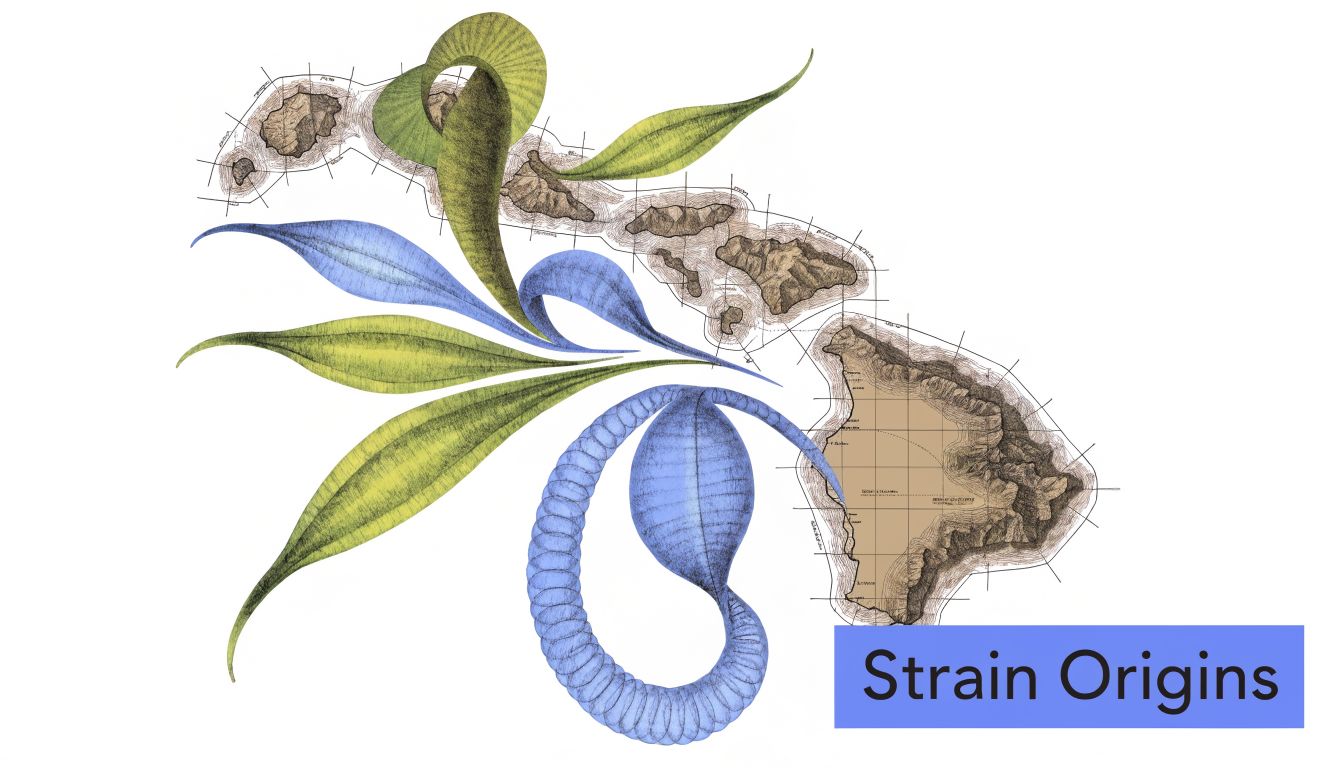
With Maui Pineapple, the confusion starts at the genetic level. One widely discussed version of Maui Pineapple Chunk is identified as a balanced 50/50 hybrid bred by Pua Mana 1st Hawaiian Pakalōlō Seed Bank from Pineapple Chunk crossed with Nāhiku Maui Wowie, a lineage tied to Hawaiian landrace history from the Maui Wowie era of the 1970s, according to this Leafly Maui Pineapple Chunk strain profile.
Another version appears in boutique breeding as a sativa-dominant Maui Pineapple built from revived 1979 “Cherry Bomb” Maui Wowie crossed with Pineapple Headband, as described on this Equilibrium Genetics Maui Pineapple page.
That’s a major difference. Balanced hybrid on one side. Sativa-dominant tropical revival on the other.
Landrace roots versus modern crosses
To make sense of those two paths, it helps to separate heritage genetics from modern hybrid naming.
Maui Wowie carries the mythology. It’s the old-school Hawaiian reference point people recognize immediately. Pineapple-forward crosses bring the sweeter, more contemporary “top-shelf tropical” angle. When breeders combine those ideas, the result can still feel coherent under the Maui Pineapple umbrella, even if the exact structure changes.
A simple way to frame it:
- Heritage side means Hawaiian energy, brightness, and a classic island profile.
- Modern side means crossing for bag appeal, flavor focus, or a more dialed-in effect.
- Retail side means shoppers often see the same name attached to slightly different products.
That’s why names alone don’t tell the full story.
Practical rule: Treat “Maui Pineapple” as a starting point, not a guarantee. The reliable answer lives in the breeder information and the lab-tested batch in front of you.
Why consumers get confused
Most shoppers don’t read breeder notes first. They read menu names first. That’s normal.
The problem is that menu language tends to compress complexity. “Tropical hybrid” is easier to display than a full genetic explanation. But if you’re trying to predict whether the maui pineapple strain will support a daytime walk through Port Jefferson, a social dinner, or a lazy Sunday on the couch, those details matter.
This gets easier once you understand the broader language of cannabis categories. If you want a clean primer on how strain labels are commonly used and where they fall short, this guide to understanding the different strains of cannabis is a useful companion.
The takeaway that actually helps in-store
You don’t need to memorize every lineage branch. You just need to know what question provides clarity.
Ask these:
- Which breeder or producer is behind this Maui Pineapple listing?
- Is this batch closer to a balanced hybrid profile or a more sativa-leaning one?
- What does the aroma suggest before I even look at potency?
- Does the lab profile support a daytime use case?
That approach cuts through almost all of the online fog. It also explains why two shoppers can both say they loved Maui Pineapple and still be talking about noticeably different experiences.
A Tropical Escape Your Senses Will Love
If genetics explain the family tree, aroma tells you what’s alive in the jar right now.
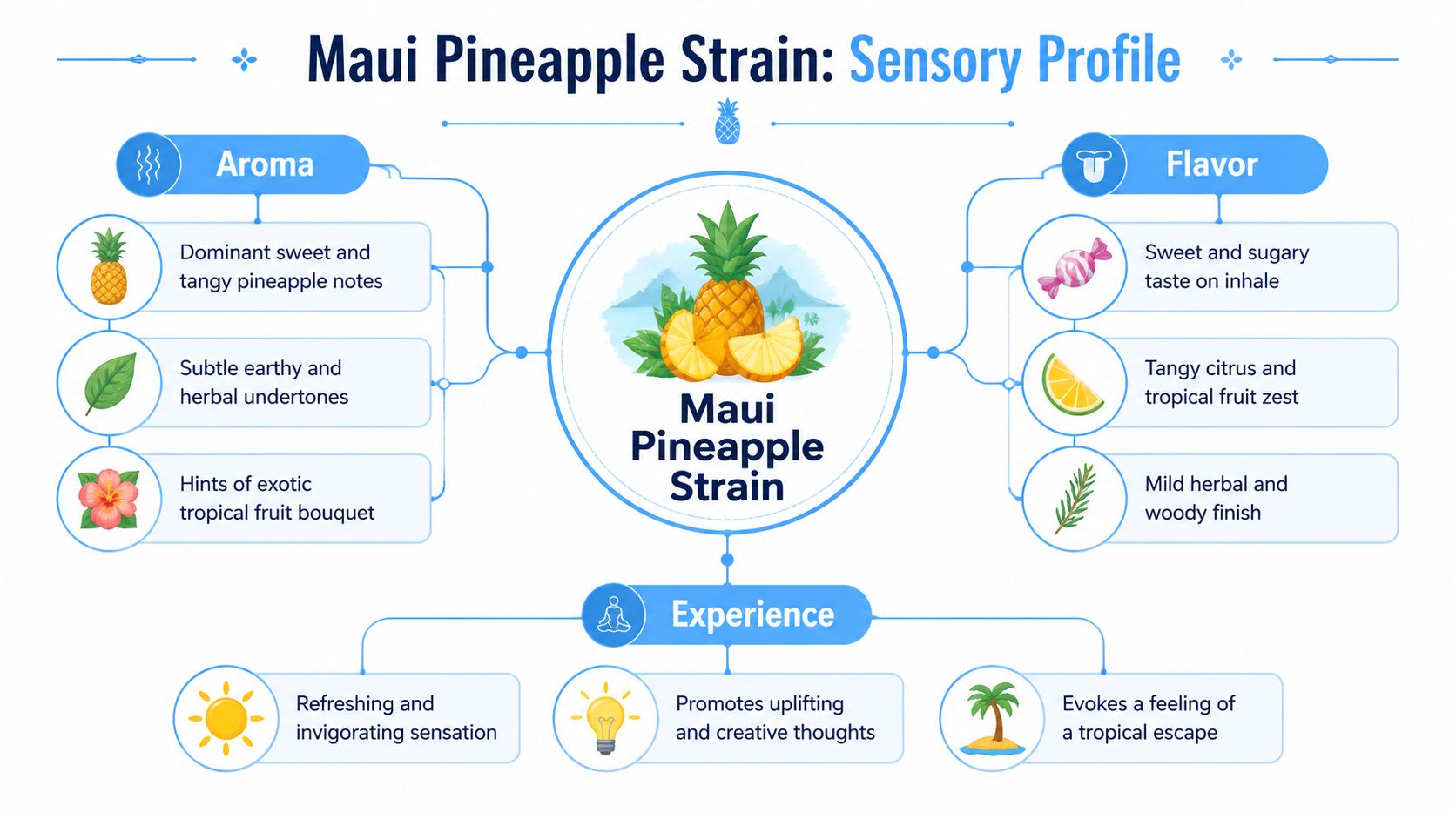
The maui pineapple strain earns attention because it usually announces itself fast. Open the container and the first impression tends to be fruit-forward. Not candy in a flat, sugary sense. More like ripe pineapple with citrus brightness and a little green, herbal edge underneath.
That second layer is what separates a serious tropical flower from a one-note novelty.
What you’ll notice first
The pineapple note is immediately identifiable. After that, the nose can branch in a few directions depending on the cut. Some expressions feel sweeter and juicier. Others lean sharper, with more citrus peel, spice, or an earthy finish.
For Maui Pineapple Chunk specifically, the profile is often described through myrcene, caryophyllene, and ocimene, supporting that sweet-sour pineapple and citrus identity from the earlier Leafly profile already discussed above.
Terpenes in plain English
Terpenes are the fragrant compounds that shape how cannabis smells and tastes. If cannabinoids are part of what drives potency, terpenes are a big part of what makes one strain feel inviting, sharp, mellow, peppery, floral, or tropical.
The easiest analogy is essential oils in plants. Lavender smells like lavender because of its aromatic compounds. Citrus peel smells bright because of its own set. Cannabis works the same way.
If you’ve ever enjoyed incense, perfume, tea, or fresh herbs, you already know how scent changes mood before any effect kicks in. That’s one reason this guide to popular incense aromas is surprisingly helpful. It trains your nose to notice layered scent families instead of flattening everything into “sweet” or “strong.”
Maui Pineapple terpene profile at a glance
| Terpene | Aroma & Flavor Notes | Potential Effects |
|---|---|---|
| Myrcene | Tropical fruit, sweet depth, slightly earthy finish | Often associated with a fuller, relaxed body feel |
| Caryophyllene | Pepper, spice, warm bite on the back end | Often chosen by shoppers who want a grounded feel |
| Ocimene | Sweet herbal lift, bright tropical accent | Often linked in consumer language to lively, fresh character |
That table isn’t a promise of how every batch will affect every person. It’s a tool for better pattern recognition.
How the flavor usually develops
The inhale is where many people get that “yes, this is the one” moment. You’ll often pick up a sweet tropical entry, then something brighter and zestier as it opens across the palate. The exhale tends to tell the truth. That’s where herbal, woody, peppery, or earthy notes show up if the flower has real complexity.
A well-grown tropical strain should feel layered, not artificial.
Here’s a simple tasting framework you can use with any flower:
- First impression: What hits right after opening the jar?
- Broken nug aroma: Does the scent get louder, greener, sweeter, or spicier?
- Dry pull or vapor flavor: Is the fruit clean, sharp, syrupy, or muted?
- Finish: Does it leave citrus zest, herb, pepper, or earth behind?
A loud pineapple top note gets attention. The finish tells you whether the flower is just flashy or actually refined.
What shoppers often miss
A lot of people shop by THC alone and skip the sensory check. That’s a mistake with strains like this.
The maui pineapple strain isn’t interesting only because it can be potent. It’s interesting because the tropical character can stay expressive through aroma, inhale, and finish when the flower has been handled well. If the nose is flat, grassy, or vague, the name won’t save the experience.
Good tropical flower should smell alive. It should suggest fruit, not just mention fruit on the label.
Understanding Its Effects and Best Uses
For most shoppers, this is the make-or-break question. What does the maui pineapple strain feel like once you use it?
The most reliable answer is that the better-known Maui Pineapple Chunk expression tends to start mentally bright and then settle into a lighter body calm, instead of dropping you straight into the couch.

The effect arc from first lift to soft landing
According to the previously cited Leafly profile, lab-tested Maui Pineapple Chunk typically ranges from 13-19% THC with around 1% CBD, though select phenotypes can reach up to 27-34% THC. The same profile notes that Leafly user surveys show 25% of consumers reporting relief for depression, 25% for lack of appetite, and 25% for stress.
Numbers help, but the shape of the experience matters just as much.
A lot of people describe this family of effects as a two-part ride:
- The opening phase feels upbeat, creative, social, or mentally active.
- The second phase softens the edges in the body without turning the whole session sedating.
That combination is why tropical hybrids often become daytime favorites. You get movement without chaos, and calm without a hard shutdown.
When it tends to fit best
This is the strain profile people usually ask for when they want cannabis that can still cooperate with real life.
A few common fit scenarios:
- Creative afternoons: Good for journaling, making music, sketching, reorganizing a space, or even tackling a light work task if your tolerance and setting are right.
- Social settings: Useful when you want to feel conversational and warm, not pinned to the couch or too foggy.
- Mood reset days: The tropical flavor and brighter headspace can pair well with low-key routines like an outdoor walk, a good meal, or a change of scenery.
- Appetite support: Some shoppers gravitate toward it because they want something uplifting that may also help them reconnect with food.
If your ideal session is “clearer, lighter, and more engaged,” this strain family often makes more sense than a heavy dessert cultivar.
Long Island use cases that make sense
This profile works best when the day still has shape to it.
Think less “midnight knockout” and more “late morning to early evening.” A walk by the water. A backyard conversation. A train ride where you want music to sound fuller and your shoulders to unclench, but you still want your thoughts to stay connected.
People also like this category for low-pressure weekends. Not because it blasts you into intensity, but because it can shift the tone of the day in a more graceful way.
Start low if you’re new
Even when a strain has an upbeat reputation, too much can flatten the nuance. Newer consumers often make the same mistake. They hear “tropical sativa energy” and assume they need a big dose to feel it.
Usually, less works better.
A simple starting approach:
- With flower: Take a small inhale and wait.
- With a vape: Keep the first session brief, especially if the hardware hits hard.
- With a pre-roll: Don’t treat one pre-roll like one serving. It rarely is.
If you’re someone who likes ritual as much as chemistry, pairing an uplifting strain with a grounding habit can help. A short breathing routine, a walk, or a quiet reset can shape the experience well. This guide to types of meditation is a practical resource if you want simple options that match different moods and energy levels.
For readers who like pineapple-forward profiles in other formats, this Pineapple Express cart guide is a useful comparison point.
Here’s a quick visual break if you want a general cannabis effects refresher before shopping:
Picking the right format for the effect you want
The same strain family can feel different depending on format.
| Format | Why someone chooses it | Best fit |
|---|---|---|
| Flower | Full aroma expression and easier sensory evaluation | Flavor-focused shoppers and people who like adjusting session size |
| Vape | Clean, quick access and convenience | Discreet daytime use and people who prefer shorter sessions |
| Pre-roll | Simple and ready to go | Social plans or low-effort sessions when convenience matters |
The key is matching the format to the moment. If flavor is your priority, flower usually gives you the clearest read on what Maui Pineapple is trying to be. If convenience matters more, a vape or pre-roll can still work well, but the sensory story may land a little differently.
How to Choose Quality Product at Strong Strains
By the time you’ve narrowed in on the maui pineapple strain, the next challenge is simpler and more important. How do you tell whether the product in front of you is good?
A premium tropical strain should look, smell, and test like it was handled with care. If any one of those is off, the whole experience can feel thinner than the name suggests.
What to look for before you buy
Start with your senses. Even before you talk potency, quality usually leaves clues.
Use this quick checklist:
- Look at structure: Healthy flower should appear well-formed and properly trimmed, not crushed into dusty fragments.
- Check surface detail: Frost, color contrast, and visible resin can all suggest careful cultivation, but they should look natural, not artificially hyped.
- Smell for definition: A tropical strain should have a clear aromatic identity. If the nose feels stale, grassy, or generic, move on.
- Ask about freshness: Cure and storage matter. Great genetics can still disappoint if the product has been sitting too long or sealed poorly.
The questions smart shoppers ask
The common question is, “What’s strongest?” A better question is, “What’s the best batch for the effect I want?”
Try asking a budtender:
- Is this Maui Pineapple more balanced or more sativa-leaning in this batch?
- What stands out more here, pineapple sweetness or herbal spice?
- Would you recommend this for daytime creativity or late-day relaxation?
- Can I see the COA or product testing details?
That last question matters.
How to read a COA without overthinking it
A Certificate of Analysis, or COA, is the lab report tied to a product batch. You don’t need to become a chemist to use it well. You just need to know what it helps confirm.
A COA can help you verify:
- Potency: Whether the listed THC and CBD align with what’s on the menu.
- Consistency: Whether this batch fits the kind of experience you were expecting.
- Safety: Whether the product passed required testing standards for a legal adult-use market.
- Transparency: Whether the retailer is comfortable showing you what backs the label.
The best cannabis shopping habit isn’t chasing the highest number. It’s matching verified product data to the effect, flavor, and format you actually want.
Why transparency beats hype
The distinction between a premium dispensary experience and random menu browsing becomes evident. A tropical strain with inconsistent naming needs context. Good staff can explain the version you’re looking at, the profile of the batch, and whether it lines up with your goal.
That’s especially helpful for newer consumers who don’t yet know how to decode product language.
If you’re building a seasonal shopping list, this roundup of the best cannabis products in Long Island for summer 2025 is a useful reference point for comparing bright, warm-weather-friendly options. And if you’re shopping locally, it also helps to know your access options through a Brookhaven dispensary page or Suffolk County weed delivery information.
A simple buying mindset
Don’t shop this category like a scavenger hunt for the loudest name. Shop it like a match-making exercise.
You’re looking for the overlap between:
- the right version of the strain,
- the right batch quality,
- the right format, and
- the right use case for your day.
When those line up, Maui Pineapple stops being a confusing strain name and starts becoming a very easy yes.
Growing Notes and Related Tropical Strains
Some people don’t just want to consume a strain. They want to understand how it behaves as a plant and where it sits in the bigger tropical family.
That’s where Maui Pineapple gets more interesting.
What growers pay attention to
The boutique sativa-dominant Maui Pineapple line from Equilibrium Genetics is described as a revival of 1979 “Cherry Bomb” Maui Wowie crossed with Pineapple Headband, with an 11-12 week flowering window and an 18-24% THC expectation based on analogous genetics, as noted earlier in the Equilibrium Genetics source.
That tells you a few useful things right away. This version is built more for the patient grower than the rushed one. It leans into classic Hawaiian style rather than quick-turn convenience, and it’s aimed at people who appreciate a more energetic, creative tropical profile.
A grower or enthusiast reading that should expect a strain identity that values expression over speed.
How it compares to nearby tropical favorites
Maui Pineapple sits in a broad lane of fruit-forward cannabis, but not every tropical strain lands the same way. Comparing them conceptually can help you find alternatives when one menu is out of stock.
| Strain | General personality | Who usually likes it |
|---|---|---|
| Maui Pineapple | Tropical, bright, often creative and social | Shoppers who want island character with function |
| Maui Wowie | Classic Hawaiian reference point | People chasing old-school tropical sativa energy |
| Pineapple Express | Familiar pineapple-forward hybrid lane | Consumers who want fruit with broad mainstream appeal |
| Pineapple Kush | Usually read as the softer, heavier cousin | People who want tropical flavor with more evening comfort |
That comparison matters because shoppers often think they want one exact strain when what they really want is one exact mood.
If Maui Pineapple is unavailable, the better move is to ask for a strain with similar aroma, tempo, and use case, not just a similar name.
What enthusiasts usually appreciate most
The people who come back to this category tend to like one of three things.
Some love the heritage angle, especially the connection to Maui Wowie-era Hawaiian genetics. Others are here for terpene character, because tropical flower can be more expressive than many generic sweet strains. And a third group wants functional uplift, meaning cannabis that feels enjoyable without knocking the whole day off course.
That’s why this strain family has such lasting appeal. It can satisfy the history-minded shopper, the flavor chaser, and the daytime user all at once.
Your Guide to the Maui Pineapple Strain FAQ
Is Maui Pineapple indica or sativa
It depends on which version you’re looking at. Some listings describe balanced hybrid genetics, while others point to a more sativa-dominant expression. The product name alone doesn’t settle it.
Why does the maui pineapple strain seem different from one menu to another
Because different breeders and producers can use similar naming for different genetic lines or phenotypes. That’s why batch details and lab testing matter more than a catchy strain title.
What does it usually taste like
Pineapple is often the initial aroma. Then they notice citrus, herbal freshness, and sometimes a spicy or earthy finish. The more refined batches usually smell layered rather than merely sweet.
Is it good for daytime use
Often, yes. Many Maui Pineapple expressions are chosen for creative, social, or mood-brightening sessions. Still, your ideal timing depends on the exact batch, your tolerance, and how much you use.
Can it feel too intense for beginners
It can if you overdo it. Tropical, uplifting strains sometimes encourage people to take more than they need because the flavor feels easygoing. Start with a small amount and give it time.
What format is best if I care most about flavor
Flower usually gives you the clearest picture of a strain’s aroma and finish. If convenience matters more, vapes and pre-rolls can still be good options, but they may present the profile a little differently.
What should I ask before buying
Ask which version of Maui Pineapple it is, whether the batch leans balanced or more sativa-forward, what the dominant aroma notes are, and whether you can review the COA.
Is it legal to buy on Long Island
Adults 21+ can legally purchase cannabis through compliant New York adult-use channels. Bring valid ID and shop through a licensed dispensary or approved delivery option.
If you want a premium, lab-tested take on tropical strains with real guidance behind the counter, Strong Strains is a trusted place to shop. Their East Setauket team helps Long Island adults find the right flower, vape, pre-roll, edible, tincture, or concentrate for the mood they want, with in-store pickup and local delivery that make the process easy and compliant.