
You’re probably here because you’ve seen grape mochi strain on a menu and paused for a second. The name sounds rich, sweet, and a little fancy. But names in cannabis can be misleading if you don’t know what sits behind them. Some strains promise dessert and deliver flat earthiness. Others look beautiful in a jar but feel too racy, too sleepy, or just one-note.
Grape Mochi is the kind of cultivar that gets attention because it sounds indulgent, then keeps that attention because the profile is more layered than the name suggests. For shoppers on Long Island who want something balanced, flavorful, and polished, it’s a strain worth understanding before you buy. That matters even more in a premium dispensary setting, where curation isn’t just about stocking what’s popular. It’s about choosing flower that has the structure, chemistry, and consistency to justify shelf space.
Introducing Grape Mochi A Modern Dessert Hybrid
A common evening scenario goes like this. You want something that helps you settle in after work, but you don’t want to feel pinned to the couch. You want flavor, but not something so sugary that it feels gimmicky. You want a strain that can fit a quiet night in, a movie, a low-key hang, or a creative reset.
That’s where Grape Mochi tends to make sense.
It’s often described as a modern dessert hybrid, which is a useful label if you know what that means. In plain language, dessert hybrids usually lean into creamy, sweet, pastry-like, or candy-adjacent aromas rather than sharp pine or old-school skunk. Grape Mochi fits that lane, but with a more refined profile than the name alone suggests.

Why shoppers keep asking about it
Some strains are easy to recommend because they do one thing very clearly. Grape Mochi is more interesting than that. It’s often sought out by people who want a hybrid that feels composed rather than chaotic.
If you’re still learning how strain families differ, this guide to understanding the different strains of cannabis helps frame where hybrids like this can fit.
A premium shop looks at more than the name. Budtenders and buyers pay attention to how a strain presents across batches. Does the aroma match the reputation? Does the flower look properly developed and resinous? Does the chemistry support the kind of experience shoppers expect from the label?
Practical rule: A strain becomes memorable when the smell, structure, and effects all tell the same story.
Grape Mochi earns its place in that conversation because it tends to offer a polished middle ground. It can feel soothing without reading as heavy. It can feel bright without becoming overstimulating. For a lot of adults shopping for flower, that balance is exactly the point.
The Genetic Lineage Behind Grape Mochi
The easiest way to understand Grape Mochi is to treat the name like a recipe card. The first half tells you where some of the fruity character comes from. The second half points toward the creamy, dessert-style side of the experience.
According to GrowDiaries’ Grape Mochi strain profile, Grape Mochi emerged as a contemporary hybrid from Doja Seeds, representing a deliberate cross between Grape Gas and Mochi Gelato parent strains. That same source describes the result as a dessert-leaning hybrid known for dense, purple-flecked flowers, sticky resin, and a terpene profile that can evoke grape jelly, whipped cream, and mint-chocolate notes.
What Grape Gas likely brings
Think of Grape Gas as the side of the family that adds tension and contrast. “Grape” suggests fruit, but “Gas” tells you this probably isn’t a simple candy profile. In cannabis, gas notes often create depth. They keep a strain from smelling flat or overly sweet.
That matters because a pure grape aroma can sometimes come off like artificial candy. A grape-and-gas lineage usually feels more mature, more layered, and more connoisseur-friendly.
What Mochi Gelato contributes
Mochi Gelato is the part of the lineage that helps explain the soft, creamy, pastry-like impression people often talk about. The “mochi” name works almost like a tasting note. It suggests a texture and mood as much as a flavor.
You can think of genetics the way you’d think about ingredients in a dessert kitchen:
- Fruit-forward genetics give a strain lift and identity.
- Creamy Gelato-line genetics round off the edges.
- Resin-rich structure often signals why a flower looks frosty and aromatic when grown well.
Why lineage matters to a shopper
A lot of confusion starts when people assume a strain name is just branding. Sometimes it is. But with a lineage like this, the name gives real clues.
If you’ve had strains from Gelato-related families before, you may already recognize the appeal. They often attract shoppers who want flavor and balance in the same jar. If you’re drawn to grape profiles but don’t want something that feels too one-dimensional, this cross helps explain why Grape Mochi tends to stand out.
Good breeding is like good menu design. Every ingredient has a job, and the final product should taste intentional.
That intentionality is part of why the grape mochi strain keeps showing up in conversations about premium flower rather than just novelty flower.
Aroma Flavor and Visual Appeal
Before anyone talks about percentages or lab sheets, observers often judge flower the old-fashioned way. They look at it. They smell it. They break apart a bud and decide whether it feels alive or dull.
Grape Mochi usually makes its first impression through contrast. You expect loud grape candy from the name. What you often get is something more nuanced. There’s sweetness, but it tends to be cushioned by creamier, earthier, and lightly minty tones.
What the aroma usually feels like
A helpful analogy is grape gelato served in a shop that also bakes hazelnut cookies. There’s fruit in the room, but it isn’t screaming. The creamy side softens it. The earthiness keeps it grounded.
Some shoppers go in expecting a purple candy blast. That’s where people get tripped up. Grape Mochi often reads as a dessert hybrid first, with grape notes sitting inside the profile rather than dominating the whole thing.
A well-cured batch can come across as:
- Creamy and sweet with a soft dessert-like opening
- Earthy underneath in a way that gives the aroma weight
- Minty or floral at the edges rather than sharply herbal
- Subtly grape-toned instead of aggressively candy-like
What you may notice in the flavor
Smell and flavor aren’t always identical. That’s another point that confuses newer shoppers. Some strains smell amazing in the jar but burn flatter than expected. Others open up once consumed and reveal notes you barely noticed at first.
With Grape Mochi, the flavor is often described in a way that mirrors the aroma’s layered character. The creamy side tends to stay present. The fruit can show up as a soft grape impression, while earthy and floral notes keep it from becoming syrupy.
Here’s a quick way to understand:
| Sensory moment | What it may resemble |
|---|---|
| First jar pop | Sweet cream, light grape, soft earth |
| Mid-smell | Hazelnut, floral, Gelato-like richness |
| Exhale impression | Creamy sweetness with a minty or herbal finish |
That profile is a big reason this strain attracts shoppers who care about flavor as much as effect. It doesn’t rely on one loud note. It behaves more like a blended dessert than a single candy flavor.
A close look at the flower helps show what people mean when they call it premium.
What premium flower should look like
Visual quality matters because it often hints at cultivation and post-harvest care. Grape Mochi has been described as showing medium-to-hard density buds, light-to-medium green coloration, minimal purple hues, and a thick coating of near-white trichomes. That’s the kind of structure many shoppers associate with modern top-shelf hybrid flower.
If a dessert strain looks dry, smells muted, or sheds aroma the second the jar opens, the issue usually isn’t the genetics. It’s the batch.
Dense buds, visible frost, and a sticky feel don’t guarantee a great experience by themselves. But they’re part of what buyers and budtenders watch for when deciding whether a batch delivers on the promise of a strain name.
Grape Mochi Potency and Terpene Profile
A premium jar can smell great and still miss the mark if the lab profile is thin or inconsistent. At a shop that curates carefully, potency and terpene data help answer a more useful question than "Is it strong?" The better question is whether the batch has the balance, flavor depth, and lab-backed quality to justify shelf space.
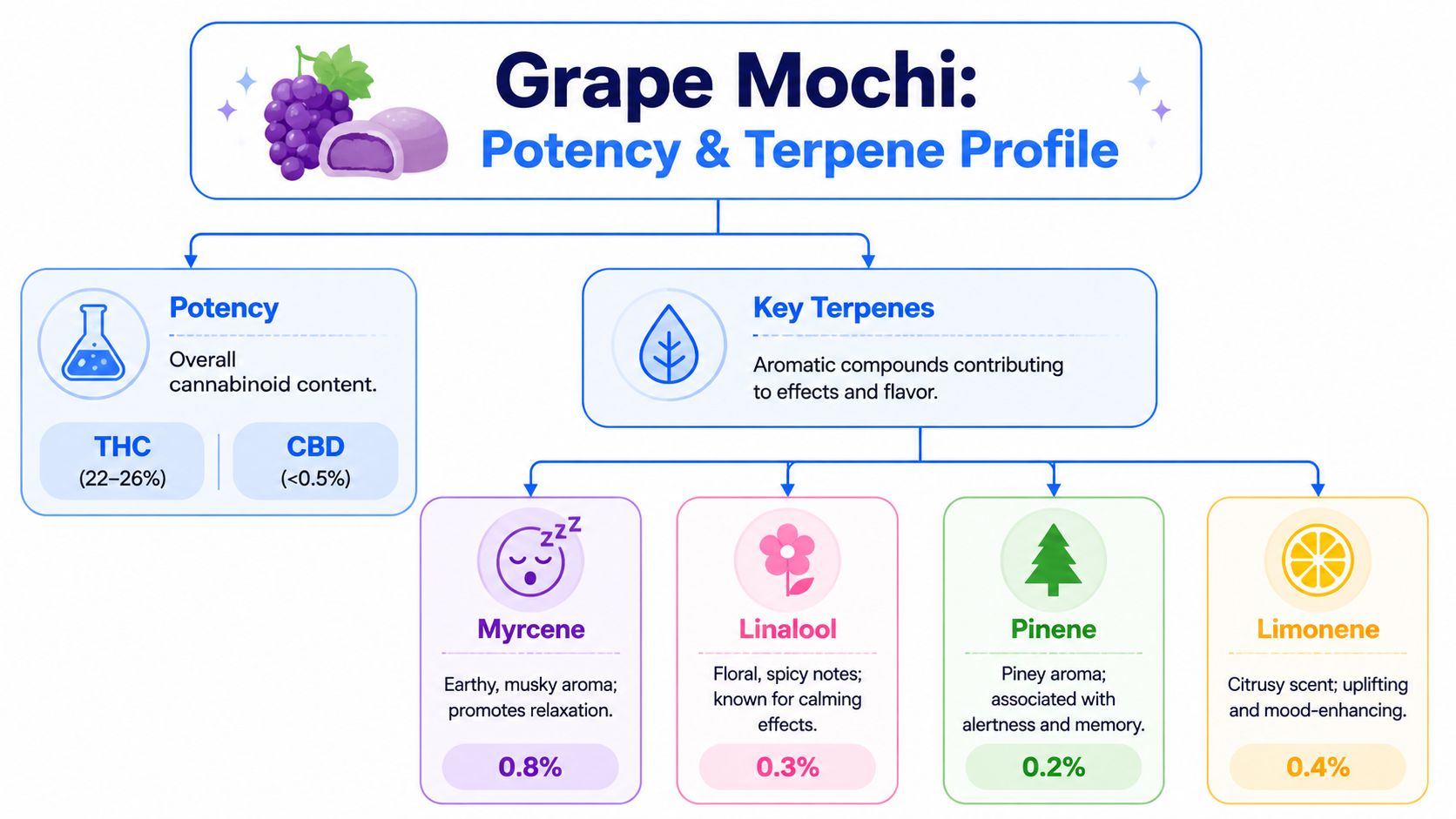
According to the Joint Commerce Grape Mochi strain guide, Grape Mochi exhibits a potency range of 18–26% THC across publicly posted certificates of analysis, and when accounting for total cannabinoids including THCa, the strain typically falls within a 20–30% window. The same source notes that CBD levels are minimal at 0.1–1.0%.
For many shoppers, that places Grape Mochi in the mid-to-high potency range. In real use, that usually means the strain can feel assertive without automatically reading like a knockout flower. Batch quality, terpene content, and your own tolerance still shape the experience.
What the potency numbers mean in practice
THC is often the first number people ask about because it is easy to compare. It helps, but it only measures one part of the strain. THC is the engine size. Terpenes and minor cannabinoids are more like the suspension, tires, and tuning. Two cars can have similar horsepower and drive very differently.
That is why a discerning dispensary does not stock flower on THC alone. A batch of Grape Mochi with solid potency and a clear terpene signature is usually more appealing than a harsher flower with a bigger headline number.
If you prefer a format with more exact dose control, it can help to compare flower strength with measured products such as 1000 mg THC tincture options, where serving size is easier to adjust.
The terpene lineup behind the profile
According to Green Goods’ Grape Mochi product data, the strain’s terpene profile includes Myrcene (0.48%), Limonene (0.41%), Caryophyllene (0.38%), and Linalool (0.29%), with approximately 2.03% total terpene content.
That mix helps explain why Grape Mochi tends to read as more than just sweet or strong. The profile has weight, brightness, spice, and softness at the same time.
| Characteristic | Profile |
|---|---|
| Strain type | Balanced dessert-leaning hybrid |
| THC range | 18–26% |
| Total cannabinoids | 20–30% window |
| CBD range | 0.1–1.0% |
| Key terpenes | Myrcene, Limonene, Caryophyllene, Linalool |
| Reported terpene total | Approximately 2.03% |
How terpenes may shape the experience
Terpenes work like the seasoning in a dish. THC may provide intensity, but terpenes influence how that intensity arrives and what direction it takes.
- Myrcene often contributes a more grounded, settled feel.
- Limonene can add lift and keep the profile from feeling dull or overly heavy.
- Caryophyllene often brings a peppery, structured character.
- Linalool adds a softer floral layer that many shoppers associate with a calmer tone.
Green Goods also notes that this terpene and cannabinoid mix supports a “happy” and “calm” profile. That matters during curation. A premium dispensary is not only looking for potency on paper. It is looking for flower that offers a repeatable, well-rounded experience, smells alive when the jar opens, and gives budtenders a clear reason to recommend it to the right customer.
A useful shortcut at the counter is simple. Ask what is supporting the THC. That one question usually leads to better flower choices.
Expected Effects and Common Uses
Consumers typically don’t walk into a dispensary asking for myrcene percentages. They ask for a feeling. They want to know whether a strain will help them loosen up, stay social, settle their thoughts, or end the night smoothly.
Grape Mochi tends to appeal to shoppers who want a hybrid that feels even-tempered. Based on the profile described earlier, it’s often associated with a combination of mental ease and body comfort rather than a sharply energizing or intensely sedating experience.
What the onset may feel like
Many balanced hybrids have a two-part rhythm. The first part is usually more head-focused. The second part settles into the body.
With Grape Mochi, that often translates into a gentle shift in mood and perspective first. You may feel more at ease in conversation, more interested in music, food, or whatever you’re watching, and less stuck in the day’s mental static. Then the body side starts to round things out.
That doesn’t mean everyone will experience it the same way. Your tolerance, dose, timing, and setting all matter. But this kind of hybrid often works well for adults who don’t want to choose between “wake-up weed” and “bed-only weed.”
Where it can fit into a routine
Because the profile leans balanced, shoppers often look at Grape Mochi for moments like these:
- After-work reset when you want to relax without immediately checking out
- Low-key social time where you’d like to feel open and comfortable
- Creative unwinding for drawing, music, gaming, or watching something immersive
- Stress-heavy evenings when you want your body and mind to stop pulling in opposite directions
If stress is part of what’s driving your search, this overview of how cannabis can help manage stress and anxiety gives broader context for choosing the right format and feel.
Common points of confusion
Newer shoppers often ask whether “balanced” means weak. It doesn’t. Balanced means the strain doesn’t push too hard in only one direction.
Another common misunderstanding is assuming a dessert strain must be sleepy. Not necessarily. Sweet aroma tells you about flavor and terpene expression, not automatically about sedation.
Start lower than your ego wants to. A balanced hybrid can still feel strong if the chemistry and the batch are both dialed in.
Some adults also gravitate toward this style of strain when they want relief without a dramatic mood swing. That may include days when they feel mentally wound up, physically tense, or overstimulated from work and screens. The appeal is often less about chasing intensity and more about regaining a sense of ease.
Find Premium Grape Mochi at Strong Strains
You spot Grape Mochi on a menu after a long day and feel that little spark of interest. The key question starts after that first glance. Is the batch in front of you worth bringing home?
A careful dispensary buyer asks the same thing. At a shop like Strong Strains, the decision to stock Grape Mochi is not based on the name alone. It comes down to whether the flower expresses the profile shoppers expect, whether the lab results are clear, and whether the batch was grown, cured, and stored with care.

What careful curation looks like
Earlier in the article, we noted the typical cannabinoid range associated with Grape Mochi. Those numbers help set expectations, but they are only part of the story. A strong batch should also smell fresh and expressive, feel properly cured rather than dry or brittle, and show the dessert-like character that makes this strain appealing in the first place.
That is why curation works a lot like produce buying at a high-end market. Two items can carry the same label, but only one has the ripeness, aroma, and handling quality that make it worth the price. Cannabis works the same way. Genetics set the blueprint, but the finished batch determines the actual experience.
A curated menu may include flower from brands such as Cookies, MFNY, Rythm, Hudson Cannabis, or Florist Farms, depending on availability. Shoppers who enjoy this flavor direction sometimes also explore other formats from brands like Airo, Pax, Wyld, or Kiva.
Why source matters more than the strain name
“Grape Mochi” tells you the intended profile. It does not guarantee that every jar will deliver it.
One grower may produce flower with a layered grape-and-cream aroma and a clean, springy cure. Another batch with the same name may come across muted, harsh, or tired from poor storage. That gap is exactly why a discerning dispensary screens products before they ever reach the shelf.
Strong Strains looks closely at factors such as:
- COA transparency, so shoppers can review cannabinoid and terpene results instead of guessing
- Batch freshness, because aroma and flavor fade when flower sits too long
- Bud structure and cure, which often reveal how well the product was handled after harvest
- Format fit, since some shoppers want flower while others prefer pre-rolls, vapes, or edibles with a similar flavor profile
Strong Strains carries lab-tested cannabis products for adult-use shoppers on Long Island, with in-store pickup and local delivery options described on its site.
If you are considering the grape mochi strain, ask the questions a good buyer would ask. What does this batch smell like? Who grew it? How recent are the test results? That approach usually leads to a better purchase than shopping by strain name alone.
If you want help choosing a balanced dessert-style hybrid or comparing Grape Mochi to other premium flower, browse the menu or stop by Strong Strains. The team can walk you through available batches, lab-tested formats, and what may fit your tolerance, routine, and flavor preferences.