
You're standing at the counter, looking at dense, aromatic flower from brands like Alien Labs, Connected, Rythm, or Good Green, and the question lands fast. Why does dispensary flower look, smell, and burn so much better than most first home grows?
Lighting matters. Genetics matter. Drying and curing matter. But the grow usually goes wrong much earlier, in the container.
Top-shelf cannabis starts with pot growing soil that gives roots air, water, biology, and stable nutrition. When the root zone is wrong, everything above it shows the damage. Plants stall, leaves pale out, aromas flatten, and buds never quite stack the way you hoped. When the root zone is right, the plant expresses itself cleanly. You get stronger structure, better resin, fuller terpene development, and flower that resembles what serious cultivators aim for.
Your Guide to Elite Pot Growing Soil
A lot of home growers begin the same way. They buy a seed or clone, grab a random bagged mix, water on instinct, and assume cannabis will sort itself out because it's called weed. Then flowering arrives and the result is airy, harsh, or bland.
That gap between average and elite usually isn't mysterious. It's foundational.
Cannabis in containers depends on a small, controlled environment. In the ground, roots can search. In a pot, they're limited to whatever structure, biology, and chemistry you built for them. If that mix holds too much water, roots suffocate. If it dries unevenly, feeding becomes erratic. If the texture is off, the plant spends energy surviving instead of producing quality flower.
Great flower isn't built at harvest. It's built from the first time roots touch the mix.
Serious growers set themselves apart. They stop treating soil as filler and start treating it as equipment. The same way you'd care about genetics from Cookies, Hudson Cannabis, or Runtz, you should care about what surrounds the roots every day of the plant's life.
What top-shelf really reflects
Elite flower shows the consequences of disciplined inputs:
- Clean structure means the plant never fought chronic root stress.
- Sharp aroma usually points to healthier metabolism and better biological activity in the pot.
- Better flavor starts long before cure day.
- Resin production follows strong overall plant function, not just heavy feeding.
If you want dispensary-grade results at home, start where professionals start. Build a root zone that drains well, breathes well, and supports consistent nutrition. Everything else gets easier after that.
Why Your Soil Is More Than Just Dirt
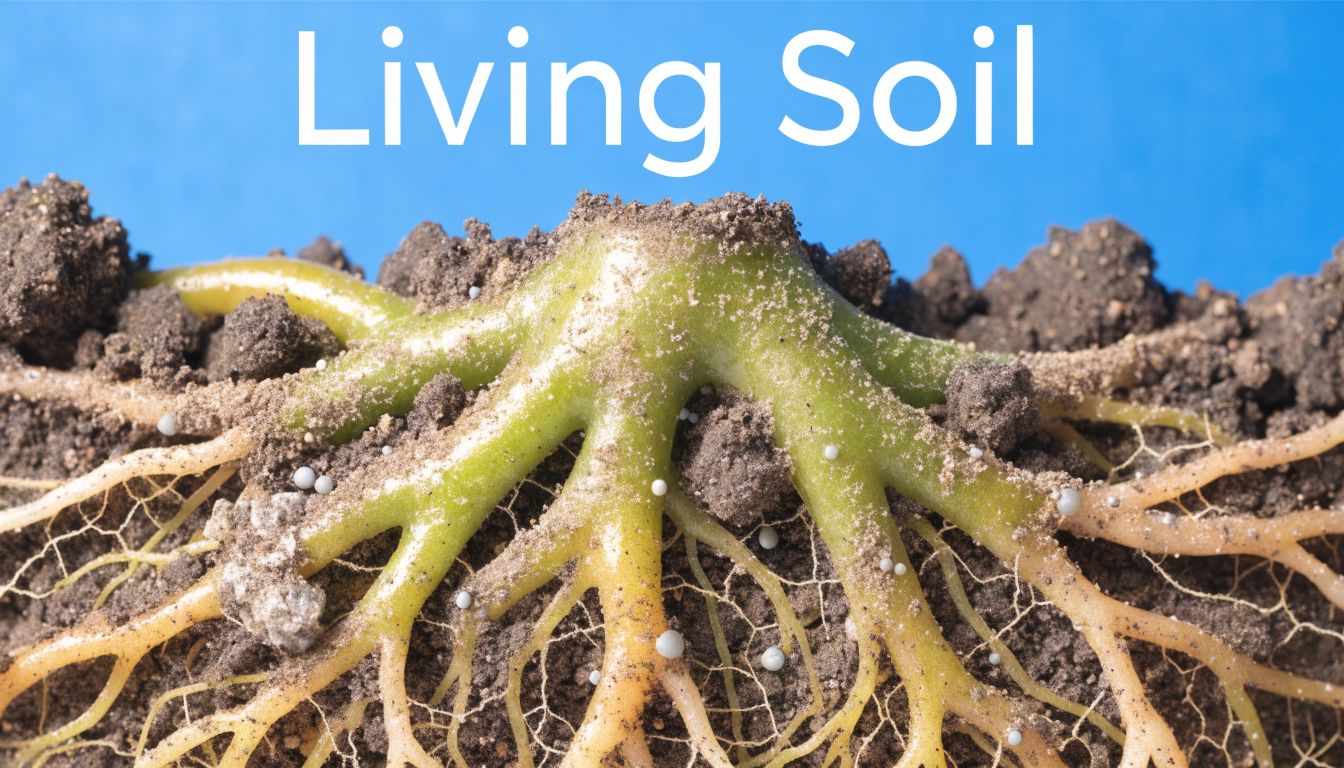
Soil in a cannabis pot does four jobs at once. It anchors the plant, stores water, carries nutrients, and supplies oxygen to the root zone. That's why I call it a living pantry and lung. If it can't feed and breathe at the same time, the plant won't finish strong.
A weak mix usually fails in one of two directions. It either stays too wet and dense, or it drains so fast that nutrition becomes inconsistent. Both problems show up above ground, but they begin below the surface.
The texture roots actually want
For cannabis in containers, the target texture is loam at 40% sand, 40% silt, and 20% clay, which supports oxygen use and drainage according to Leafwell's discussion of cannabis potting soil. That balance matters because the roots need both moisture and air at the same time.
Leafwell also notes that when clay rises above 25%, compaction can reduce root biomass by up to 30% in cultivation benchmarks. That's the kind of problem growers often mistake for a feeding issue. They add more nutrients, but the actual problem is that the root zone has become physically hostile.
What good pot growing soil does
Healthy cannabis soil should feel light in the hand but not dusty. After watering, it should hold moisture evenly without turning slick or muddy. When you squeeze a moist sample, it should clump lightly and then break apart.
Watch for these functional signs:
- Anchorage that holds. The stem should stay stable without the pot feeling cement-like.
- Moisture retention with release. Water should soak in, spread through the mix, and leave enough air behind.
- Nutrient buffering. The plant should feed steadily, not swing from hungry to burned.
- Root-zone airflow. The container should never smell sour or swampy.
Poor soil doesn't just slow growth. It also makes plants more vulnerable to stress, and stress opens the door to disease and insect pressure. If you want a useful broader read on soil's role in pest management, that piece does a good job showing why resilient soil creates more resilient plants.
Practical rule: If your pot stays heavy for too long after watering, your roots are paying the price even if the leaves still look decent.
What failure looks like
Bad container soil usually creates one of these patterns:
| Soil problem | What you'll notice |
|---|---|
| Too dense | Slow growth, drooping after watering, weak lower leaves |
| Too fast-draining | Dry pockets, inconsistent feeding, sudden wilt |
| Too fine and silty | Crusting on top, poor oxygen exchange, sluggish roots |
| Too rich too early | Dark clawed leaves, stalled development, salt stress |
Good growing gets easier when the medium is doing its job. Bad growing feels like constant correction.
Deconstructing the Perfect Potting Mix
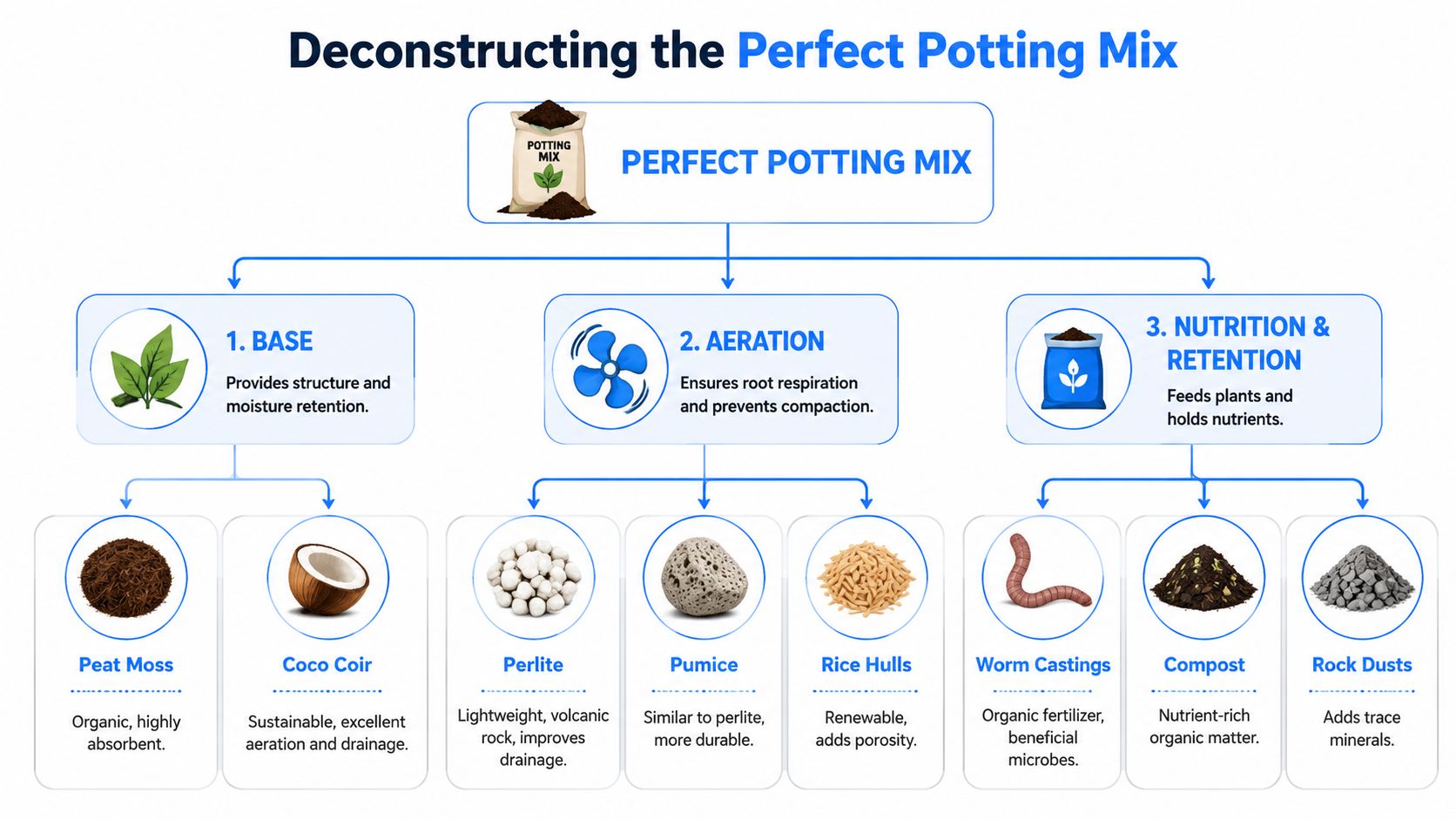
A quality cannabis mix is easier to understand when you stop reading the bag like marketing copy and start reading it like a parts list. Every good potting mix has three jobs to cover. It needs a base, an aeration component, and a nutrition and biology component.
If one of those is missing, the mix usually underperforms. If one dominates, it usually creates a new problem.
The base material
The base gives the pot its body. It's the part that holds moisture, supports roots, and helps distribute amendments through the container.
Peat moss is common because it holds water well and creates a soft structure. It's forgiving for growers who tend to underwater, but it can become stubborn if allowed to dry too hard.
Coco coir feels springier and often rewets more easily. Many growers like it because it resists compaction better over time. It also tends to create a cleaner, airier feel in the pot.
Trade-offs appear quickly:
- Peat-heavy mixes usually hold moisture longer.
- Coco-forward mixes usually feel more open and easier to manage after repeated watering.
- Cheap base materials often break down too quickly and collapse the structure of the pot.
The aeration layer
Roots need pore space. That's what aeration ingredients create.
Perlite is the classic choice. It's lightweight, easy to source, and effective at opening a dense mix. The downside is that it can float upward over time and crush more easily than harder mineral amendments.
Pumice does similar work with more weight and durability. Many experienced growers prefer it because it holds the structure of the mix longer, especially in larger containers.
A few practical observations matter here:
- A mix that looks rich and black can still be too tight.
- More compost doesn't fix poor aeration.
- Fine particles settle. That's why some mixes start well and then get worse after a few weeks.
If you've ever compared cannabis soil to blends made for succulents, the contrast is useful. Succulent growers obsess over drainage for good reason, and The Cactus Outlet's guide to succulent potting is a good reference for understanding how ingredient choice changes airflow and water behavior, even though cannabis needs a more balanced moisture profile.
Nutrition and biology
This is the part of the mix that separates alive soil from sterile filler.
Compost brings organic matter and broad nutrition. Earthworm castings bring gentle fertility and microbial life. In a good mix, these don't just feed the plant directly. They also support the biological processes that make nutrients available over time.
That matters for quality flower. A plant grown in a balanced, biologically active container usually develops more naturally than one pushed through a lifeless medium with constant correction.
Rich soil should feel active, not hot. If a bag smells sour, swampy, or sharply chemical, don't use it for cannabis.
How to judge a bag before you buy
Don't shop by the front label. Check the ingredient panel and texture.
Look for:
- Visible structure. You want to see chunky material, not uniform dust.
- Real aeration inputs like perlite or pumice.
- Organic matter that suggests compost or castings, not just peat and wetting agents.
- A balanced feel. Light enough to breathe, substantial enough to buffer moisture.
Avoid mixes that feel like mud when wet or collapse into a brick after a few irrigations. That kind of soil forces you to fight the medium all season.
Brands like Matter, MFNY, or Rythm don't earn their reputation from luck. The final flower reflects disciplined root-zone management, and the mix is one of the first places that discipline shows.
Managing Soil pH and Plant Nutrition
A lot of growers talk about feeding when the actual issue is access. You can put nutrients into a pot and still starve the plant if the soil chemistry blocks uptake.
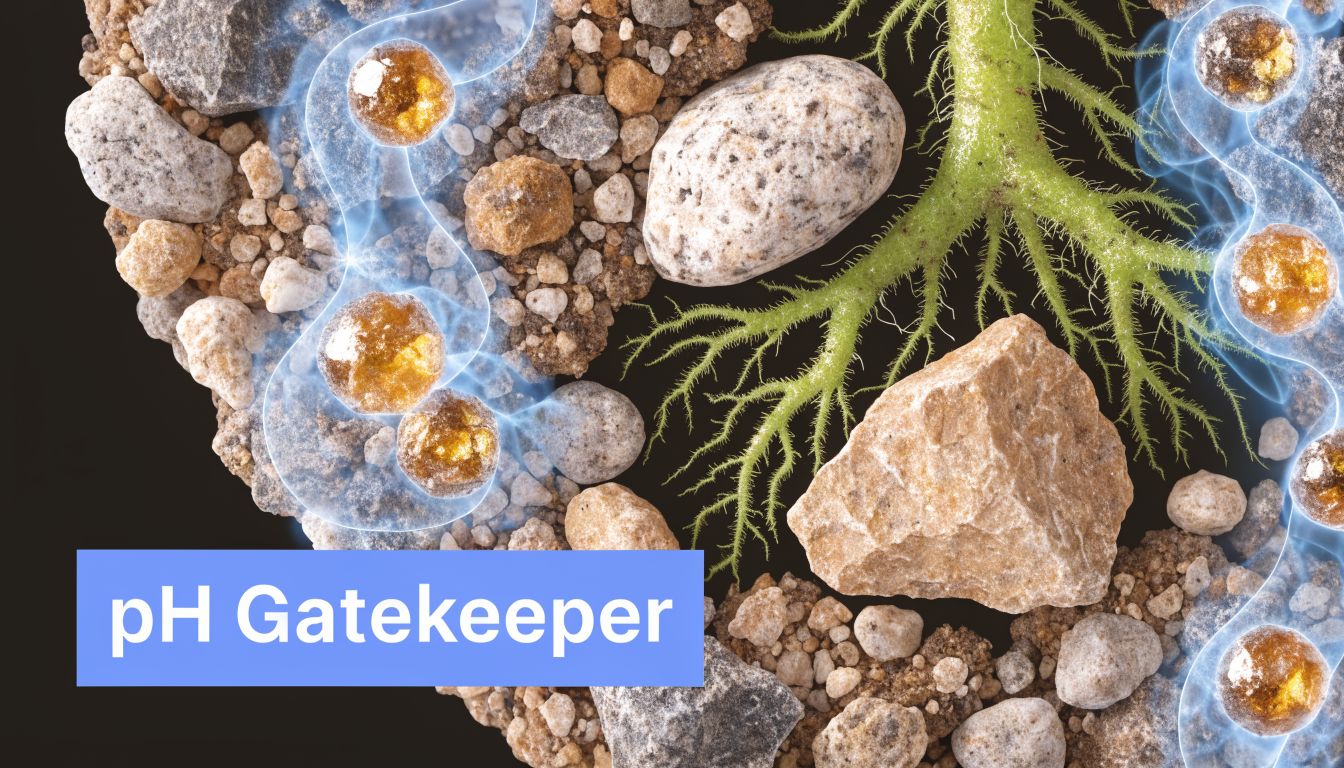
That's what pH does. It acts like a gatekeeper. When pH is in range, nutrients move through the door. When pH drifts out of range, the door starts locking.
The locked-door problem
For cannabis, soil pH should stay between 6.0 and 7.0, and optimal inflorescence yield is achieved with nitrogen at 194 mg/L and phosphorus at 59 mg/L, according to Alluvial Soil Lab's review of cannabis soil testing. The same source notes that moving outside that pH range can lock out nutrients and slash yields by up to 30-40%.
That explains a common grow-room frustration. The leaves show deficiency symptoms, the grower adds more feed, and the plant gets worse. The soil already contains nutrients, but the plant can't use them efficiently.
What nutrient problems often look like
When pH or feeding drifts, the plant tends to signal it in visible ways:
- Nitrogen issues often show up in leaf color and vigor.
- Phosphorus stress often affects flower development and plant energy.
- Lockout can mimic deficiency and toxicity at the same time.
- Overfeeding usually gives you dark, stressed foliage before it gives you better buds.
Professional growers test because guessing compounds mistakes. If you want a homeowner-friendly overview of DIY soil kits for local homeowners, that guide is a useful starting point for checking pH without turning the process into a lab project.
A workable nutrition routine
You don't need to make this complicated. You do need to stay consistent.
Start with a known medium
If you don't know what's in the pot, every correction becomes guesswork.Check pH before increasing feed
Many “hungry” plants are locked out.Feed according to stage
Young plants and flowering plants don't use nutrients the same way.Watch the leaves after every change
New growth tells the truth faster than old damage does.
Don't chase every symptom with another bottle. Correct the root-zone chemistry first, then judge the plant's response.
Why this matters for final quality
Good flower isn't only about yield. Stable pH and balanced nutrition shape how the plant builds density, aroma, and finish quality. When feeding is erratic, flower often loses sharpness. It may still test fine visually, but the nose, flavor, and burn tell a different story.
That's why serious cultivators treat pH and nutrition as daily craftsmanship, not side details.
Buying Packaged Soil or Building Your Own Mix
There are two solid paths for pot growing soil. You can buy a packaged mix and improve it if needed, or you can build your own from raw ingredients. Neither path is automatically better. The right choice depends on your experience, time, and how much control you want.
Packaged soil is faster. DIY soil gives you more precision.
When packaged soil makes sense
If you're new, a quality bagged mix is often the smarter move. It reduces the number of variables and lets you focus on watering, plant health, and environment. That matters because many first grows fail from overcomplication, not lack of ambition.
Good packaged mixes are useful when:
- You want speed and don't want to source multiple ingredients.
- You're growing only a few plants and don't need bulk volume.
- You'd rather amend lightly than build a full recipe from scratch.
The catch is consistency. Some bagged soils come in rich and airy. Others are too hot, too dense, or too woody. Read ingredient lists closely and don't assume every premium-looking bag is suitable for cannabis.
When building your own pays off
DIY becomes attractive when you want repeatability. You control texture, biology, and how aggressively the mix feeds. That's valuable once you've learned how your room, containers, and watering style behave.
A widely used living-soil framework uses a 1:1:1 ratio of base material, compost or castings, and aeration, and when it's cooked for 2-4 weeks, microbial activity can boost terpene profiles by 25-40% compared to sterile soils, according to Nature's Living Soil guide.
That's the appeal. A well-built living mix can carry a plant with fewer interventions and often produces more expressive flower. It's one reason growers chasing rich aroma and flavor study soil recipes as seriously as they study genetics.
Side-by-side trade-offs
| Path | Best for | Upside | Trade-off |
|---|---|---|---|
| Packaged soil | New growers, small grows | Fast setup, less prep | Quality varies by bag |
| DIY mix | Experienced or detail-focused growers | More control, easier to repeat | More labor, more chances to mismeasure |
DIY Pot Growing Soil Recipes
| Ingredient | Basic All-Purpose Mix | Water-Only Super Soil |
|---|---|---|
| Base | Peat moss or coco coir | Peat moss or coco coir |
| Compost or castings | Compost and/or earthworm castings | Compost and/or earthworm castings |
| Aeration | Perlite | Perlite |
| Preparation | Mix thoroughly and use as a balanced container medium | Mix in the same balanced ratio, then let it cook before planting |
| Best use | Growers who want a forgiving starting point | Growers aiming for a living, water-only style |
What works and what usually doesn't
What works is restraint. Build a clean, balanced medium first. Let the plant tell you what it needs after that.
What usually fails is the urge to make “super soil” by throwing every amendment on the shelf into one tote. Richer isn't always better. A mix can become so loaded that root function suffers before flowering even starts.
A good rule is to decide your system before you shop:
- Want simplicity. Buy a quality mix and make small adjustments.
- Want deeper control. Build your own and keep notes.
- Want inspiration from premium brands. Spend time studying how different product lines express terpene and flower quality through cultivation choices at the Strong Strains brands page.
The best soil choice is the one you can manage consistently. A modest, balanced mix run well will outperform a complicated recipe run poorly.
Watering Your Soil and Troubleshooting Problems
Most container problems are watering problems wearing a different disguise. Growers blame nutrients, genetics, or the weather when the pot is really staying too wet, drying too hard, or cycling between both extremes.
The fastest way to improve pot growing soil performance is to learn the weight of the container.
The lift test
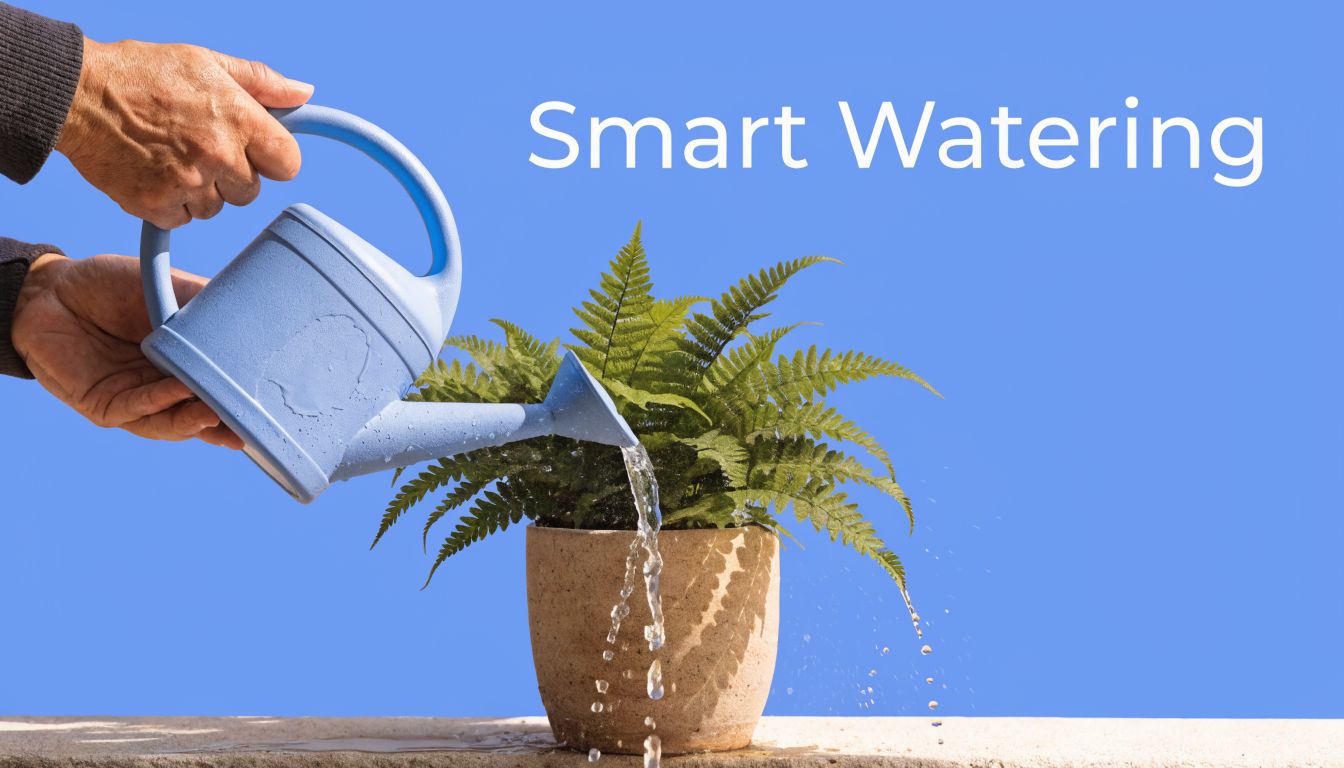
Pick up the pot right after a proper watering. Then pick it up again as it dries. That difference tells you more than most new growers realize. Over time, your hands learn the zone between soaked and ready.
Water slowly enough for the medium to absorb it evenly. Don't dump water on top and assume the whole root ball got it. In fabric pots especially, a rushed watering can create channels and leave dry pockets inside.
Useful habits:
- Lift before you water so you don't irrigate on autopilot.
- Water in stages if the mix has become dry and resistant.
- Watch the runoff pattern. Uneven flow often signals dry channels or compacted spots.
- Keep your workspace clean. A tray setup like a Blazy Susan rolling tray helps keep tools and amendments organized, which sounds minor until you're juggling pH gear, topdress, and runoff cleanup.
Reading the plant correctly
Symptoms overlap, so context matters.
| Symptom | Common soil-related cause | First correction |
|---|---|---|
| Drooping leaves in wet soil | Overwatering or poor aeration | Let the pot dry and improve airflow |
| Limp plant in a light pot | Underwatering | Rehydrate slowly and fully |
| Burnt leaf tips with dark foliage | Nutrient excess | Back off feeding and observe new growth |
| Pale, stalled growth | Root stress, lockout, or weak feeding | Check root-zone conditions before adding more nutrients |
If the leaves droop and the pot is heavy, don't water. If the leaves droop and the pot is light, water properly.
A lot of growers would save themselves trouble by seeing more examples of plant response in real time. This short video is worth watching before your next irrigation cycle.
Reusing soil without repeating mistakes
You can often reuse container soil if it still has structure and doesn't smell foul. Break it up, remove old roots, and bring life back into it with fresh organic matter and gentle amendments. If the old run suffered from compaction or chronic overwatering, fix that physically before you plant again.
For common cultivation questions that come up mid-grow, the Strong Strains FAQ page is a practical bookmark to keep around.
The goal isn't perfect watering. It's repeatable watering. Plants can recover from a missed cue. They struggle when the root zone swings wildly every week.
Your Local Source for Growing Success and FAQs
The shortcut to better cannabis isn't a secret bottle or a hype-heavy trick. It's better root conditions. When pot growing soil has the right structure, biology, and chemical balance, the plant has a fair chance to express real quality.
That connection shows up in the jar. Better aroma. Better flavor. Better burn. Better flower.
Quick answers growers usually ask late
Can autoflowers use the same pot growing soil?
Yes, but keep the mix balanced and avoid making it excessively rich early. Autoflowers don't have much time to recover from root stress.
Can I use dirt from my yard in a pot?
That's usually a mistake. Garden soil tends to compact in containers and behaves very differently from a proper potting mix.
Should I keep feeding if the plant looks deficient?
Not automatically. Check the root-zone condition and pH first. A locked-out plant can look hungry while sitting in a fully fed pot.
What matters more, genetics or soil?
You need both. Great genetics in bad soil won't finish like top-shelf flower.
If you're on Long Island and want a reliable local starting point for products, education, and access, you can find location details through Strong Strains on Long Island.
New York cultivation rules can change, and home growers should always follow current adult-use laws, plant limits, and local requirements before starting a grow.
Strong flower starts long before the jar. If you want trusted guidance, premium cannabis, and a better understanding of what top-shelf quality should look and feel like, visit Strong Strains.