
You walk out to the garden, coffee in hand, and the first thing you notice isn't your cannabis. It's the carpet of weeds pushing up around it. They're stealing water, crowding airflow, and turning a clean cultivation plan into a salvage job. For Long Island home growers, that problem isn't just cosmetic. If you're raising cannabis for a clean, premium finish, every input matters, including what you use to control unwanted plants.
That's why organic weed control methods matter so much in a cannabis garden. Weeds compete hard, but synthetic herbicides create a different risk. They don't belong anywhere near a flower crop you care about smoking, vaporizing, or processing. If you're growing at home under New York's adult-use rules, purity has to stay front and center from soil prep through harvest.
This guide keeps it practical. No fluff. Just methods that fit the way licensed home cannabis cultivators garden on Long Island, where humid weather, fast summer growth, and tight suburban spaces can make weeds move quickly. If you want a broader primer on natural weed control methods for home landscapes, that's a useful companion read.
The bigger point is simple. Premium genetics deserve a clean bed. If you've invested in standout cultivars inspired by brands like Cookies, Alien Labs, Connected, Hudson Cannabis, MFNY, Rythm, or Florist Farms, don't let weeds drag down the finish.
1. Hand-Pulling and Manual Removal
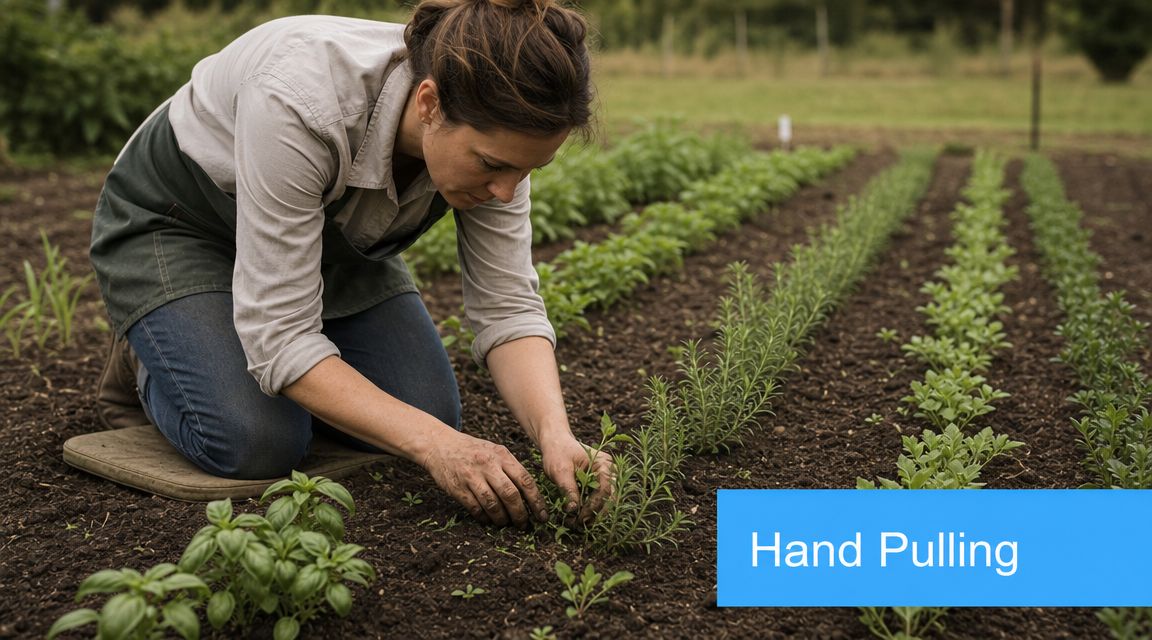
Hand-pulling is still the cleanest method in the book. For small cannabis plots, raised beds, greenhouse corners, and the tight spaces around fabric pots, it's hard to beat because it removes the weed without adding residue, heat, or drift.
This works best when weeds are young and the soil is slightly moist. Dry, baked soil makes roots snap. Damp soil lets you pull the whole plant, which is what matters if you don't want the same weed back in a week.
Where manual removal earns its keep
If you're growing premium flower, detail work matters. Hand-pulling lets you clean around the crown of the plant, irrigation lines, trellis anchors, and drip emitters without disturbing the root zone of your cannabis. That's especially useful in backyard grows where each plant gets individual attention.
UC IPM makes an important distinction in organic weed control. Weed burial works best on small weeds, while larger weeds are better handled by destroying the root-shoot connection or by slicing and cutting, which is exactly why early hand removal saves effort later in the season, as noted in the UC IPM organic weed control guidance.
Practical rule: Pull weeds before they flower. Once they seed, you're managing next month's problem, not today's.
A few habits make this method much better:
- Work after irrigation or light rain: Moist soil releases roots more cleanly.
- Grip low on the stem: Pulling from the top tears the plant off and leaves the crown behind.
- Bag invasive or seeding weeds: Don't drop them back in the bed if mature seedheads are present.
- Wear gloves: You protect your hands and reduce unnecessary contact from bed to bed.
For a useful companion routine, these expert tips for garden weeding line up well with the way careful growers maintain high-value crops.
2. Mulching and Ground Covers
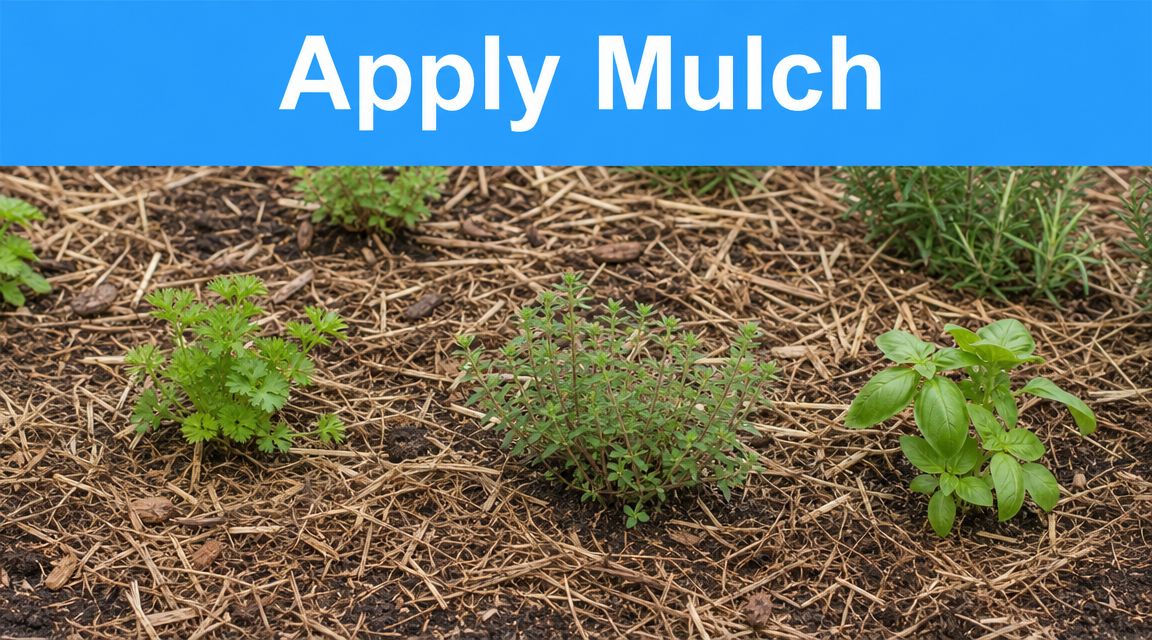
Mulch is one of the most dependable organic weed control methods because it prevents germination instead of chasing weeds after they emerge. That's a major advantage in outdoor cannabis, where bare soil turns into a weed nursery fast once summer hits.
Straw, leaf mold, clean compost, and untreated wood chips all have a place, depending on your setup. Around cannabis, I favor mulch that breathes, stays loose, and doesn't mat so tightly that it traps too much moisture against the base of the plant.
Best uses around cannabis beds
Mulch shines in outdoor rows, hoop houses, and anywhere you're trying to hold soil moisture steady. On Long Island, that matters because sandy soils can dry quickly, then weeds flush again after every watering cycle.
The trade-off is management. Mulch that's piled against stems can invite crown issues, shelter slugs, or keep the surface too wet. Keep a clean gap around the plant base and check that drip irrigation still penetrates instead of running off the top layer.
The strongest evidence for mulch in this article is straightforward. A 2024 review of organic systems found that mulch after one hand weeding controlled up to 98% of weeds, which is why I treat mulch as a force multiplier, not a standalone afterthought, according to the 2024 meta-analysis on weed management in organic farming.
Ground covers need a lighter touch
Living covers can help, but they require judgment. Clover between rows may work in wide paths or off-season spaces, yet it can compete if planted too close to a young cannabis root zone. In a tight home grow, dead mulch is often easier to manage than a living understory.
Mulch doesn't solve every weed problem, but it changes the fight in your favor before the weeds even show up.
For growers chasing clean, terpene-rich flower, prevention usually beats rescue work.
3. Flame Weeding
Flame weeding is fast, satisfying, and useful, but it's also the method most likely to be misused. The goal isn't to burn weeds into ash. It's to pass enough heat over small weeds to rupture plant cells so they collapse afterward.
That makes it a good fit for paths, gravel edges, fence lines, and the spaces between established rows where a hoe is awkward and hand-pulling gets old. It is not something to wave around casually near dry mulch, support stakes, or low-hanging cannabis leaves.
What the research says and what the field says
Among the organic options people often assume will work equally well, they don't. A 2012 field study summarized by USDA NRCS found that flame weeding reduced average weed coverage to 12.14%, while some other organic treatments performed very poorly when used alone, according to the USDA NRCS summary of the weed-control field study.
That matches practical experience. Flame works best on tiny, tender weeds. Once weeds get thick stems, deep crowns, or established perennial roots, the torch becomes a top-burn tool, not a complete solution.
Here's a useful demonstration of technique and pacing before trying it in your own space.
Safety matters more than speed
Cannabis growers need to be stricter than vegetable gardeners here. Resinous plant material, trellis netting, dry grass, and bagged amendments all add fire risk.
- Use it only on calm days: Wind turns a precise tool into a hazard.
- Keep water nearby: A hose under pressure beats a watering can.
- Target seedlings, not mature weeds: Heat works better before weeds harden off.
- Avoid mulched beds: Paths and non-crop zones are safer choices.
If you live in Brookhaven, Suffolk County, or another local jurisdiction with seasonal burn restrictions or open-flame rules, check local ordinances before using any torch system. A good method isn't worth a bad call.
4. Cover Cropping and Crop Rotation
A lot of growers treat cover crops like a nice extra. In cannabis, they're closer to long-game weed management. They occupy space, shade the soil, and keep your garden from sitting bare between productive cycles.
Rotation matters for the same reason. If the same bed stays open on the same schedule every year, the same weeds learn that rhythm. Breaking that pattern reduces the advantage weeds get from predictable disturbance and open ground.
Why systems beat one-off fixes
Rodale emphasizes that crop rotation is the core of organic weed management, and that principle applies cleanly to cannabis gardens. If you alternate production periods with cover-cropped rest periods, you stop feeding the weed seed bank with repeated, exposed openings.
The strongest quantitative support here comes from the same 2024 review. Diversified crop rotation reduced weed density by up to 49%, showing why rotating and covering beds deserves more respect than it usually gets in home gardens.
For Long Island growers, this often looks like a fall or early spring cover, then termination before transplanting outdoor cannabis. In larger yards, rye, clover, or mixed covers can work in off-season beds. In smaller grows, even rotating a cannabis bed into a temporary soil-building bed helps.
One caution about buckwheat
People love to recommend buckwheat as a smother crop because it grows quickly. Fast growth helps, but it's not magic. In the USDA NRCS summary of the 2012 field study, buckwheat used as a single-species smother crop was ineffective as a standalone method, which is a good reminder that cover crops work best as part of a system, not as a silver bullet.
Rotation and cover cropping pay off slowly, but they solve the kind of weed pressure that keeps coming back year after year.
For cannabis, that matters more than a flashy one-day fix.
5. Hoeing and Cultivation
Hoeing is what I reach for when weeds are too numerous for hand work but still young enough to kill easily. Done at the right time, it's efficient and clean. Done too deep or too late, it stirs up more weed seed and risks clipping feeder roots.
This method fits outdoor rows, wide beds, and greenhouse aisles. It's less useful in container grows or very tight plantings where the margin for error is small.
Match the tool to the weed stage
The mistake most growers make is waiting until weeds are obvious from across the yard. By then, they're tougher, better rooted, and often close to setting seed. Cultivation should happen when weeds are still in the seedling stage, not after they've won the race for sunlight.
UC IPM's guidance supports this timing mindset. Small weeds respond best to burial and shallow mechanical action, while larger weeds often need cutting or severing that fully disrupts regrowth. In practice, that means a stirrup hoe or collinear hoe works beautifully on flushes of fresh annuals, but not on deep-rooted perennials.
Keep it shallow and consistent
The best passes are light. You want to slice just under the surface, leave uprooted weeds to dry, and move on. Deep chopping brings buried seed back into the germination zone and can disturb the root zone of a nearby cannabis plant.
- Cultivate when weeds are tiny: Delay makes every pass harder.
- Sharpen your hoe: A dull edge drags and tears instead of slicing.
- Stay back from the stalk: Give established cannabis a buffer around the crown.
- Work on a drying day: Cut weeds desiccate faster if the weather cooperates.
For growers trying to keep labor realistic without compromising purity, hoeing is one of the most practical organic weed control methods available.
6. Corn Gluten Meal Pre-Emergent Herbicide
Corn gluten meal gets a lot of attention because it's one of the few organic products marketed as a pre-emergent option. The appeal is obvious. Stop weeds before they start, and your season gets easier.
The catch is timing. Pre-emergents only help before seeds establish. If weeds are already up, corn gluten meal won't rescue the bed. That makes it more of a prevention tool than a cleanup tool.
Where it fits and where it doesn't
In a cannabis garden, this method makes more sense in paths, around established transplants, or in areas with a predictable flush of annual weeds. I wouldn't use it casually where you plan to direct-sow anything desirable. Its whole point is interfering with successful establishment.
It also needs realistic expectations. If your beds already hold perennial bindweed, creeping grasses, or other established weeds, pre-emergent thinking won't solve a rooted problem.
That's the pattern I'd keep in mind with any premium cultivation setup. Prevention products only earn their keep when the rest of the garden plan is disciplined. The same mindset shows up after harvest too. Growers who care about clean inputs usually care about clean finishing choices, which is why curated picks like the best cannabis products in Long Island for summer 2025 tend to appeal to the same crowd.
Use it as part of a layered plan
Corn gluten meal works better when you stack it with mulch, hand removal, and good bed sanitation. Used alone, it's too easy to overestimate.
Don't expect a pre-emergent to fix an existing infestation. Use it to protect clean ground you've already worked hard to clean up.
That distinction saves a lot of disappointment.
7. Vinegar-Based Herbicides Acetic Acid Solutions
Vinegar sprays sound ideal on paper. They're familiar, simple, and widely discussed in organic gardening circles. In practice, they're best treated as spot-burn tools for very young weeds, not as a reliable full-program answer.
That distinction matters because a lot of growers expect horticultural vinegar to replace mechanical control. It usually doesn't. It can burn the tops off weeds quickly, but if the root system stays strong, the weed often comes right back.
What works and what disappoints
The USDA NRCS summary of the 2012 field study is unusually clear on this point. The study found that 20% acetic acid vinegar was ineffective and costly, and that the organic herbicide treatment left plots with more than 97% weed coverage, which is about as strong a warning as you'll get against relying on vinegar alone.
For a home cannabis grower, that means vinegar has a place, but it's narrow. It's useful on isolated seedling weeds in hardscape cracks, path edges, and non-crop areas where you can avoid contact with cannabis leaves entirely. It is not something I'd depend on for established bed weeds or perennial invaders.
Use it with strict spray discipline
Acetic acid doesn't care what plant you meant to hit. Drift onto cannabis leaves can scar tissue fast, especially in warm weather.
- Spot spray only: Broad spraying near crop plants is asking for collateral damage.
- Use it on small, exposed weeds: Older weeds recover more easily.
- Avoid windy conditions: Even light drift can damage desirable plants.
- Wear eye and skin protection: Stronger acetic acid products can irritate badly.
The clean-input mindset still matters here. If you're the type of consumer who values precisely made products like a 1000 mg THC tincture for controlled dosing, you already understand why precision matters in the garden too. Vinegar works best when it's used carefully, narrowly, and without magical expectations.
8. Solarization Soil Heating
Solarization is the patient grower's method. It doesn't give you the instant satisfaction of pulling, hoeing, or torching. What it does give you is a cleaner starting point before the crop ever goes in.
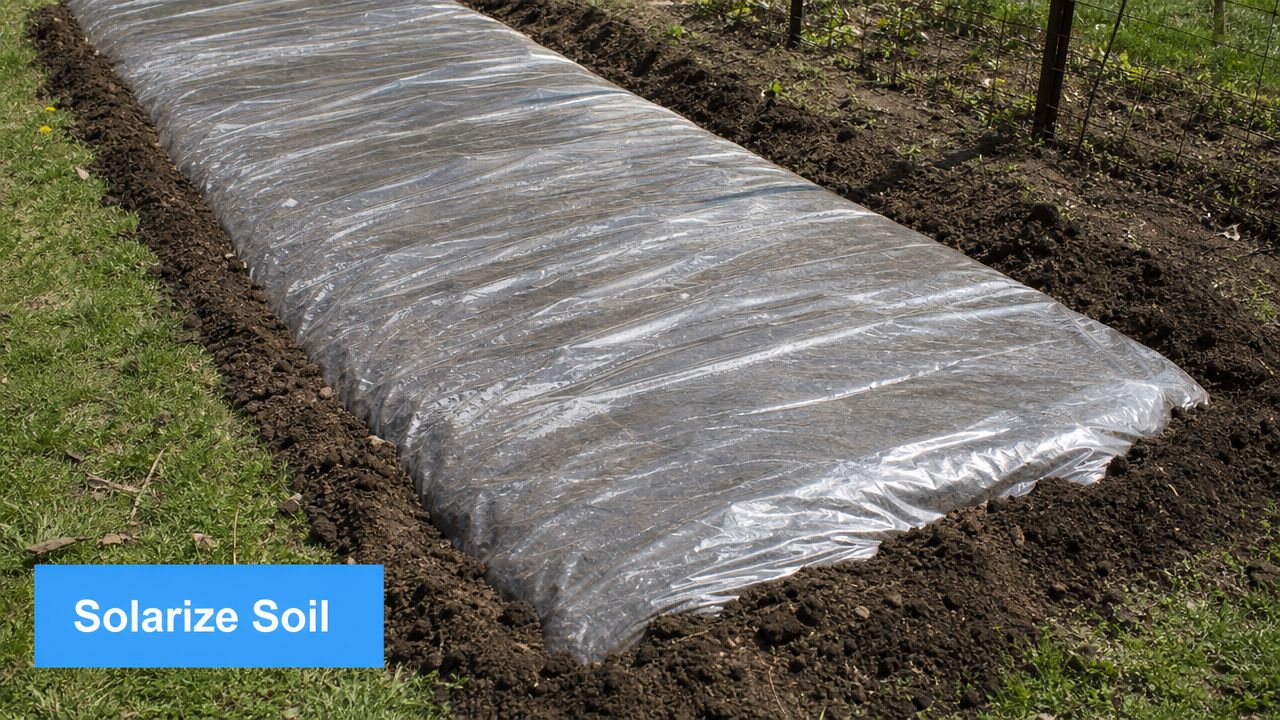
The process is straightforward. You moisten the soil, cover it with clear plastic during the hottest stretch of the season, seal the edges, and let the sun do the work. It's most useful when you're resetting a bed with chronic weed pressure before the next cannabis cycle.
Best for pre-season cleanup
If a bed has turned into a weed nursery, solarization helps reduce the pressure before transplant day. That's valuable with cannabis because early-season competition can stunt growth you won't fully get back.
The limitation is climate and timing. Long Island summers can support solarization, but your results will depend on sun exposure, bed orientation, and how well you seal the tarp. A half-done setup won't deliver much.
The USDA NRCS summary of the 2012 field study reported that solarization reduced weed coverage to 49.22%. That's not the strongest result in the study, but it confirms that solarization can reduce pressure before planting, especially when combined with stronger in-season methods.
Pair it with follow-up control
Solarization isn't the whole program. Once the tarp comes off, new weed seeds can still arrive by wind, compost, tools, or foot traffic.
Solarization is a reset button, not a lifetime guarantee.
Use it when reclaiming a problem bed, then protect that cleaner start with mulch, hand removal, and cultivation at the right time.
9. Herbicidal Soaps and Plant-Based Sprays
Botanical sprays appeal to cannabis growers for a good reason. They feel more compatible with a clean cultivation approach than conventional herbicides, and many are sold as plant-based contact products.
Still, the same old rule applies. Contact burn-down is not the same thing as complete control. If you spray top growth and leave an aggressive root system untouched, you haven't finished the job.
Good for edges, weak on established weeds
These products fit best where precision matters more than broad knockdown. Think walkway margins, gravel seams, fence lines, and occasional spot treatment far away from crop foliage. In a dense cannabis bed, the risk of off-target contact rises quickly.
I treat these sprays as cleanup tools around the garden, not as the primary defense inside the bed itself. Hand tools, mulch, and cultivation usually do the core work more safely around valuable plants.
That's also a useful way to think about cannabis education more broadly. Categories matter. Effects differ. Methods differ. And understanding distinctions makes better decisions, whether you're choosing weed control tools or reading through a guide to understanding the different strains of cannabis.
Choose by weed stage, not marketing copy
Plant-based sprays are most effective on small, actively growing weeds with plenty of exposed leaf surface. They struggle more with waxy leaves, mature stems, and established perennial weeds.
- Spray visible foliage thoroughly: Missed tissue often survives.
- Keep applications targeted: Drift can still injure nearby plants.
- Expect repeat treatments: Contact products often require follow-up.
- Don't oversell them: They're tools, not miracles.
For growers who want organic weed control methods that stay aligned with premium cannabis standards, botanical sprays belong in the toolbox. They just shouldn't be mistaken for the whole toolbox.
10. Integrated Pest Management and Companion Planting
The strongest organic gardens don't rely on one tactic. They stack pressure against weeds from several directions. That's the value of an integrated approach. You stop weeds before emergence, remove them early when they appear, and reduce open niches where they can take hold.
Companion planting fits that philosophy when it's used carefully. Low, fast, competitive plants can occupy bare soil, interrupt weed establishment, and in some cases make the garden easier to manage overall.
Let weed biology guide the method
This is the angle many generic guides skip. Weed type matters. Timing matters. Annual seedlings are one problem. Established perennial weeds are another.
The modern evidence base supports that systems view. The 2024 review found that organic fields generally carry higher weed pressure than conventional fields, but also showed that integrated practices can suppress weeds effectively. Cover crops achieved between 24% and 85% control depending on species, and maize-bean intercropping lowered densities of Amaranthus, Cyperus, and Commelina species compared with monocropping.
That matters because it shifts the conversation away from “organic equals one natural trick” and toward “organic means combining the right tools in the right sequence.” For cannabis, that might mean a clean stale seedbed, shallow cultivation for annual flushes, mulch around transplants, and aggressive digging or repeated exhaustion tactics for perennial rhizomes.
Companion plants should support, not compete
Basil, clover, and border plantings can make sense in some layouts. Mint can become its own problem if you let it roam. Marigolds are often worth growing for garden diversity, but they're not a substitute for actual weed suppression planning.
A good cannabis bed doesn't just fight weeds. It leaves fewer openings for weeds to start.
That's what integrated management looks like in practice. Fewer bare patches. Faster response. Smarter matching of method to weed biology.
Comparison of 10 Organic Weed Control Methods
| Method | 🔄 Implementation complexity | ⚡ Speed / Efficiency | Resource requirements | ⭐📊 Expected outcomes | 💡 Ideal use cases & tips |
|---|---|---|---|---|---|
| Hand-Pulling and Manual Removal | Low (simple tools, labor‑intensive) | ⚡ Low, time-consuming | Minimal (gloves, hand tools, labor) | ⭐⭐ High purity; moderate control for small areas | Best for small/indoor plots, pull when soil moist, remove roots, weekly rounds |
| Mulching and Ground Covers | Moderate (initial setup, maintenance) | ⚡ Medium, reduces ongoing labor | Moderate (mulch material, occasional refresh) | ⭐⭐⭐ High suppression + improved soil/moisture retention | Outdoor/greenhouse beds, apply 2–4" mulch, keep away from stems, refresh yearly |
| Flame Weeding | Moderate–High (equipment + safety training) | ⚡ High, rapid treatment of areas | Propane/IR torch, PPE, fuel | ⭐⭐ Very effective on foliage and tough weeds; avoid near crops | Use on paths/between rows only; quick 1–2s passes; avoid drought conditions |
| Cover Cropping & Crop Rotation | High (planning, longer cycles) | ⚡ Low short-term / High long-term | Seeds, land/time, incorporation tools | ⭐⭐⭐ Long-term soil fertility and sustained weed suppression | Plant after harvest; choose legumes for N; rotate every 2–3 years |
| Hoeing and Cultivation | Low–Moderate (skill to avoid root damage) | ⚡ Medium, efficient over larger areas | Hoes or cultivator, labor | ⭐⭐ Good for seedlings; less on deep perennials | Hoe shallowly (1–2"), after watering/rain, keep 6+” from cannabis stems |
| Corn Gluten Meal (Pre‑Emergent) | Low (easy to apply; timing critical) | ⚡ Medium, preventative season coverage | Product cost, water for activation | ⭐⭐ Prevents germination; provides slow N; no effect on established weeds | Apply early spring before germination, water after application, avoid on seed beds |
| Vinegar‑Based Herbicides | Low (simple spray) | ⚡ High foliage kill; may need repeats | Very low to moderate (household or horticultural vinegar), PPE | ⭐ Low–Moderate, kills tops quickly; roots may survive | Spot‑treat young weeds on calm sunny days; use 20% for best results; avoid contact with cannabis |
| Solarization (Soil Heating) | Moderate (pre‑season prep, timing) | ⚡ Low (4–6 weeks), strong pre‑season payoff | Clear plastic sheeting, water, time | ⭐⭐⭐ Kills many seed bank organisms and pathogens; long‑lasting reduction | Solarize in hottest months, water soil before tarping, bury edges, allow recovery time before planting |
| Herbicidal Soaps & Plant‑Based Sprays | Low (spray application) | ⚡ Medium, contact action; repeatable | Commercial products (costly), PPE | ⭐⭐ Moderate, fast contact kills; limited on mature perennials | Use OMRI‑listed products, spray calm days, ensure full foliage coverage, reapply as needed |
| IPM, Allelopathy & Companion Planting | High (species selection, ecosystem planning) | ⚡ Low short-term / High long-term sustainability | Companion seeds/plants, planning, monitoring | ⭐⭐–⭐⭐⭐ Enhances biodiversity, gradual weed suppression and pest benefits | Interplant with basil, buckwheat or clover; contain aggressive species; plant slightly before or with cannabis |
Your Organic Strategy for a Premium Long Island Harvest
You clear a bed on Saturday, see bare soil on Sunday, and by the next warm, wet stretch on Long Island, a new flush of weeds is already up around your cannabis. That cycle is common here. The growers who stay ahead of it build a system before weeds get momentum.
For a premium home harvest, organic weed control works best as a sequence, not a single fix. Start with the cleanest site you can manage before planting. Use mulch or living ground cover to block germination. Cultivate or pull seedlings while they are still small. Reserve stronger tools, like flame or high-acid spot sprays, for the right places and only when safety and local rules allow it. If you want a useful outside reference on natural weed control methods, keep it supplemental to a cannabis-specific plan, not a substitute for one.
Long Island conditions change the details. Humid air, summer storms, and warm soil push weed growth fast. Small yards and close neighbors also mean less room for error with drift, runoff, smoke, and flame. In a licensed home grow, that matters twice. You are protecting the crop itself, and you are protecting the purity of a product you may later compare against lab-tested flower from a dispensary such as Strong Strains.
Method choice should match the weed in front of you. Annual weeds usually respond well to shallow hoeing, mulch, corn gluten meal, or quick hand removal before they set seed. Perennials are a different job. If bindweed, quackgrass, or nutsedge is established, expect repeated digging, cutting, smothering, and follow-up. Contact sprays may burn the top growth, but they rarely finish the root system on their own.
I treat weed control as part of crop quality, not yard cleanup. Clean beds improve airflow, reduce competition for water and nutrients, and cut the chance that a late-season tangle hides pests or traps moisture around the lower canopy. That is especially important with cannabis, where residue, contamination, and avoidable stress can show up in the finished flower.
New York home growers should also keep the legal side in view. Plant limits, secure cultivation, odor control, fire safety, and local restrictions on open flame or nuisance conditions all deserve attention before you choose tools. In tighter Suffolk and Nassau neighborhoods, the practical standard is simple. Use methods that stay on your property, stay off your plants, and do not create problems for the people next door.
The best results come from steady timing. Hit weeds early, keep soil covered, and do small weekly corrections before they turn into a full reset. That is how home growers on Long Island keep a cannabis garden clean enough to produce flower that looks better, cures better, and holds up to the standards expected of a premium, tested product.